

Wednesday September 17, 2025
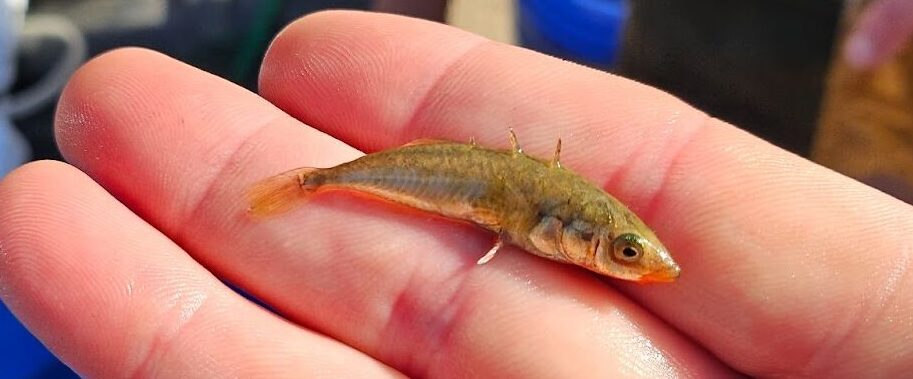
Common names: Threespine Stickleback
Scientific name: Gasterosteus aculeatus
Native range: In North America: from northern Baja Mexico to Alaska and from Virginia to Southern New Brunswick; also native to parts of Europe and Asia
Status: Species of least concern, but subspecies G. a. williamsoni is federally endangered
Habitat: Freshwater and ocean, depending on individual life history
Threespine stickleback (Gasterosteus aculeatus) are a pokey little fish native to waters from Northern Baja California to Alaska on the west coast and Virginia to Southern New Brunswick on the east coast of the United States. They can also be found in parts of Europe and Asia. There are two forms of threespine stickleback – those that are anadromous and reproduce in freshwater but spend most of their time in the ocean, and those that live their lives entirely in freshwater. Freshwater inland sticklebacks are smaller, usually reaching up to 5 cm long, while anadromous sticklebacks can reach up to 8 cm long. Threespine sticklebacks have a grey-green mottled upper body and silvery bellies with two to four dorsal spines. During spawning, males usually exhibit red and blue coloration on their throats and bellies and iridescent blue-green eyes to attract females.
Fun fact: Typically, male sticklebacks take on most of the nest building and parental care to their offspring for up to two weeks after hatching.