

Monday March 16, 2026
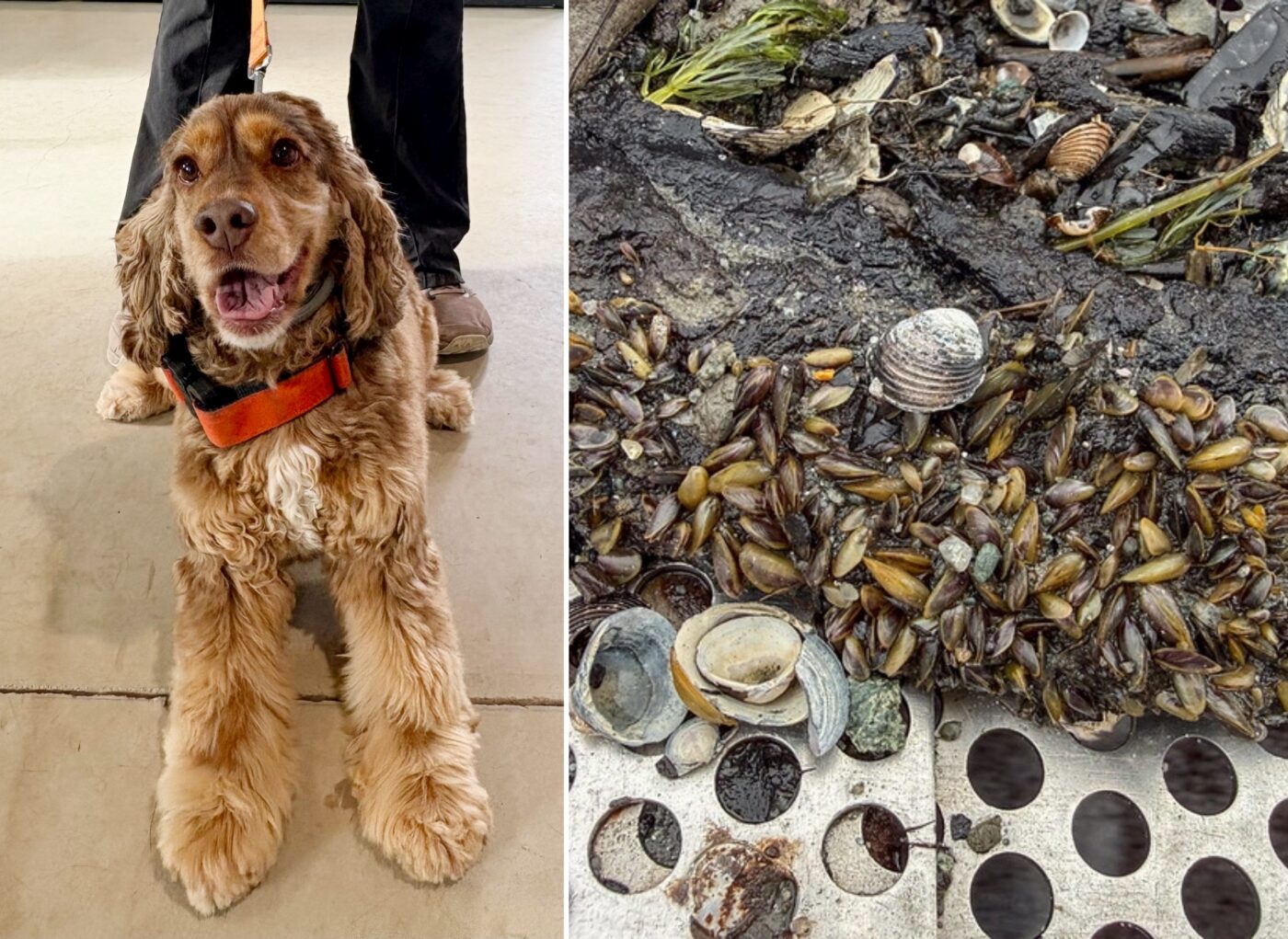
Even though golden mussels were only detected in California in October 2024, they pose a significant and immediate threat to the state’s waterways. Invasive mussels multiply quickly and disrupt native food webs, while also clogging and damaging aquatic infrastructure and boats. Veligers, the free-floating larval form of mussels, are microscopic and grow into adults that attach to pipes, hulls, ballast tanks, live wells, and everything in between. Because golden mussels can spread quickly and undetected at this early life stage, they present a serious challenge for both governing agencies and recreators, making watercraft inspections essential. Unfortunately, many of the common inspection programs and methods—like boat inspections or eDNA—can be costly, labor intensive, and slow. While these methods offer comprehensive results, the rapid spread of golden mussels requires tools that deliver immediate answers as boaters enter waterways. Luckily, a new solution is on the rise: dogs that can smell invasive species.
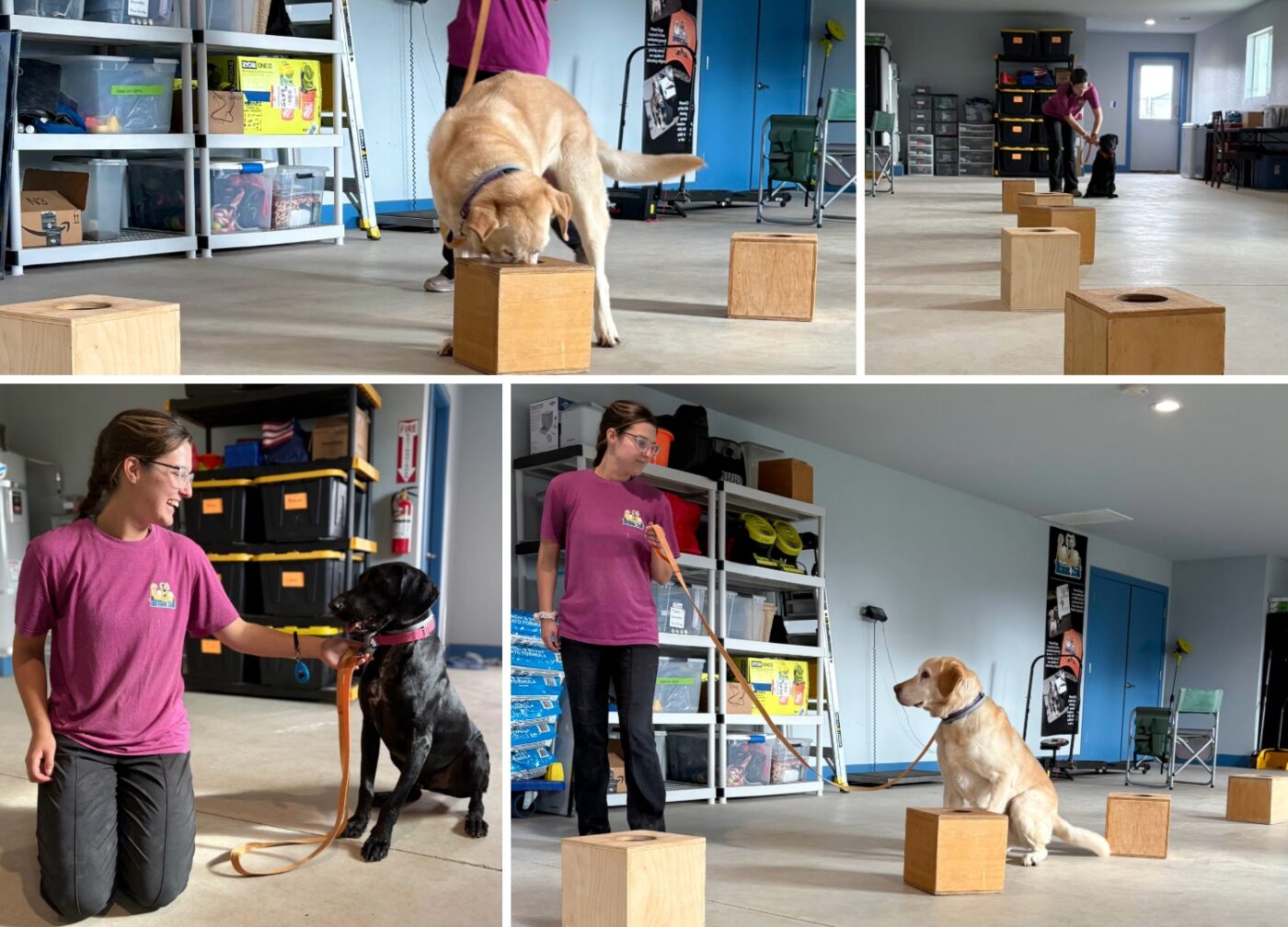
From time on the treadmill to weekly weigh-ins, golden mussel-sniffing dogs are treated like star athletes at Mussel Dogs, an Oakdale-based canine training and environmental consulting business. The company has completed a variety of biological surveys, including detecting species such as quagga and zebra mussels, marbled murrelets, and bats. When asked what her dogs specifically smell for in each survey, owner Debra DeShon explains that the science of scent-based surveys is not exact. Without isolating each chemical component of a mussel, there is no way to know exactly what the dogs smell. Instead, they think of smells as “odor profiles”, a unique set of odors associated with a given target. Because of limited resources and potentially long waiting periods when performing boat inspections or sampling with eDNA, the dogs’ accuracy, mobility, and speed are unmatched, putting them on the front line of a critical conservation movement.
It takes about three weeks of training for mussel-sniffing dogs to be able to smell and detect a new species. Whether training to smell a new species or brushing up on skills in the off-season, the main training technique requires a dog, a ball, a scent box, and a smelly sample of the target species. To begin a training session or boat inspection, dogs are given a keyword that signifies, “let’s get to work.” After receiving their keyword, dogs sniff high and low around their working area. Upon finding their target species, a golden mussel in this case, the dog will sit or point in front of the organism. Detections will earn the dogs positive reinforcement like verbal praise and a game of tug-of-war. Handlers want their dogs to associate fun with the scent of their target species, which in turn produces accurate and precise detections. As DeShon says, “fun is where the odor is.”
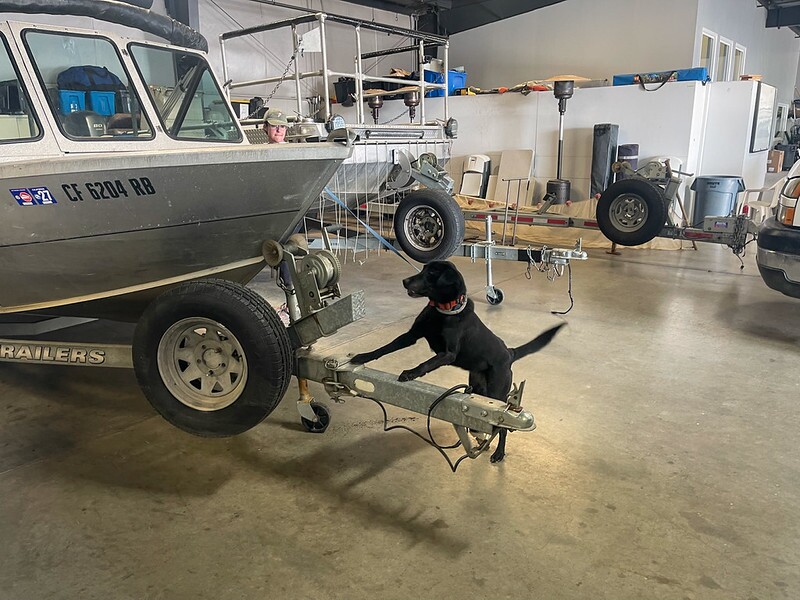
When dogs are on site, such as at Modesto Reservoir, daily boat inspections are more fun for everyone. With the dogs, inspections are usually completed in minutes or less. This gives DeShon and her furry inspectors the opportunity to have conversations regarding best boating practices: cleaning, draining, and drying. If the dogs do detect mussels on a watercraft, it should be quarantined or cleaned with methods like pressure washing and flushing with hot water. Adult golden mussels can survive without water for more than six days, making detection and boat decontamination processes critical to stopping the spread of this species.
With no clear eradication solution, the golden mussel is likely here to stay in California. The species has already been detected in the California aqueduct and at more than 100 different locations across the state. As agencies continue to seek invasive mussel solutions, mussel-sniffing dogs can help provide rapid ecological defense. Managers at lakes and reservoirs—including Modesto, Sonoma, Mendocino, and Lopez—are adopting these trained canines as an efficient and cost-effective way to stop the spread of golden mussels. These furry detectors’ noses are powered to serve our local lakes, reservoirs, rivers, and beyond. In classic Paw Patrol style, the next time you think there might be golden mussel trouble, just yelp for help!
This post was featured in our weekly e-newsletter, the Fish Report. You can subscribe to the Fish Report here.
Header Image Caption: Trained dogs are an efficient and cost-effective way to stop the spread of golden mussels.