

Monday February 9, 2026
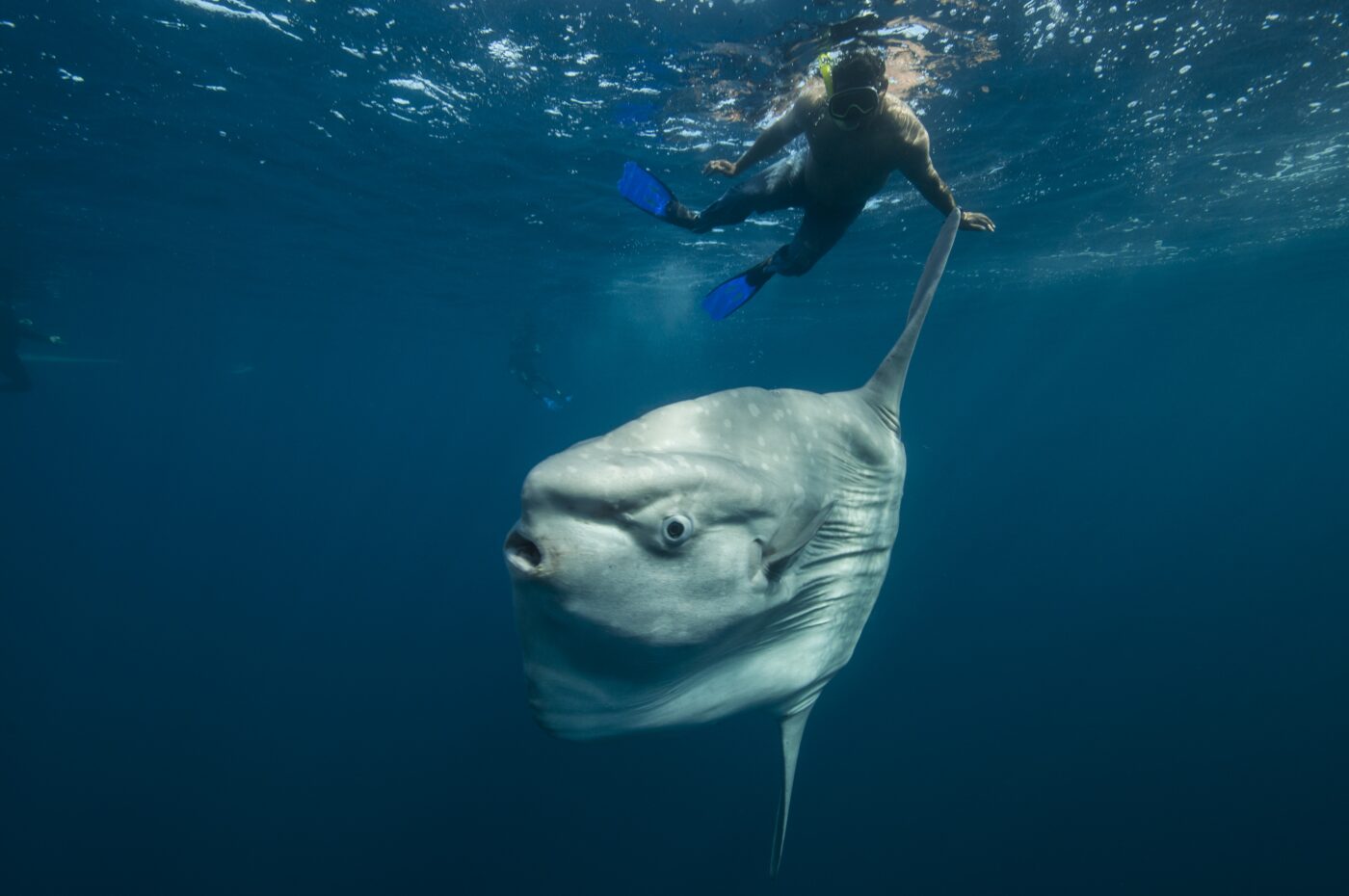
What do Mola mola, Chanos chanos, and Boops boops all have in common? Besides being fish, these species names are all examples of tautonyms. A tautonym is a scientific name where both the genus and the species are the same. Most scientific names have a unique species and genus name, like humans as Homo sapiens. Some species are so unique or distinct that scientists decide to double up. But what is the reason behind this repetition, and what can it tell us about the species behind the name?
Taxonomy—the science of classifying and naming organisms—is an old discipline. While people have classified species for as long as we have record, the idea of modern taxonomy is attributed to Carl Linnaeus, whose work took place during the mid-1700s. He introduced the idea of what is now called a “scientific name”, in which the Latin words for both the genus and the species of an organism make up its official name. For the Chinook salmon (Oncorhynchus tshawytscha), the genus of the fish is Oncorhynchus, while its actual species is tshawytscha.
So, what does it mean when a species has the same genus and species name, like Mola mola, the ocean sunfish? It turns out there are a few different reasons why a species may have a tautonym. Some of these reasons may include: the species was the first species of a new genus, a taxonomic revision resulted in a tautonym, or the genus has a unique physical trait.
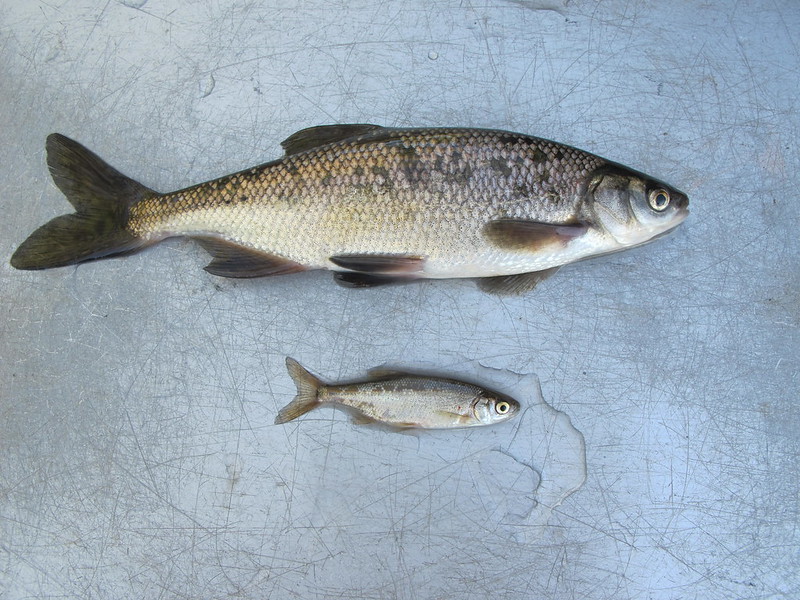
Often, when a new genus is discovered or defined, it only has one species. When this happens, sometimes scientists give this species the same name as the genus. Such is the case of Brosme brosme (the cusk) and Chanos chanos (the milkfish), the only members of their genera. Interestingly, when a new subspecies is defined, it is required to take on the species name as its subspecies name. This is the case with Lavinia exilicauda exilicauda (the Sacramento hitch). Previously, all members of this species were called Lavinia exilicauda. When researchers determined that there was enough diversity in this one species to split it into multiple subspecies, Lavinia exilicauda exilicauda was the first defined, followed by Lavinia exilicauda harengus (the Monterey hitch) and Lavinia exilicauda chi (the Clear Lake hitch). Circumstances like these can even lead to a species with the same name repeated three times—called a trinomial—like Rutilus rutilus rutilus, a previously defined subspecies of the common roach.
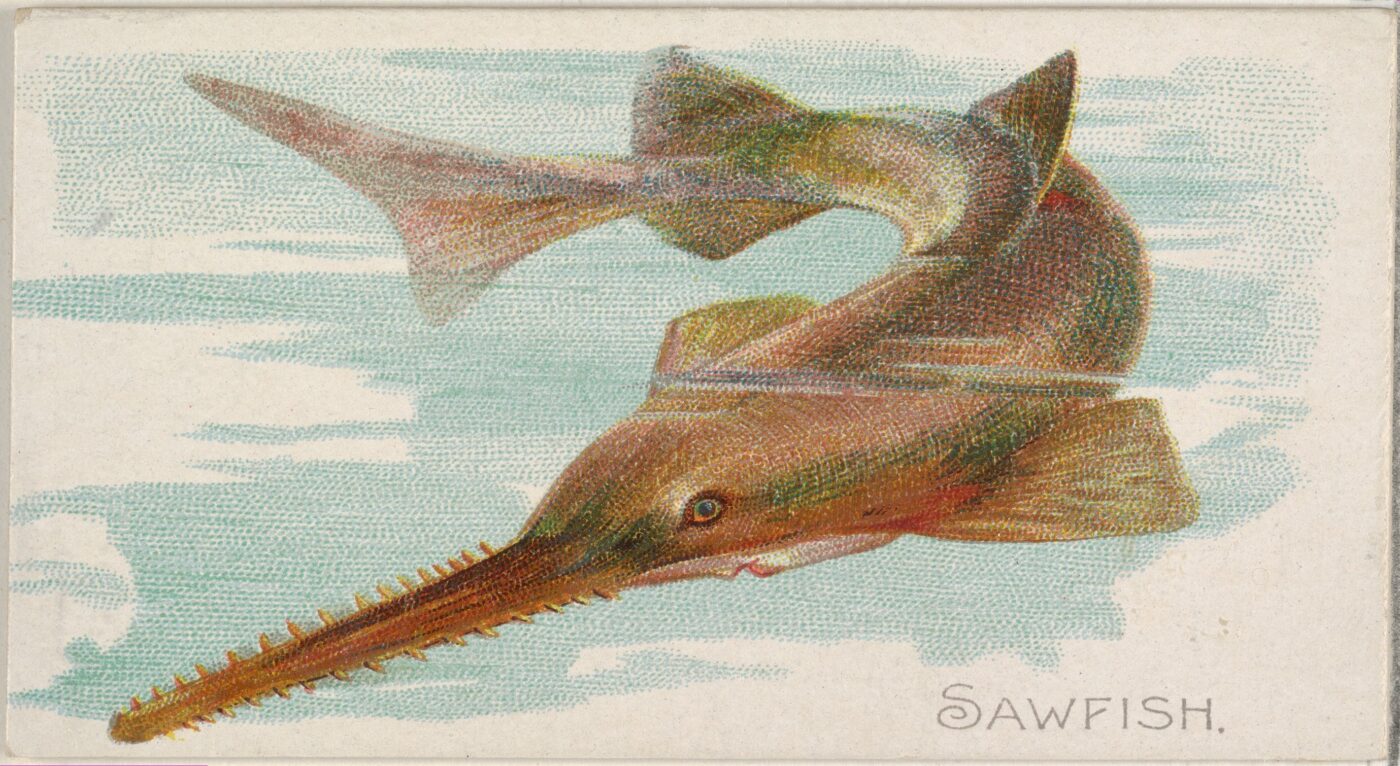
Additionally, a taxonomic revision can also result in the creation of a tautonym. When Hucho hucho, the Danube salmon, was first described, it was called Salmo hucho. Later, scientists discovered that this species, and others closely related to it, were different enough from other members of the genus Salmo to classify them into a separate, new genus (Hucho). With this change, and the definition of the new genus, Salmo hucho had its name changed to the tautonym Hucho hucho. This sometimes overlaps with the fact that often, genera and species names refer to physical features that set one fish apart from another. An obvious example of this is Pristis pristis, the largetooth sawfish. With “pristis” being a reference to the Greek word for “saw”, the repetition reinforces the fish’s most recognizable trait.
Overall, tautonyms are rare, and trinomial names even more so—only about 120 and a meager 19 of the over 33,000 fish species are members of these exclusive groups, respectively. While these names are fun and memorable, the science behind the repetition is meaningful. The double name of a species may show that it is the oldest of its group, that its taxonomy has been changed, or that it looks unique. Often, a tautonym is a result of a combination of these factors. The next time you come across a fish name like Banjos banjos or Rutilus rutilus rutilus, remember, it is not just an echo but a reflection of its place in the taxonomic tree and the science that put it there.
This post was featured in our weekly e-newsletter, the Fish Report. You can subscribe to the Fish Report here.
Header Image Caption: The species Mola mola (the ocean sunfish) has the same genus and species name.