

Tuesday February 17, 2026
It is no secret that our team at FISHBIO loves all things fish. From field biologists to weekend anglers, we have worked with an impressive variety of species both on and off the clock. We recently held an internal poll—dubbed the Fish List—to see how many species our team has encountered over the years. To qualify, an employee must have caught or handled the species using a rod and reel, a net, or other fishing apparatus during work or personal time.
Altogether, our team listed over 314 unique species. That is a lot of fish! This total reflects our diverse backgrounds and field experiences. It is also quite impressive considering it exceeds the 131 freshwater fish species currently described in California. While freshwater species dominate our list, our collective expertise spans from the deep sea to international conservation projects. However, while our experiences are all different, salmon and trout are what unite us all. To no surprise, salmonids top the Fish List. Chinook salmon was the most frequently encountered and the only species handled by every employee who took the poll. Because of Chinook salmon’s cultural and economic significance, many of our projects focus on monitoring their abundance and survival. During these same projects, we often encounter rainbow trout, our second-most encountered species and another beloved California native we work hard to preserve.
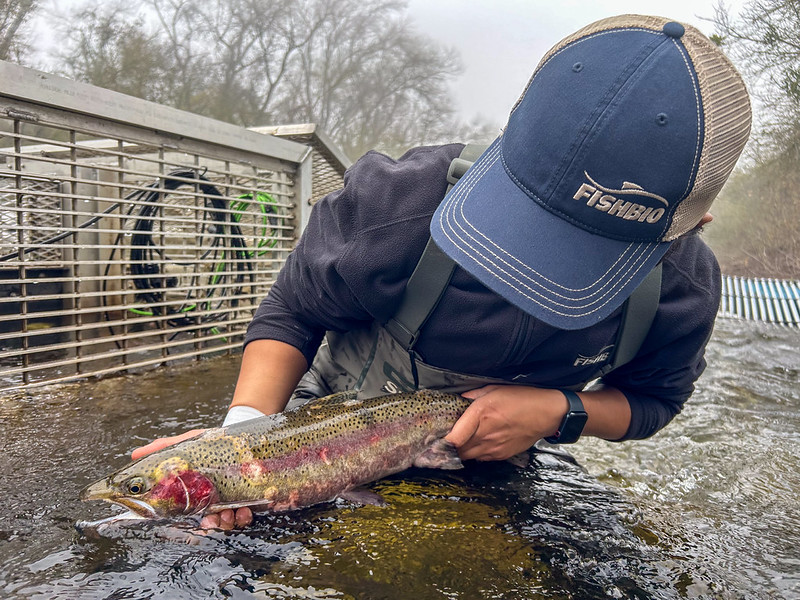
But the Fish List goes beyond Chinook salmon and rainbow trout. When we looked at the data, we found a range of biodiversity. Our list spans the color spectrum, from red Irish lord and yellow perch to blue rockfish and pink salmon. The patterns of the Fish List species are just as varied, featuring the stripes of striped bass, the mottling and marbling of mottled and marbled sculpins, and the distinctive decoration of the starry flounder.
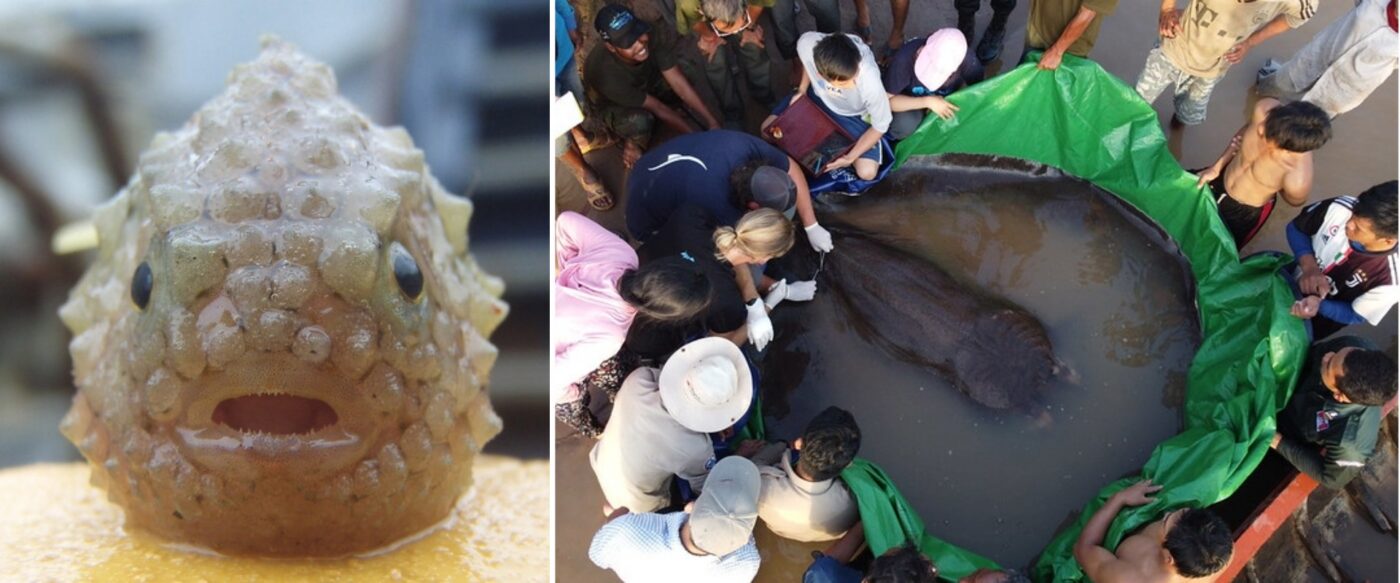
The physical diversity on the Fish List is equally impressive. We have handled speedsters of the ocean like yellowfin tuna and sailfish, as well as sluggish species like salmon snailfish. In terms of form, our team has encountered a variety of fish body shapes, from flattened shovelnose guitarfish to elongated cutlassfish. Size is no barrier either; the Fish List covers species from grape-sized Pacific spiny lumpsucker to the world’s largest freshwater fish, a giant freshwater stingray.
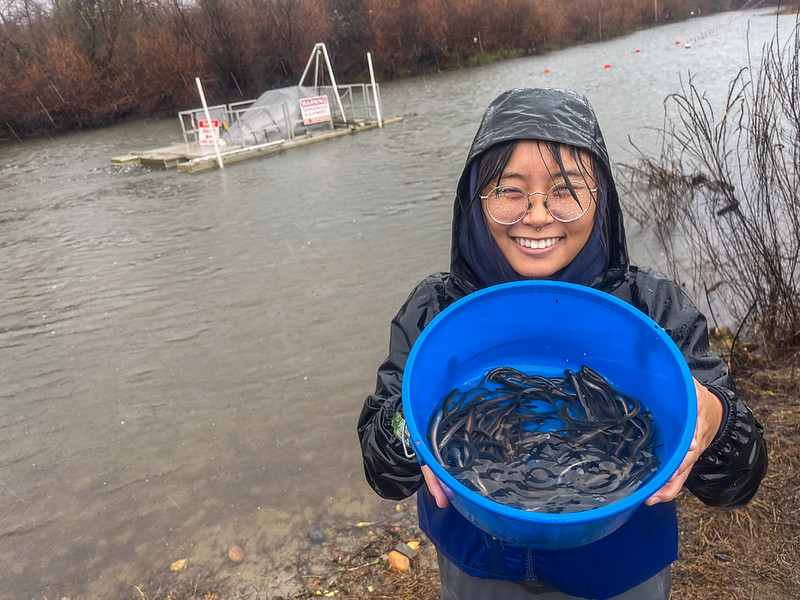
Beyond just biology, the Fish List is a mix of native, introduced, and invasive species, many of which have, for better or worse, become staples of North American ecosystems. Since FISHBIO’s beginning in 2006, we have specialized in working with sensitive and imperiled species like Delta smelt. Our Fish List also spans every IUCN conservation status, from Least Concern to Critically Endangered, and even includes “Data Deficient” species for which the information is lacking to assign them an official status. The diverse places and habitats we frequent are even included in the names of the species we have caught, from the Arctic char to the riffle sculpin.
The Fish List offers an exciting look at the range of fish species some of our team has worked with and is a testament to the collective experience held by our team in fisheries management. While the list and its 300+ species covers some amazing biodiversity, it is humbling to remember that our collective experience only includes about 1% of fish diversity on the planet—but we are passionately chipping away at the other 99%! The list will continue to expand as we take on new projects, engage in targeted research, and organize team fishing expeditions between fieldwork. Whether in the lab or on the water, our collective fish experience is always growing.
This post was featured in our weekly e-newsletter, the Fish Report. You can subscribe to the Fish Report here.
Header Image Caption: From California to Laos and beyond, our love for fish just keeps growing.