

Monday December 15, 2025
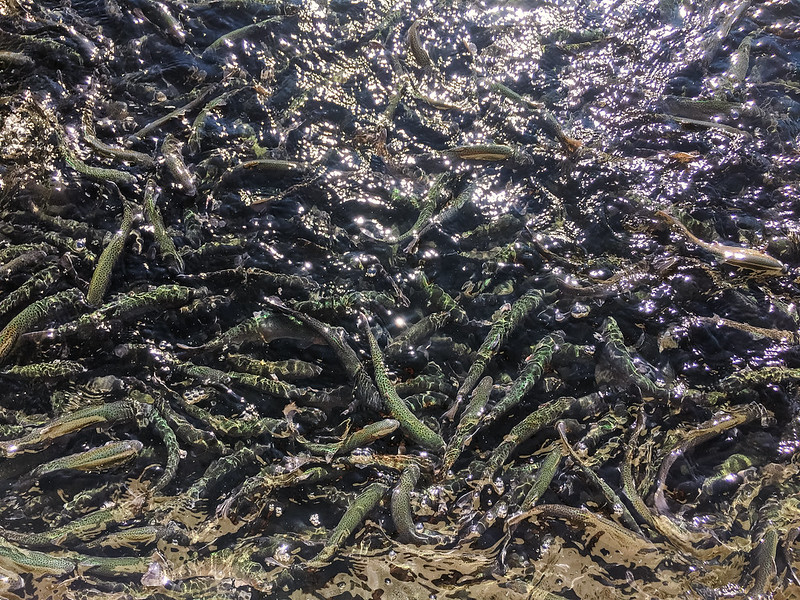
Aquaculture and hatchery programs bolster endangered species populations and increase farmed and game fish production. While maintaining fish welfare and health is paramount, there are challenges in captive settings that predispose fish to disease. Antibiotics and vaccines are some tools to reduce disease risk and transmission, and are effective, but the peripheral effects on hatchery fish health can be nebulous.
Human-caused factors, including dam construction, overfishing, and pollution, led to declines in Atlantic salmon (Salmo salar) populations in the Great Lakes. The first Atlantic salmon hatchery program was established in 1866 to help rebuild Great Lakes Atlantic salmon populations. Bacterial kidney disease, however, affects hatchery salmon and causes up to 40% mortality in infected fish—posing a challenge to fish raised in crowded raceways. Luckily, a vaccine for bacterial kidney disease exists, but its effects on the community of microbes living inside fish, called the microbiome, are unknown. The microbiome has a symbiotic relationship with its host, providing benefits like improved digestion or immunity for the host in exchange for a body to live in, and disruptions can make the fish host vulnerable to health issues.

In a recent study, a Midwestern research team sought to understand how bacterial kidney disease vaccines affect gut microbial communities of juvenile Atlantic salmon. Further, they wanted to understand how microbial communities of hatchery-raised juvenile salmon differed from those of adults raised in hatcheries and released into the wild.
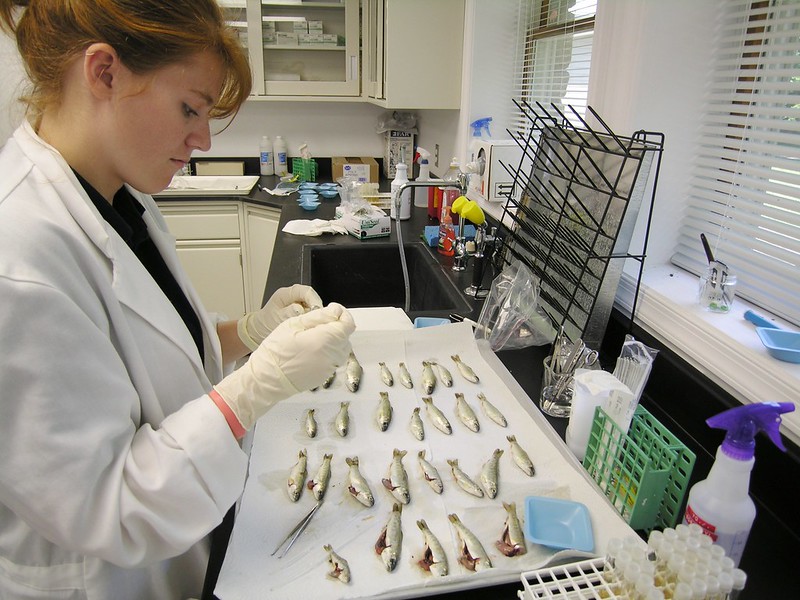
Like something out of a Dirty Jobs episode, researchers collected guts from vaccinated and unvaccinated juveniles from the same hatchery and adults originally raised in two different hatcheries. This way, they could understand the effects of age, rearing origin, and vaccination status on gut microbial communities. They collected gut samples and used 16S sequencing, a genetic technique that identifies bacteria in the sample.
To compare bacteria across the four groups, the study included two measures of microbial community diversity: alpha and beta diversity. Alpha diversity is how many bacteria are found in each individual in each group of study fish and how evenly they are spread in each group. Beta diversity is how similar or different microbial communities are among groups of fish. The researchers found more diverse microbial communities in juveniles than adults and lower diversity in vaccinated compared to unvaccinated individuals. Adult salmon had similar microbial communities regardless of hatchery origin—previous publications have shown both similarities and differences in fish exposed to different environments, depending on the species and context.
After comparing bacterial communities, researchers keyed in on specific bacteria unique to each group or driving differences among the communities. For example, they suggested that more bacterial phyla or the diet of hatchery juveniles could contribute to faster growth during this life stage compared to slower growing adults living in a wild environment.
Because juvenile vaccinated and unvaccinated fish were raised under the same conditions, differences between microbiomes of these individuals could be attributed to vaccination status. Vaccinated fish had less diverse microbial communities with more microbes like Shewanella, which includes some bacteria known to cause disease in wild and farmed fish. This suggests that the vaccine may provide room for opportunistic microbes like Shewanella to take hold, though researchers are not sure what role Shewanella played in the guts of the study fish. While protecting against bacterial kidney disease, the vaccine may drive changes in community composition and open the door to pathogenic bacteria. The authors suggest that administering probiotics to hatchery fish may help them maintain a balanced and healthy microbiome after vaccination.
Another notable finding of the study was that the microbiomes between adult fish raised in different hatcheries were very similar. The authors show that these adults came from the same broodstock spawning event which may explain the similarities. Another explanation for the similarities could be that hatchery influences on the microbiome are lost after introduction into a wild environment.
In summary, this study supports previously held ideas that environment and life stage influence gut microbial communities. The study also shows that the bacterial kidney disease vaccine reduces gut microbial diversity, and that the exploration of methods like providing probiotic supplementation with vaccines shows promise in increasing captive-raised fish health. These results showcase the importance and application of microbiome research in raising healthy and happy salmon in hatchery settings.
This post was featured in our weekly e-newsletter, the Fish Report. You can subscribe to the Fish Report here.
Header Image Caption: Aquaculture and hatchery programs bolster populations but sometimes the crowded conditions can result in rapid disease transmission.