

Monday November 24, 2025
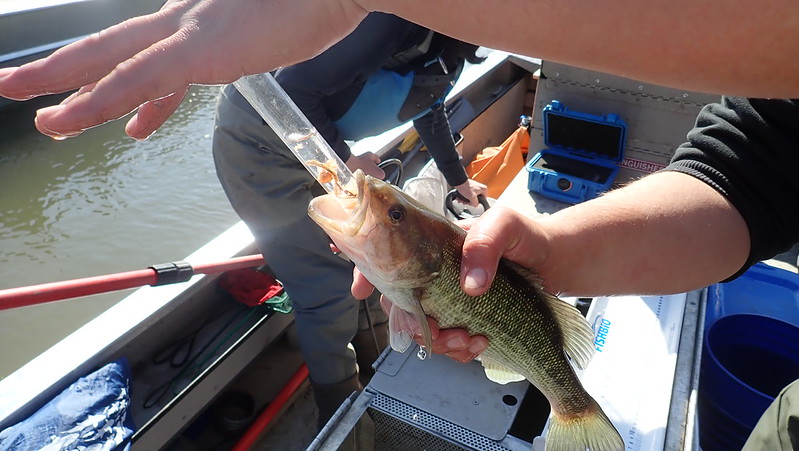
By choice, and because of access to abundant food sources, most people have been able to tailor their diets to the needs and desires of the individual. Fish, on the other hand, are limited by the food they can access in the environment, prompting the evolution of novel digestive systems to cope with food limitations and strict diets while maximizing energy gained and minimizing energy lost.
The fish digestive process begins in a mouth full of mucus-producing cells where fish capture their food. Unlike humans, who thoroughly chew their food to prevent choking, fish generally use their mouths for prey capture rather than mastication (chewing). Food moves past the mouth into the foregut, which includes either a mucus-lined esophagus and stomach, gizzard, or proximal intestine (depending on the species). Continuing along the digestive tract, broken down food moves into the intestines where nutrients and water are absorbed before being expelled into the environment as waste.
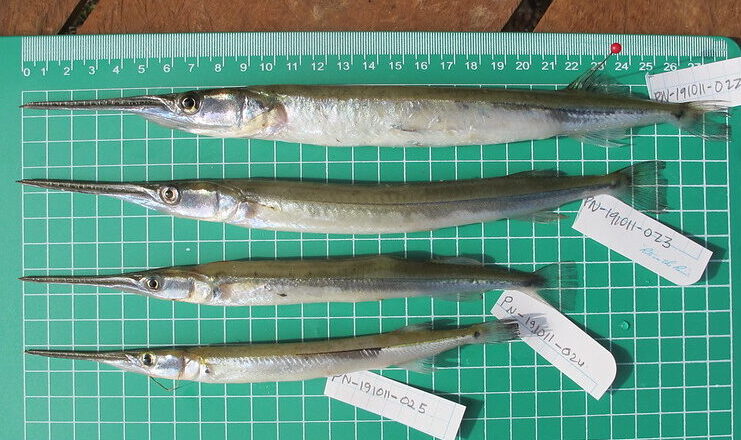
While the stomach is often the main focus of digestion in humans, many fishes have evolved stomachless digestive tracts. The stomach is an important stop on the digestive journey, providing an acidic space that secretes enzymes (proteins that speed up chemical reactions) to break down proteins – an important process for carnivorous fishes! However, around 25% of fishes do not have stomachs – most of these are herbivorous (plant-eating) or omnivorous, like mosquitofish, though some carnivorous needlefish also lack stomachs. These needlefish rely on the digestive enzymes in their intestines. Even more rare, some fishes have developed gizzard-like structures, including gizzard shad (hence the name), which function the same way as bird gizzards – mechanically breaking down food early in the digestive process.
Additional accessory organs important to digestion include the liver, bile duct, gallbladder, and pyloric caeca. The liver is ubiquitous among fish and is important for lipid and glucose metabolism, detoxification, and lipid storage. While not present in all fishes, the bile duct connects the liver to the stomach, transporting bile to help digestion. Many fishes also have a gallbladder (excluding sharks, skates, rays, and lampreys) that can temporarily store bile and, except for stomachless fishes, a pyloric caeca – a finger-like structure at the junction of the gut and stomach – that aids in the absorption of nutrients and further digestion.
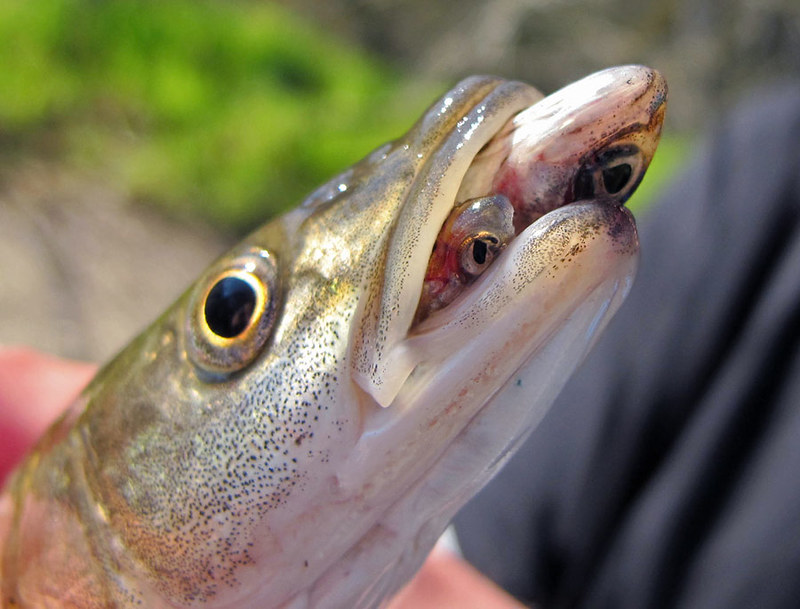
Aside from variation in the presence or absence of different organs, the morphology (structure) of the digestive system often reflects the type of diet a fish consumes. Carnivorous fishes typically have shorter guts, while herbivorous fishes have longer guts, and omnivorous fishes fall in between – a trend exemplified by the prickleback family. The relationship between gut length and diet choice presumably has to do with how difficult it is to extract nutrients from complex carbohydrates like those in plants compared to foods with more readily available nutrients, like lipids and proteins in animal tissue. These longer guts allow more time to extract nutrients from digested food.
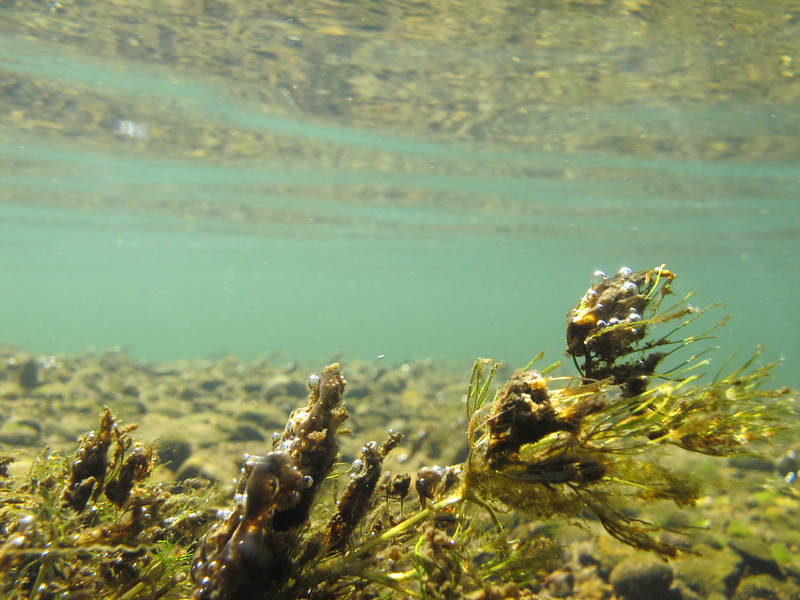
In addition to herbivores, carnivores, and omnivores, there are also fish with eclectic food preferences, specializing in eating decomposing matter (detritivores), algae (algivores), wood (xylivores), and fish scales (lepidophagy), among many other diet items. Specialized digestive tracts work in tandem with digestive enzymes and microbial activity to break down food. The wood-eating catfish, for example, does not digest the fiber in the wood it eats. In actuality, it produces large amounts of the digestive enzyme amylase along its extremely long gut to digest simpler sugars released by microbes that have already begun degrading the wood fiber. Much like how humans do not digest the fiber we eat in our diets, these fish do not either. Microbes in the gut of a scale-eating catfish likely produce the enzymes necessary to help these fish break down chitin (a protein resistant to chemical digestion) and incorporate its nutrients during its digestion.
To take advantage of the diverse foods that the aquatic realm offers, fish have evolved specialized gastrointestinal tracts and organs to optimize digestion. Whether they are stomachless omnivores, spiral-intestined sharks, or long-intestined herbivores, fish have carved out their niches in the competitive underwater foodscape.
This Fish Report is part of the Fish Physiology Series, where we highlight some of the important physiological characteristics that enable fish to survive, persist, and thrive in aquatic environments on an ever-changing planet. Subscribe to the Fish Report and follow these posts to learn more about fish physiology!
Header Image Caption: Fish diets are limited by the food they can access, resulting in novel digestive systems.