

Monday October 27, 2025
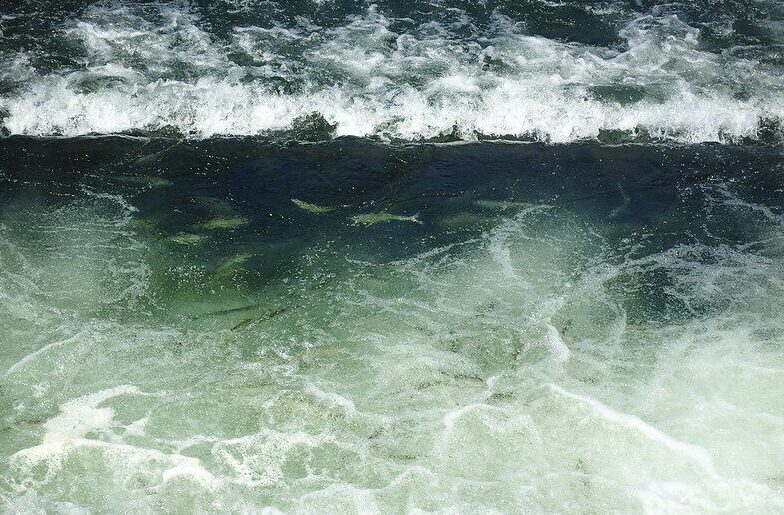
Humans experience little variability in air pressure because gravity keeps our feet grounded to the earth, and pressurized airplane cabins simulate only minor decreases in air pressure when flying. Fish, however, are subjected to greater amounts of pressure and more drastic changes in pressure because water is much denser than air. Consider the pressure that builds up in your ears when you dive into a pool or into the ocean – fish battle this change in pressure regularly. To keep themselves suspended in the right depth of the water column and prevent pressure injuries, fish have evolved approaches to address these challenges, including specialized organs and swimming tactics.
At a basic level, fish can swim to maintain their position in the water column. Swimming for this purpose is energetically expensive – imagine having to walk constantly to avoid floating into space – so a specialized organ, called the gas bladder, helps to reduce this energetic cost. The gas bladder can be inflated or deflated like a balloon, as necessary, to help fish move up and down through water. It is thought that the gas bladder originally evolved from a lung in primitive fishes.
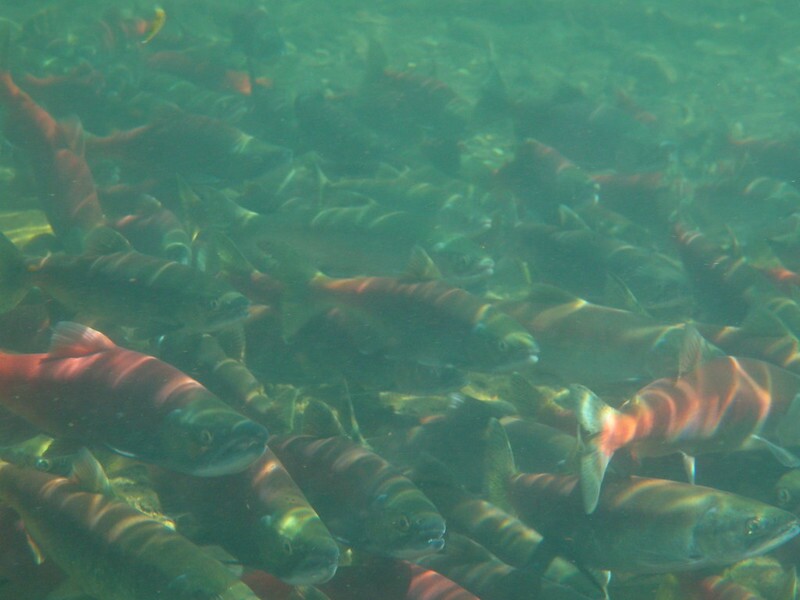
There are two types of gas bladders: physostomous and physoclistous. Physostomous gas bladders are attached to the gut. Fish, like gar, lungfish, and salmonids, with this type of bladder, swallow air and push it into the gas bladder to inflate it, which means they need access to the water’s surface and are typically found in shallower waters. Physoclistous gas bladders, on the other hand, are not attached to the gut. Instead, these bladders are inflated and deflated with help from special structures like the rete mirabile and gas gland, which diffuse gas from blood into the gas bladder and vice versa. Fish with physoclistous gas bladders include wrasses, perch, and snappers.
While a physoclistous gas bladder may sound like the better option, as fish with these bladders do not need to surface to fill it, the process of changing buoyancy is slower through diffusion, predisposing fish hooked in deep waters to barotrauma. Barotrauma is a systemic injury that fish can experience when undergoing rapid changes in pressure. Alternatively, fish with physostomous gas bladders reduce their risk of barotrauma by quickly burping out air when reeled up to the surface by anglers.
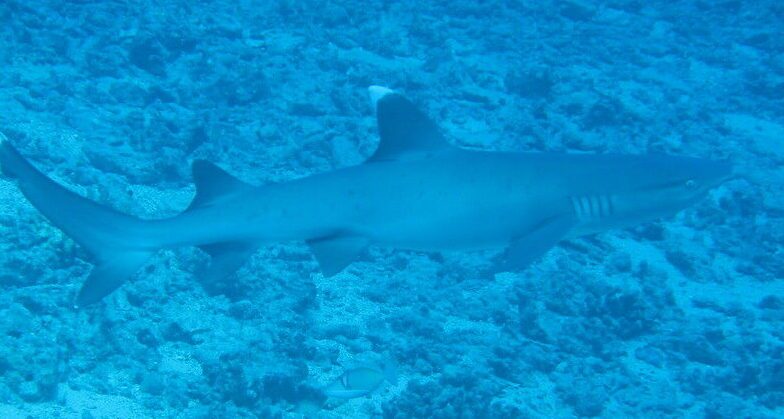
As with all physiological adaptations, there are some fish that go against the grain. Many fishes lack a gas bladder entirely. Some of these fish lost their gas bladders through adaptations to their lifestyles, such as elasmobranchs and bottom-dwelling fishes like sculpins. Swimming is more difficult without a gas bladder, contributing to the characteristic swimming style of sculpin which exhibit short bursts of swimming, giving them a characteristic appearance of “hopping” as they move. Elasmobranchs, or sharks and rays, do not have gas bladders. Instead, they have fatty livers, which are less dense than seawater, preventing them from sinking. The chicken of the sea, tuna, maintains its position in the water column through continuous swimming. Since tuna already need to swim constantly to breathe, this approach to regulating their position in the water column is not an additional energetic expense. Ocean sunfish also lack a gas bladder and, instead, have a unique water-rich gelatinous layer of tissue below their skin that allows them to be neutrally buoyant. This tissue is what allows these fish to travel between the ocean’s surface and depths up to 600 meters in search of food.
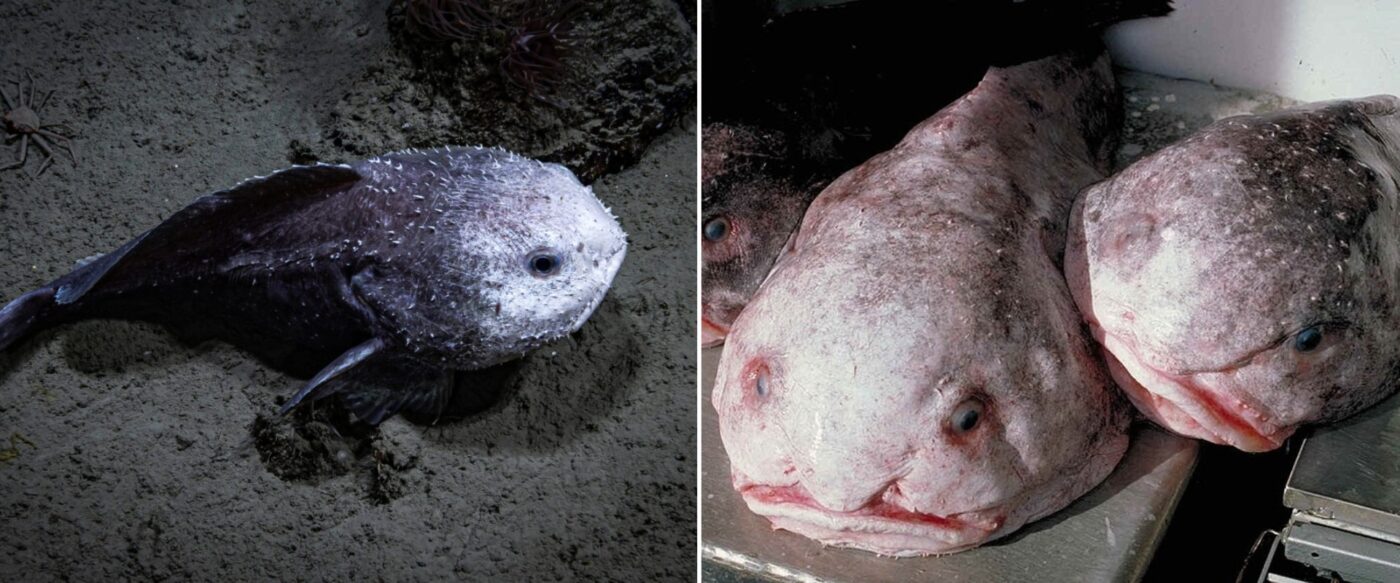
Gas bladders help fish maintain their position in the water column, but what allows fish to live in high-pressure depths without structural collapse? Most deep-sea fishes do not have gas bladders, as these air-filled structures would implode at such deep depths. The blobfish, unlike surface fishes, lacks a rigid bone structure and is largely held together by the water pressure around them, causing them to turn into a pile of mush when they are pulled to the surface. Some fish, like the Mariana snailfish, documented at over 8,300 meters below sea level (nearly the height of Mt. Everest), even have specialized molecules that help maintain cellular membrane and protein structure so they don’t get crushed by the pressure.
Fish face several stressors which can make survival difficult, including existing in high pressure environments, and traveling in and out of them. Very few organisms can live under a pressure 800 times the amount that we experience at sea level, yet fish have adapted strategies and physiologies to thrive at these depths.
This Fish Report is part of the ongoing Fish Physiology Series, where we highlight some of the important physiological characteristics that enable fish to survive, persist, and thrive in aquatic environments on an ever-changing planet. Subscribe to the Fish Report and follow these posts to learn more about fish physiology!
Header Image Caption: Fish have adapted many strategies and physiologies to thrive at various depths and pressures.