

Monday March 30, 2026
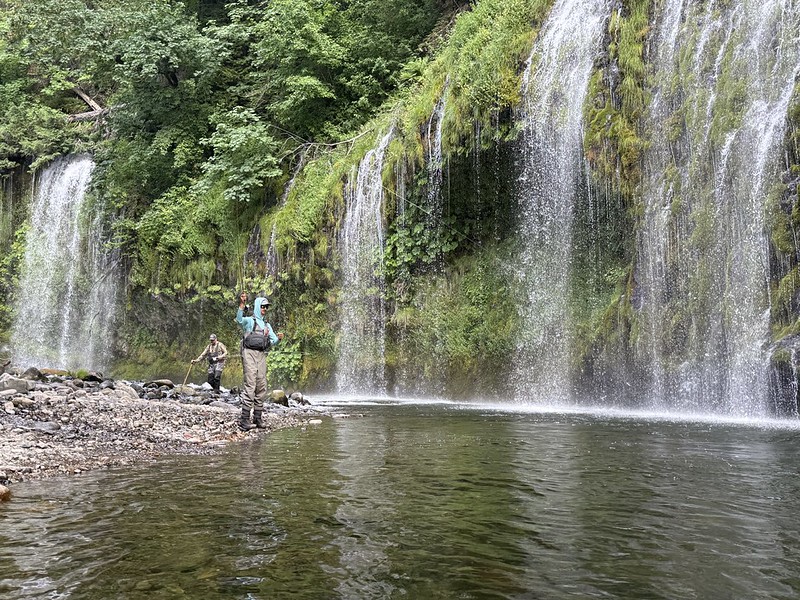
Have you ever volunteered to help local scientists, participated in a census like the Backyard Bird Count, or used an app to identify a critter? If so, you’ve participated in citizen science. Citizen science allows researchers to work with the public to collect datasets on anything from monarch butterflies to coral bleaching—even faraway galaxies! Given the popularity of recreational fishing, anglers (and other fish-lovers) can lend their unique skills and perspectives to fish-focused citizen science. Here, we’ll explore some examples of how angler participation helps drive ongoing fisheries research.
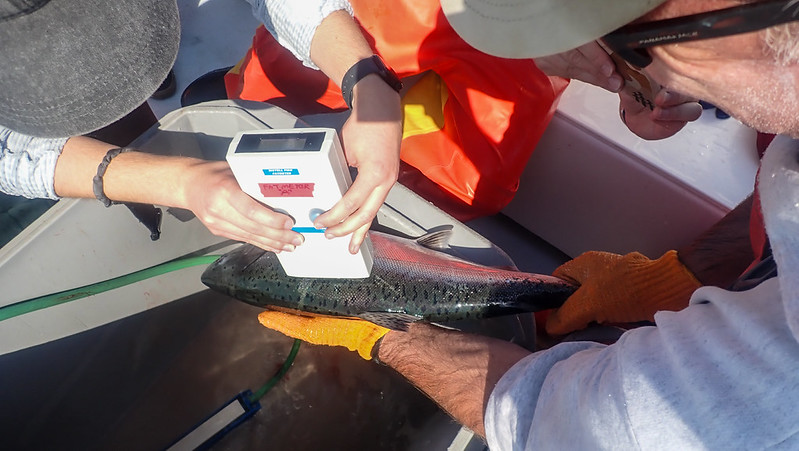
Angler participation is particularly important for monitoring recreational and commercial fisheries. For example, the California Department of Fish and Wildlife (CDFW) collects heads from hatchery-origin salmon harvested by anglers at sea during salmon fishing seasons. The heads of these adipose fin-clipped salmon contain a tiny tag that tells scientists the fish’s hatchery of origin. These data inform hatchery practices and support California’s struggling salmon populations.
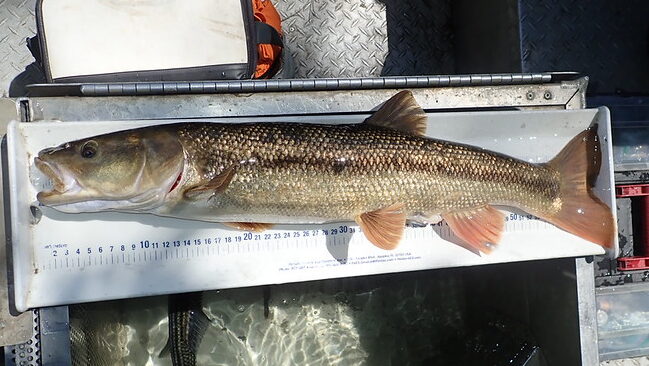
Sometimes a rod and reel are the best tools for the job. Often referred to as “hook-and-line sampling”, fishing is a useful method when conditions, habitat features, or fish behavior make other sampling methods difficult. In these cases, scientists often turn to recreational anglers for help. One well-known example is the Northern Pikeminnow Sport-Reward Program. Started in 1991, the program offers cash rewards to anglers for removing native northern pikeminnow from the Columbia and Snake rivers in Oregon and Washington. The goal is to reduce predation risk of northern pikeminnow on migrating juvenile salmon and steelhead by reducing the number of predators in these systems. The cash rewards are a strong incentive, with over 150,000 fish removed, and the highest earning angler making over $159,000 in 2025.
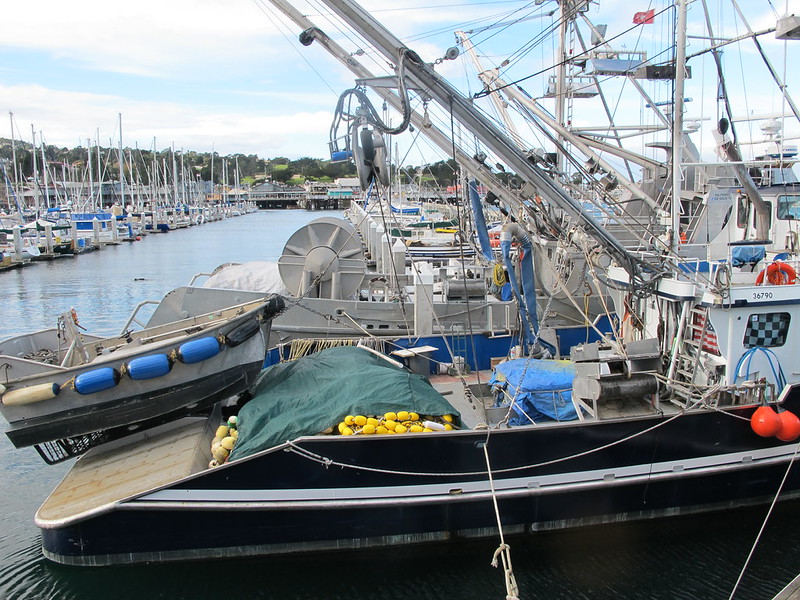
Along California’s coast, the California Collaborative Fisheries Research Program (CCFRP) brings together volunteer anglers, commercial fishing crews, and researchers to monitor fish stocks in Marine Protected Areas (MPAs). Not only does this provide critical insight into the health of our oceans, but it also strengthens the relationship between fisheries researchers and the people who depend on properly managed fisheries. Surveys of anglers who volunteered with CCFRP showed that their perception of MPAs and resource management improved after participation in the program. Creating transparency and engaging local communities improves public perception of fisheries management, which in turn makes it more successful.
As online platforms like iNaturalist become more widespread, scientists are recognizing them as valuable data sources. These large observational databases can be extremely useful for monitoring species distributions and range shifts in the face of rapid climate change. A recent study of Australia’s coastal marine species analyzed a decade of data from several online observation platforms, discovering range extensions for 25 species. These extensions were previously unreported, highlighting the value of citizen science platforms as early warning systems for climate-driven range shifts. The iNaturalist platform has also been useful for studying species richness, a measure of biodiversity, and the occurrence of rare or cryptic (hard to find) species. Opportunistic observations by the public documented significantly more species—including a higher proportion of cryptic species—than structured surveys on Australian reefs. This was due to the sheer volume of public observations by local divers, snorkelers, and fishermen. Another study of South American fishes found that iNaturalist observations recorded by anglers included 151 additional species, which increased measures of species richness by around 33%. When combined with traditional methods, public observations can contribute to a clearer picture of the underwater world.
When it comes to monitoring and managing fisheries, many hands make light work. Citizen science and angler participation offer strength in numbers that can help scientists cover more ground, collect extra data, and respond faster to changes. This is especially important in the face of unprecedented changes in climate and aquatic ecosystems. It also builds strong relationships between scientists, fisheries managers, and public stakeholders who all rely on successful management. When scientists and anglers work together, mutual conservation goals can be realized.
This post was featured in our weekly e-newsletter, the Fish Report. You can subscribe to the Fish Report here.
Header Image Caption: Also known as hook-and-line sampling, fishing can be a useful sampling method to capture or survey fish.