

Monday March 9, 2026
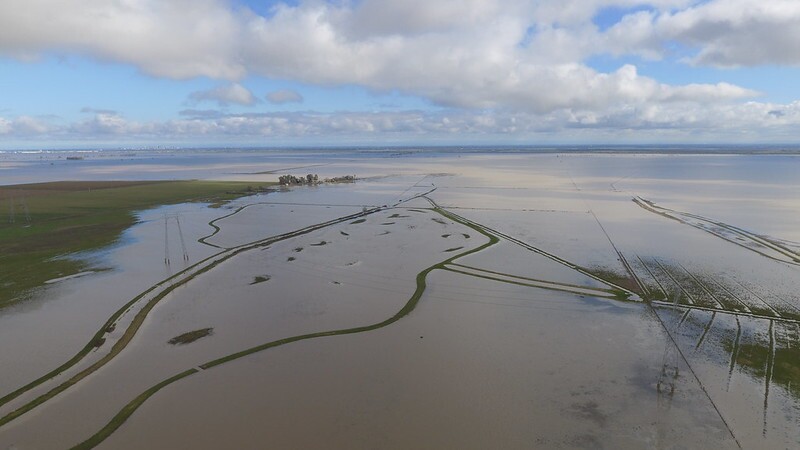
As humans, our lives are like puzzles, occurring in a variety of places that all shape us. The same is true for fish which often move across a patchwork of environments over the course of their lives. Scientists refer to these patchworks as habitat mosaics—networks of habitats that provide a variety of resources. Along a salmon’s migration path, these mosaics can include upstream tributaries, mainstem rivers, floodplains, estuaries, and the ocean. This migration path is often erroneously thought of as a direct pipeline, with all salmon growing in natal streams before shooting downstream to the ocean. However, a simple pipeline may not have been able to support the large numbers of salmon historically present in our rivers (think salmon runs “thick enough to walk across their backs from shore to shore”). So how did the environment support all those salmon, and where do habitat mosaics fit into the picture?
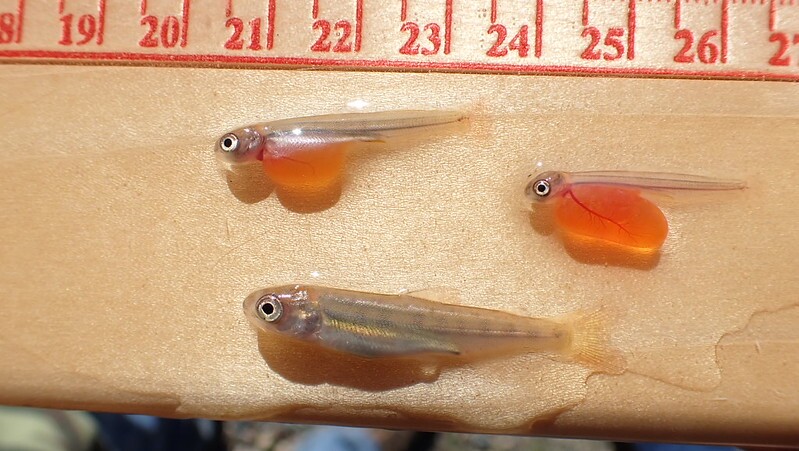
Some researchers suggest that studying habitat mosaics might help answer this question because of their role in supporting salmonid resilience. Biological resilience is the ability to resist or recover from perturbations, such as those caused by climate change. At its most basic, resilience requires two factors: abundance and diversity. By linking a variety of suitable habitats, mosaics provide young fish with space to spread out and more food for growth. The limited carrying capacity of upstream natal grounds is alleviated when some individuals move away, reducing competition for resources. This variety also gives salmon a “choose your own adventure” experience, where they can occupy different habitats for different durations, experiencing unique timing and growth rates. This gives rise to a diversity of life histories—the sequence of events during an organism’s life that shape its survival and reproduction.
Habitat mosaics are key for the survival of California’s Central Valley spring-run Chinook salmon. In a 2024 study, researchers investigated the impacts of habitat restoration and mosaics on the resilience of the spring-run stock complex. This complex is made up of populations in Mill, Deer, and Butte creeks, three tributaries of the Sacramento River. In the 1990s, restoration efforts connected Butte Creek to Sutter Bypass, which acts as critical floodplain habitat during wet years. Unlike Butte Creek, Mill and Deer creeks do not connect to floodplain habitat except in very wet years. They instead provide cool, high-elevation refuges until fish prepared to emigrate. Using adult return surveys between 2004 and 2020 and otolith isotope analyses from 2003 to 2018, the researchers found a 2000% increase in salmon abundance across the stock complex. Most of that increase was within the Butte Creek population due to improved access to food and rearing habitat in Sutter Bypass.
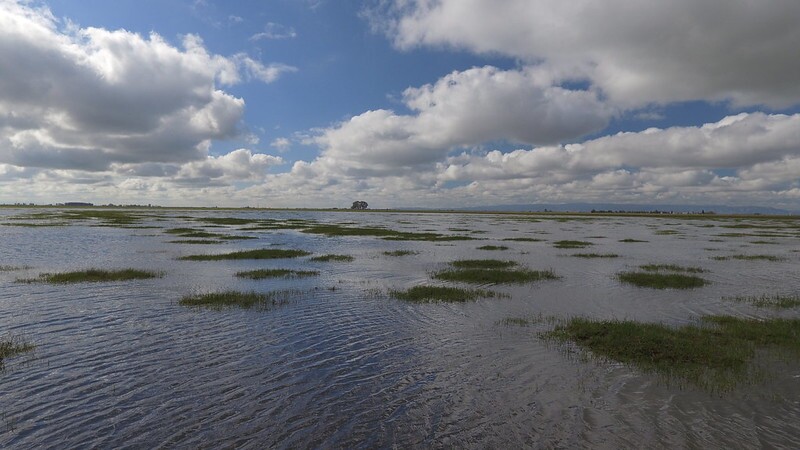
However, this boost in abundance was not matched by a boost in diversity. The Butte Creek population exhibited a lower diversity of life history strategies than Mill and Deer Creek salmon, uniformly outmigrating from natal streams earlier and at smaller sizes. Alternatively, Mill and Deer Creek salmon showed a range of outmigration strategies including the yearling phenotype, characterized by over-summering in cool refugia upstream before moving out once temperatures drop in the fall. But, because Mill and Deer Creek abundances remained low and Butte Creek was dominated by a single phenotype, the researchers discovered an increase in synchronization. This points to an across-population reduction in diversity and, therefore, stability.
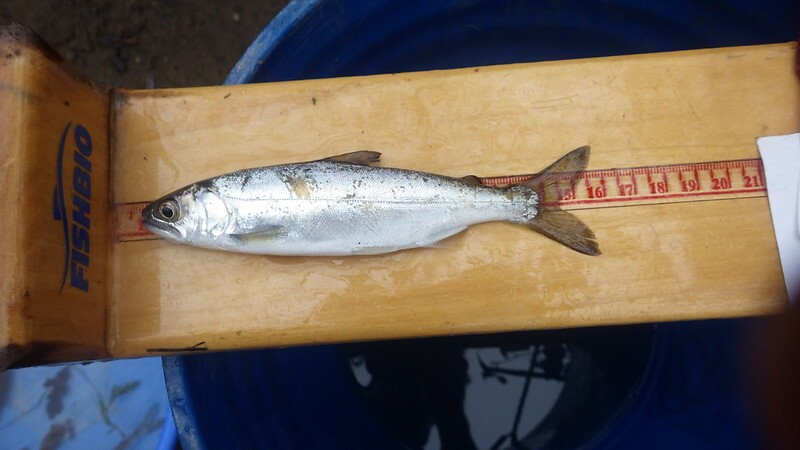
Restoration of critical habitats, like floodplains, can bring us closer to historic abundances by increasing the food and space necessary for young salmon to grow. But when restoration efforts address only a single life history strategy, populations can lose critical diversity and remain vulnerable to environmental change. This is especially concerning in the face of warming temperatures and drought in the Central Valley. During drought years, floodplains disappear, and the Butte Creek population crashes. But the yearling phenotype in Mill and Deer Creeks can beat the heat in cool, deep pools upstream, contributing disproportionately to the survival of the stock complex. The key to restoring stability therefore lies in creating and maintaining viable habitat mosaics that support multiple life history strategies within and across populations.
From Alaskan sockeye fisheries to coho and Chinook salmon in California, complex networks of habitats can “re-awaken” alternate phenotypes. Their diversity can help explain historic abundances and protect current populations from extinction. Restoration efforts that target habitat mosaics in the right place at the right time can complete the puzzle of salmonid survival.
This post was featured in our weekly e-newsletter, the Fish Report. You can subscribe to the Fish Report here.
Header Image Caption: Salmon have lost access to habitat mosaics that supported historic numbers and phenotypic diversity.