

Wednesday August 20, 2025
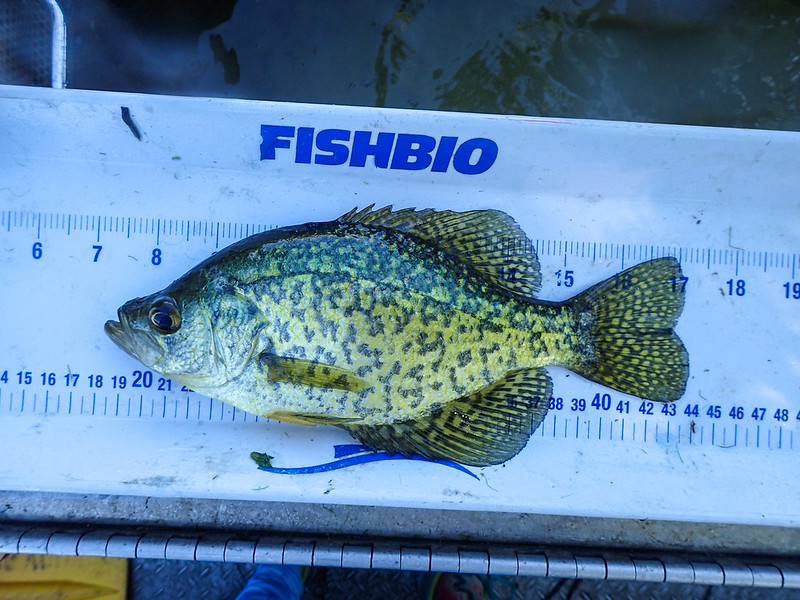
Common names: Black Crappie
Scientific name: Pomoxis nigromaculatus
Native range: Midwestern and Southern United States
Status: Least Concern
Habitat: Slow moving, warm freshwater habitats
The black crappie (Pomoxis nigromaculatus) is native to freshwater ecosystems in the midwestern and southern United States, as well as parts of Oklahoma, Texas, and Pennsylvania. Outside of their native range, black crappie have been observed in all other continental states. This species is characterized by a flattened, pancake-like appearance with large, rounded dorsal and anal fins. They have irregular blotches along their bodies and seven to eight dorsal spines. The species can reach up to 19 inches and live as long as 15 years. These fish are nest guarders, with the males guarding nests for several days or until the eggs hatch. Smaller black crappie mainly consume zooplankton and larvae, while larger fish primarily consume other small fishes. Much of their presence outside of their native range has been attributed to intentional stocking for sport fishing.
Fun Fact: Large females can lay up to 150,000 eggs and can spawn with multiple males.