

Wednesday October 1, 2025
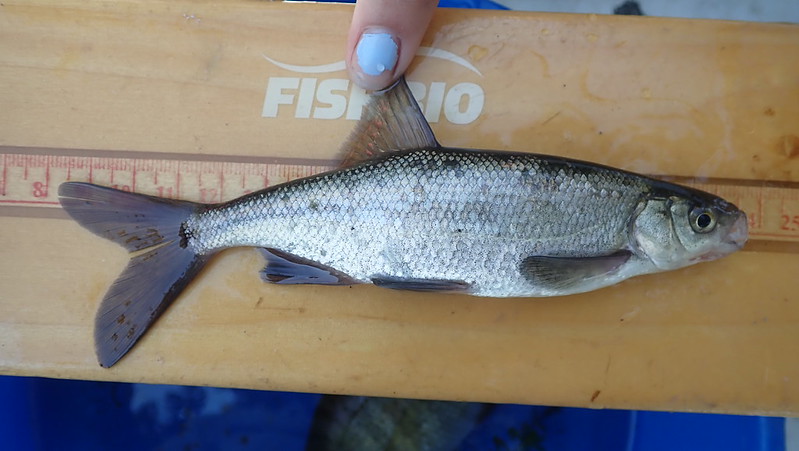
Common names: Hitch
Scientific name: Lavinia exilicauda
Native range: Central California
Status: Least Concern
Habitat: Slow freshwater
First described in 1854 from the Sacramento River, hitch (Lavinia exilicauda) are a member of the family Leuciscidae found primarily in central California. Adults are silver in color and can grow up to 36 cm in total length. Juveniles are darker and have a black spot at the base of their tale which fades as they mature. The species is known for its forked caudal fin and upturned mouth. Young hitch typically inhabit shallow, vegetated areas before moving to deeper waters as they mature. Hitch are omnivores, feeding on algae, zooplankton, crustaceans, and insects. Females generally reach sexual maturity in 2 to 3 years, while males may mature slightly earlier, in 1 to 3 years. Spawning occurs from February to July, typically in tributaries, and females can produce between 3,000 and 63,000 eggs. The average lifespan is 4 to 6 years. This species is the only member of the genus Lavinia, and there are three recognized subspecies: the Clear Lake hitch, the Monterey hitch, and the Sacramento hitch. Because of declining numbers, the Clear Lake hitch subspecies was listed as threatened in 2014 under the California Endangered Species Act. Habitat alterations, drought, poor water quality, and non-native species have all contributed to this subspecies’ decline.
Fun Fact: Hitch and the California roach (Hesperoleucus symmetricus) have been known to hybridize but are considered separate species because of differences in appearance and genetics.