

Friday September 4, 2026
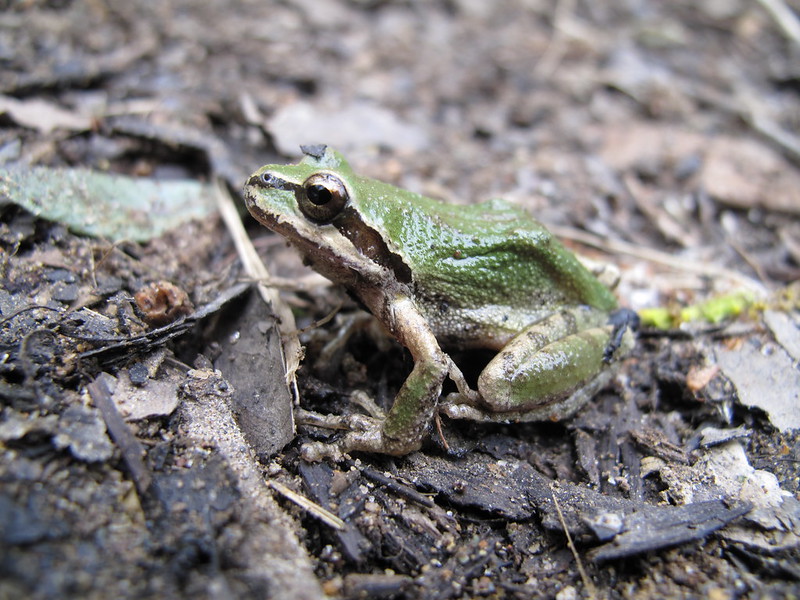
Common names: Sierran Treefrog
Scientific name: Pseudacris sierra
Native range: Pacific and western regions of North America, from central California to British Columbia and east to Nevada and western Idaho, and Montana
Status: Some Concern
Habitat: Forests, grasslands, farmlands, and many environments near water sources.
The Sierran treefrog (Pseudacris sierra), formerly considered a subspecies of the Pacific treefrog, is a small amphibian native to the Pacific Northwest and parts of California, Nevada, and Idaho. It typically grows between 0.75 and 2 inches in length and has smooth skin that varies in color from green to brown or even gray, allowing it to blend into its surroundings. A distinctive dark eye stripe runs from the snout through the eye to the shoulder. This species is highly adaptable and found in a variety of habitats, including forests, grasslands, and wetlands, often near streams or ponds. It is an excellent climber and jumper due to its long, powerful legs and adhesive toe pads that help it grip surfaces. Sierran treefrogs are known for their loud, distinctive “ribbit” call, which is often used in movies as the generic frog sound, even in areas where the species is not found. Their call can vary depending on the purpose of their communication. They breed in seasonal pools and lay eggs in clusters attached to vegetation. Tadpoles develop quickly, undergoing metamorphosis in a few months to adapt to drying water sources.
Fun fact: The Sierran treefrog can change color depending on its environment.