

Wednesday October 15, 2025
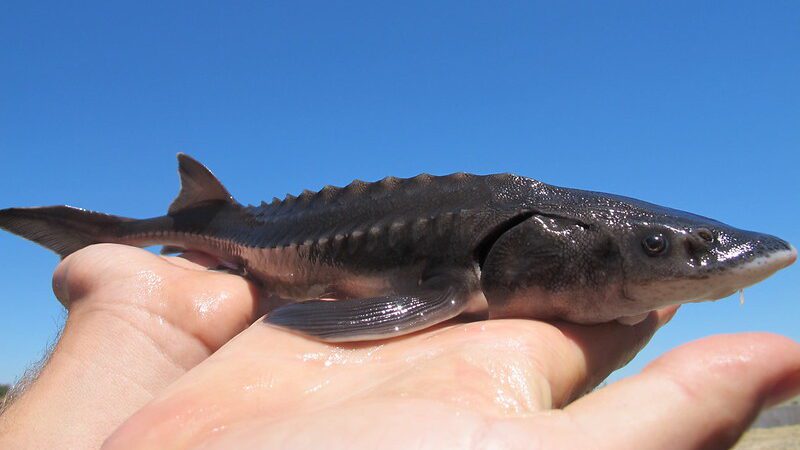
Common names: White Sturgeon
Scientific name: Acipenser transmontanus
Native range: Mexico to Alaska
Status: Vulnerable
Habitat: Rivers and ocean
The white sturgeon (Acipenser transmontanus) – one of many sturgeon species harboring a vulnerable status – is native to marine and freshwater ecosystems and can be found from northern Baja California to Alaska. White sturgeon have blunt, round noses with four barbels that are lined up closer to the tip of their snout than their mouth, an important identifying feature among sturgeon. They have white bellies and gray-brown backs and can grow to massive proportions. Historical records cite a fish that was 20 feet long, but modern records are closer to 12 feet. This species is slow growing and long lived, often reaching over 100 years of age and taking between 10 and 19 years to mature. White sturgeon spend most of their lives in estuaries and move large distances to freshwater spawning grounds to reproduce, though some fish have made even longer migrations in the ocean along the coast. Compared to their closely related cousins, the green sturgeon, white sturgeon likely have a shorter marine residence. Several human-caused factors like habitat fragmentation and alteration, overharvesting, and pollution have contributed to the decline of these prehistoric individuals.
Fun Fact: White sturgeon holds the moniker of the largest freshwater fish in North America.