

Monday July 6, 2026
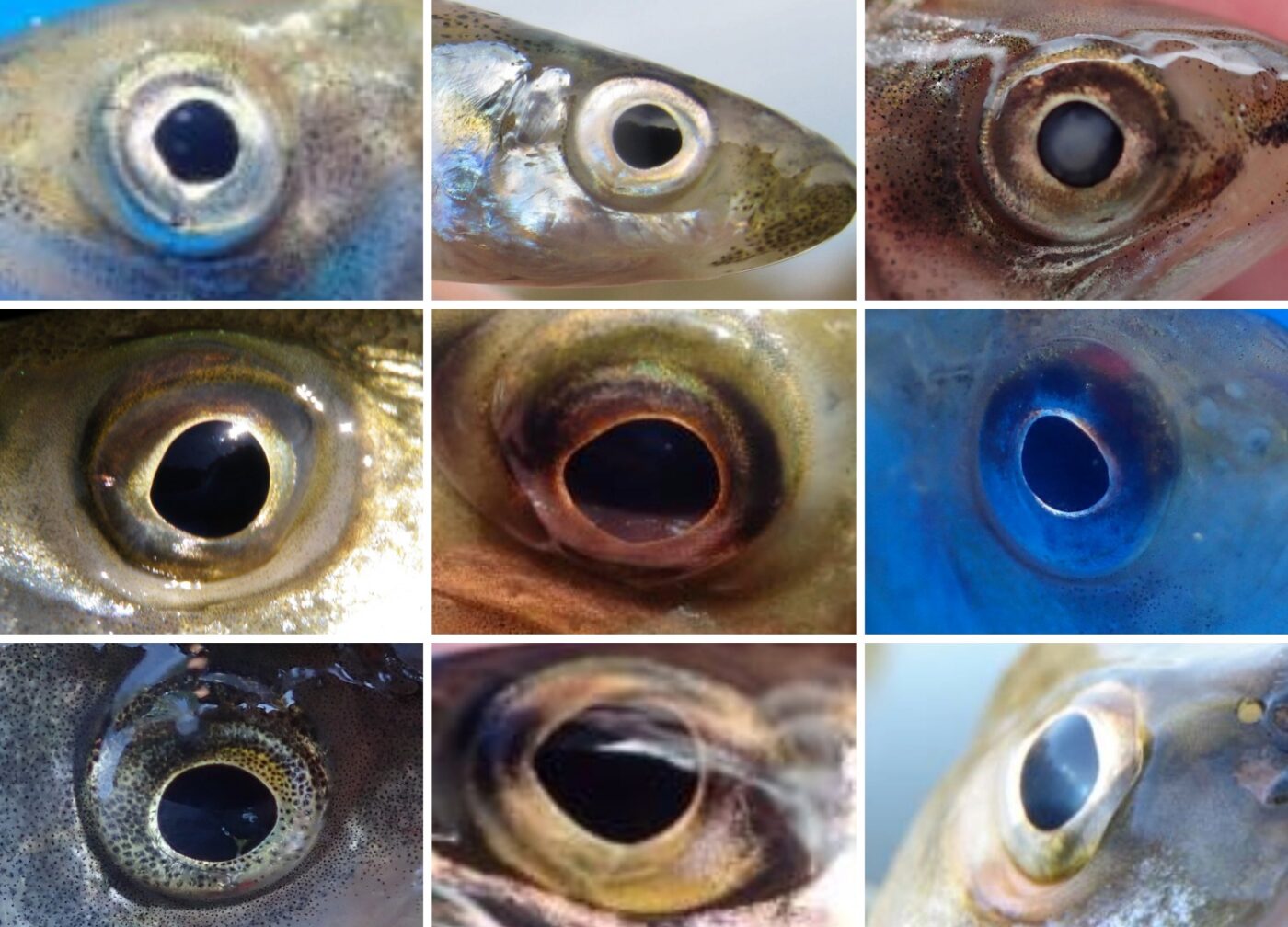
The primitive fish eye evolved nearly 500 million years ago—about 250 million years before dinosaurs roamed the Earth. Since they first appeared, fish eyes have experienced rapid modification across this diverse group of species. Not only did the primitive fish eye set the stage for sight in fishes, it also set the foundation for the basic anatomy of all vertebrate eyes—including ours!
Humans and fish share a similar eye structure with a lens, cornea, pupil, and optic nerve. In this structure, light passes through the protective cornea into the pupil. Teleost (ray-finned fishes) and lamprey pupils have fixed diameters, while elasmobranchs (sharks and rays) can change the size of their pupils to control how much light reaches the sensory cells on the retina, called rods and cones. Rods are sensitive to low light and help fish see in dim conditions, while cones detect different wavelengths of light, allowing fish to perceive the color spectrum. Fish do see in color! Information perceived by rods and cones then travels to the brain through the optic nerve.
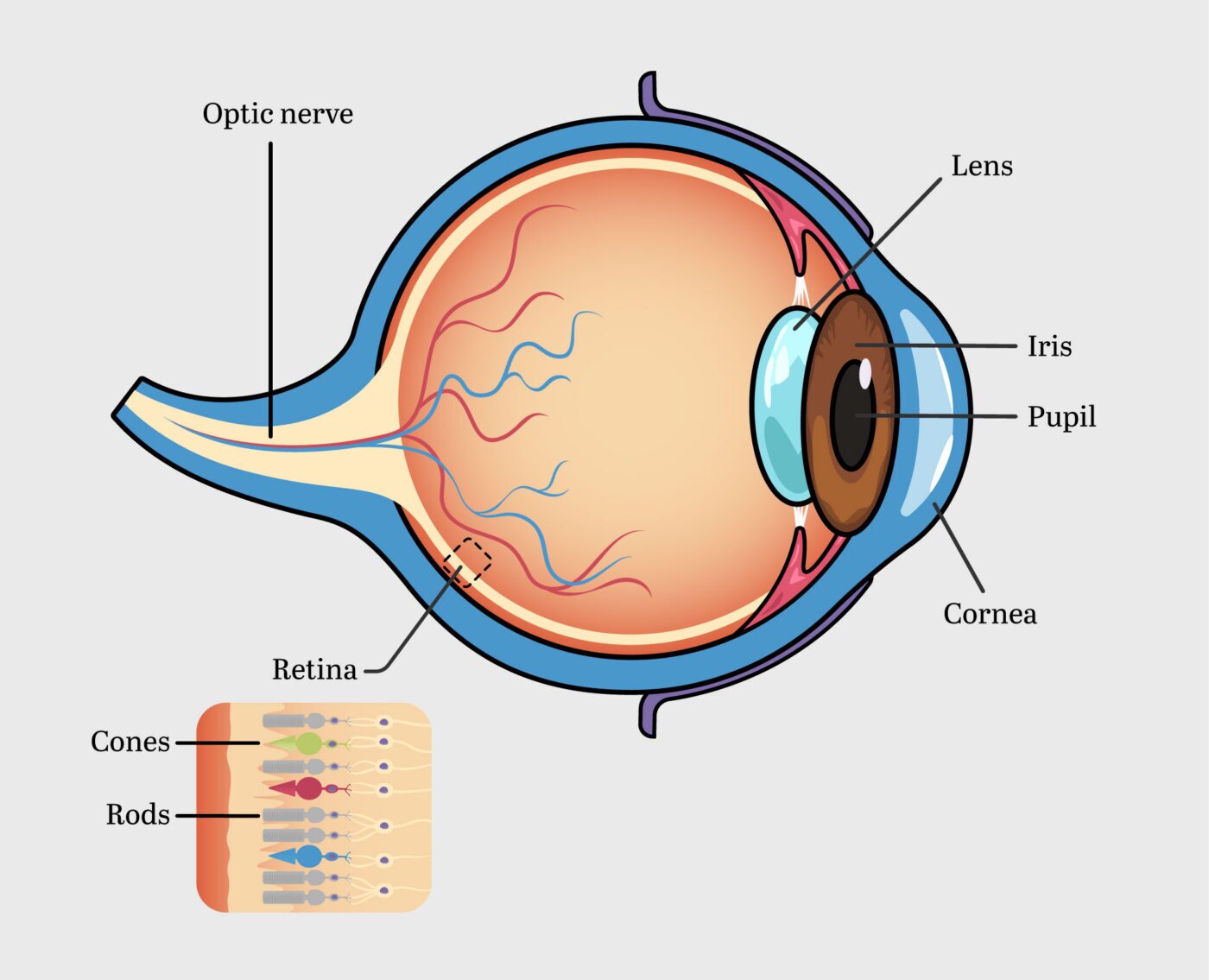
Fish vision is affected by factors like where a fish lives, when it is active, and its age. Habitat depth typically correlates with how many types of rods and cones a fish has, as different depths have different amounts or types of light. Shallow-habitat fish have more cones that pick up red-yellow light, deeper-dwelling fishes have more green-blue light sensitive cones, and deep-sea fishes mainly have blue light sensitive cones. Fish active during the day have a higher cone-to-rod ratio than fish mainly active in the mornings and evenings—some deep-sea fishes lack cones entirely. The eye can change with fish as they age to accommodate changes in habitat use. Anadromous fishes, which move from shallower freshwater habitats to the deeper ocean as they mature, undergo a shift from primarily red-yellow to blue-green light receptors.
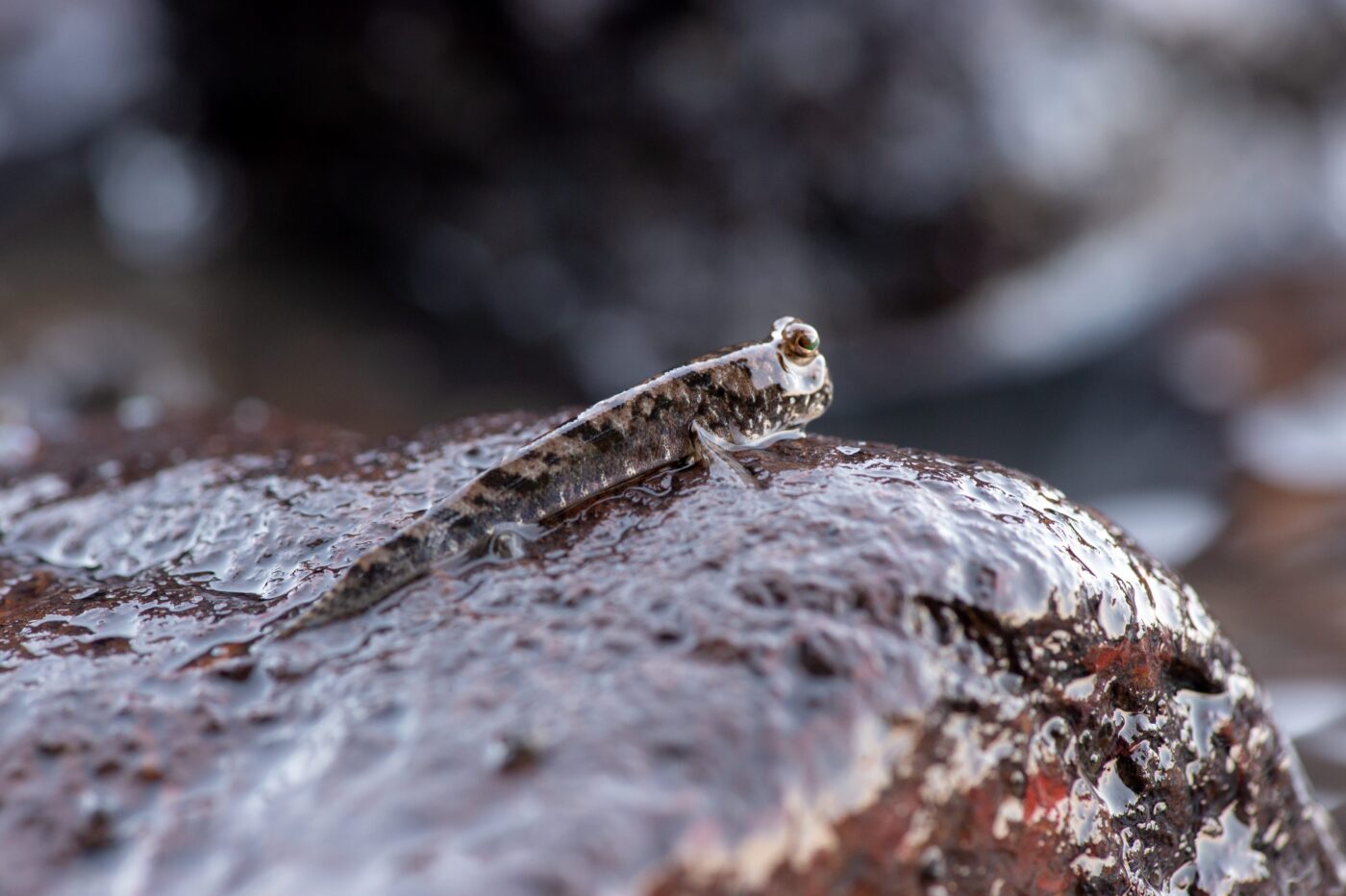
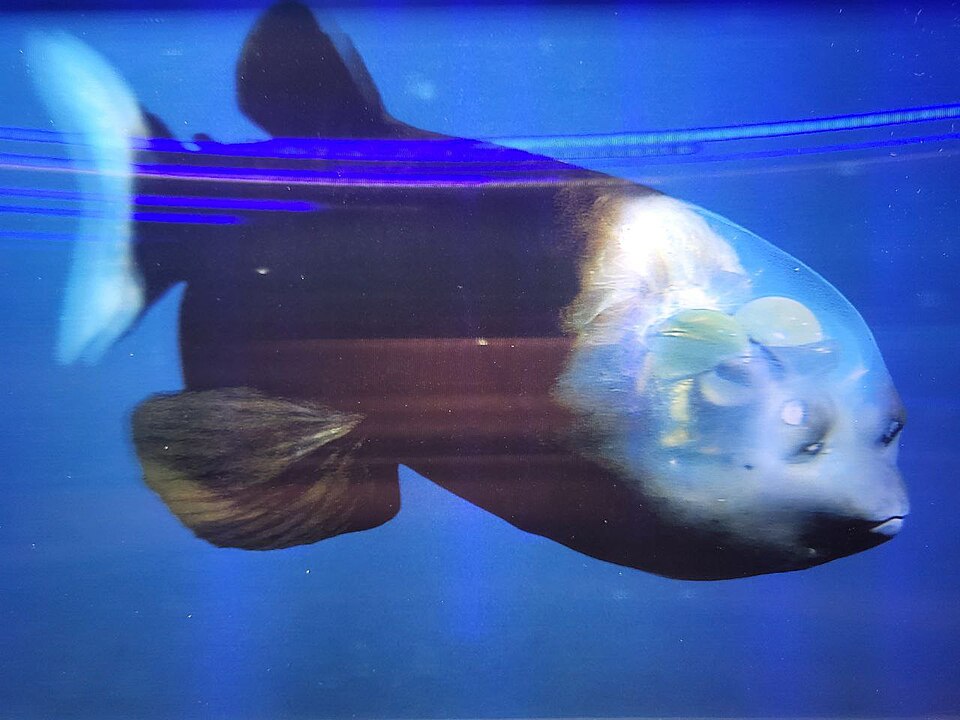
Many fish living in unique habitats have specialized eyes to improve their sight. Amphibious mudskippers (a species that makes pilgrimages on land) have eyes atop their heads to provide a panoramic view of their environment and see terrestrial and aquatic predators. They can also blink—unlike their fully aquatic counterparts—by sucking their eyes into their head cavities to rewet them while walking on land. Anableps anableps, a South American fish, has similar eye placement to that of mudskippers but also evolved dual pupils. This means that each of their eyes can see above and below the water simultaneously, making them effective predators of aquatic and terrestrial prey and giving a whole new meaning to “four eyes”. On the opposite end of the depth spectrum, deep-sea fishes have evolved a variety of visual strategies to deal with low-light conditions. Some fish, like the barreleye family, have exceptionally large, upward facing barrel-shaped eyes to view predators and prey above them. The Pacific barreleye (Macropinna microstoma) even has eyes that can rotate forwards and backwards, allowing it to see in front of and behind itself. This species also sports a transparent fluid-filled head that provides protection for their eyes when stealing food from stinging jellyfish. The brownsnout spookfish has a unique eye structure that acts like a mirror, allowing it to see both above and below at the same time.
Eyes allow fish to perceive and outmaneuver predators and prey, but they expend a lot of energy and can be costly for those living in low-light environments. To reduce this energetic demand, many deep-sea fishes in the bathypelagic zone (more than 1000 meters below sea level) evolved small eyes. Other dark-dwelling fishes, like the cave-dwelling Mexican tetra (Astyanax mexicanus), have evolved to be eyeless, with significantly smaller brains and a 30% reduction in energy expenditure compared to surface-dwelling Mexican tetras.
From barreleyes to four eyes, across oceans, lightless caves, and surface waters, fish have seen it all. Eyes shape how fish find food, avoid predators, and navigate their environments, yet maintaining visual systems requires significant energy. Fish have met this challenge with extraordinary diversity, evolving eyes that match their habitats, behaviors, and life histories. Together, these adaptations reveal how vision is a powerful tool for survival in the aquatic world.
Header Image Caption: The diversity of fish eyes reflects the different habitats, evolutionary histories, and adaptations across fish species.
This Fish Report is part of our Sensory Perception miniseries, where we highlight important sensory structures that allow fish to thrive in aquatic environments. You can subscribe to the Fish Report here.