

Monday June 29, 2026
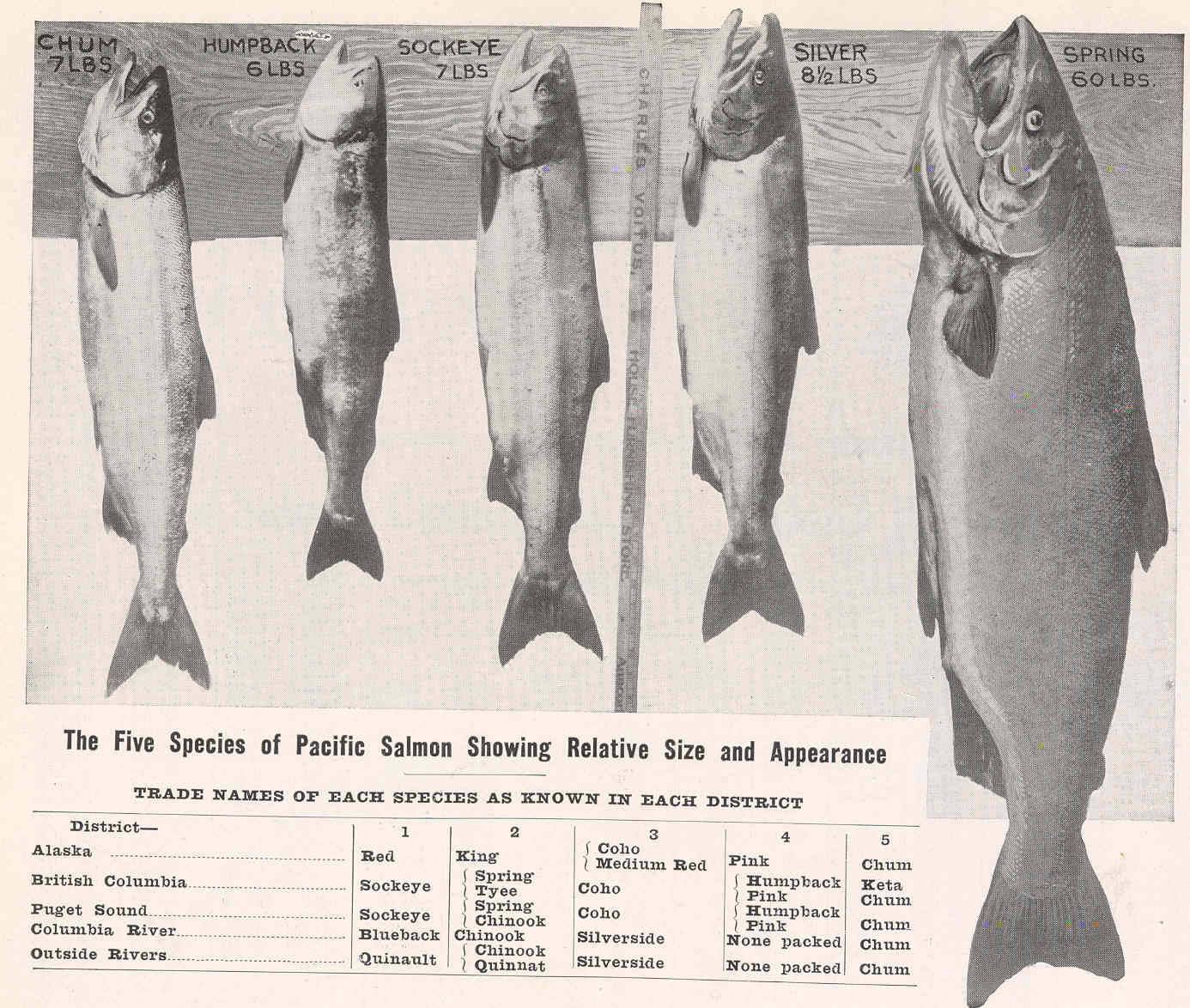
Salmon species have a remarkable range of common, scientific, and colloquial names. Of the seven Pacific salmon species, five are found in North American waters and there are many ways to refer to these fish. Each of those species comes with at least two names attached to it—a Latin name and a common name. However, most of these species go even further with multiple common or colloquial names. Often, these names have significance beyond an identifier because they can give insight into the biology, history, and culture surrounding each species.
Everyone is likely most familiar with the common names of the fish in their area. For the North American Pacific salmon species, the common names that most people often know are Chinook, chum, coho, pink, and sockeye. “Chinook” is derived from the name of the Chinookan peoples—indigenous groups of the Pacific Northwest with deep cultural and economic ties to salmon. Because this name is a proper noun, it is capitalized while the other common names are usually lowercase. “Chum” salmon comes from a Chinook Jargon word that translates to “spotted” or “marked”. The word “coho” is a reference to a Halkomelem (Salish) word, potentially the name of the fish itself. The “pink” salmon gets its name from the color of its meat, which appears pink compared to the more orange-hued flesh of its relatives. “Sockeye” also comes from a (mispronounced) Salish word (Suk-kegh) which translates to “red fish”.
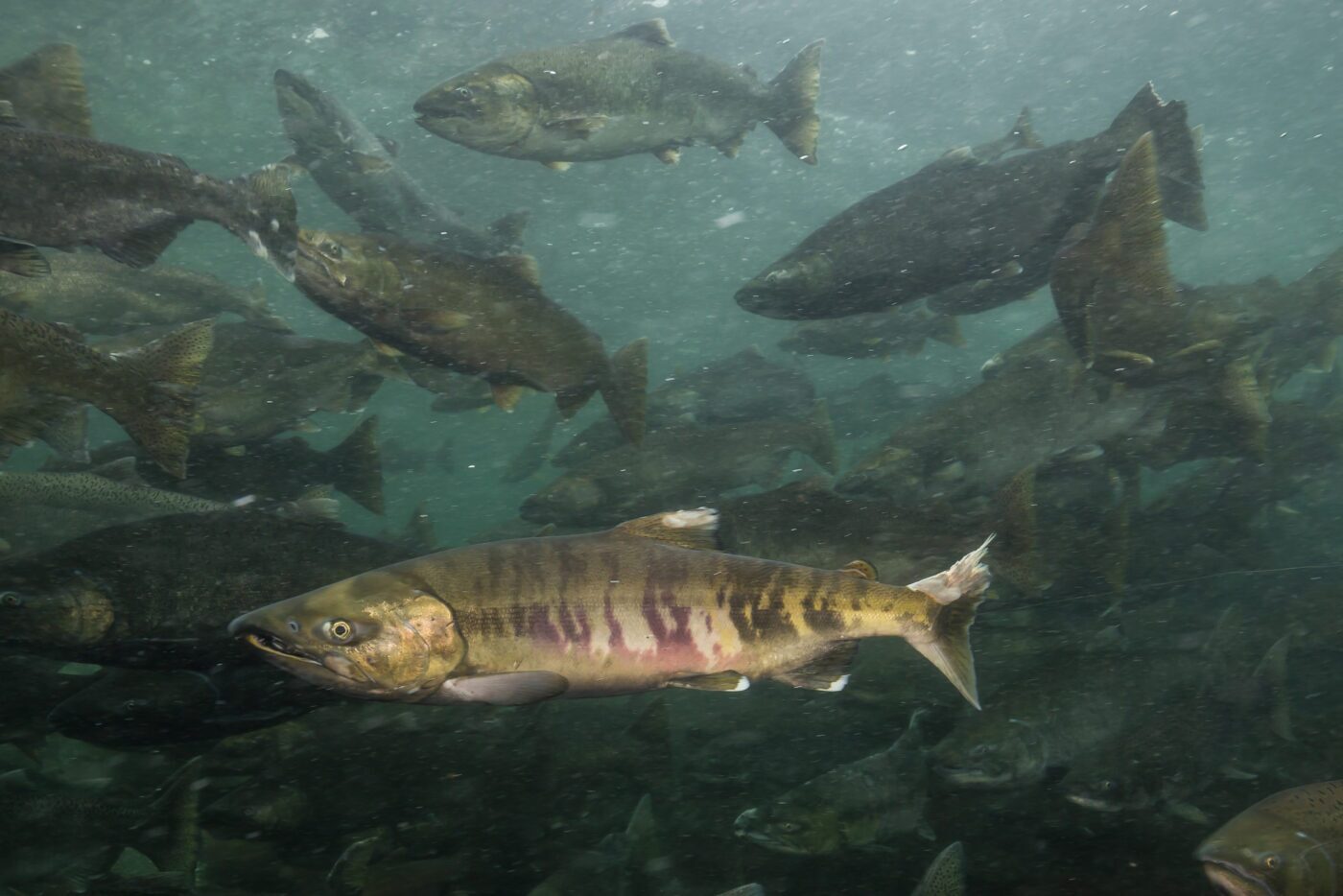
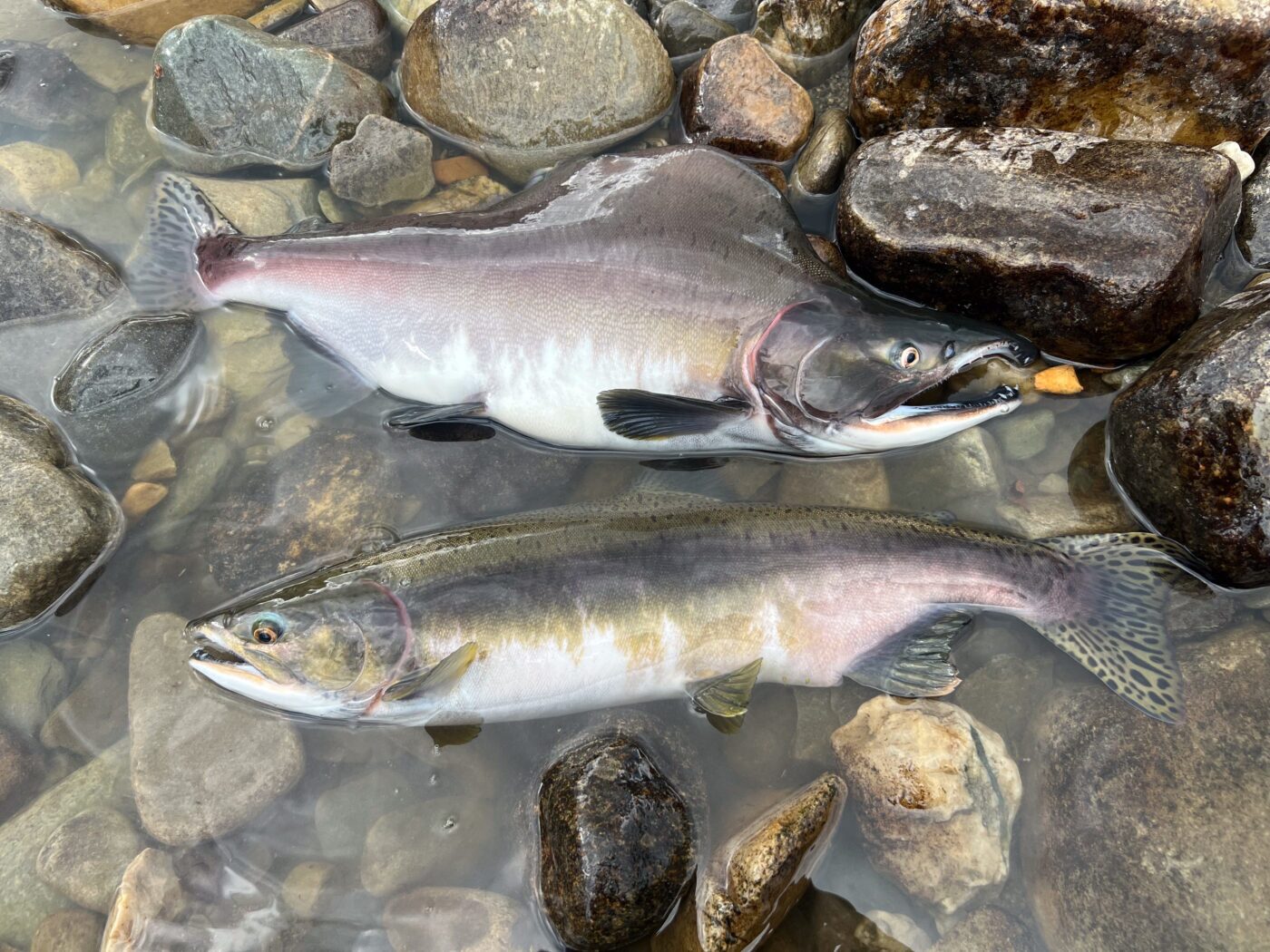
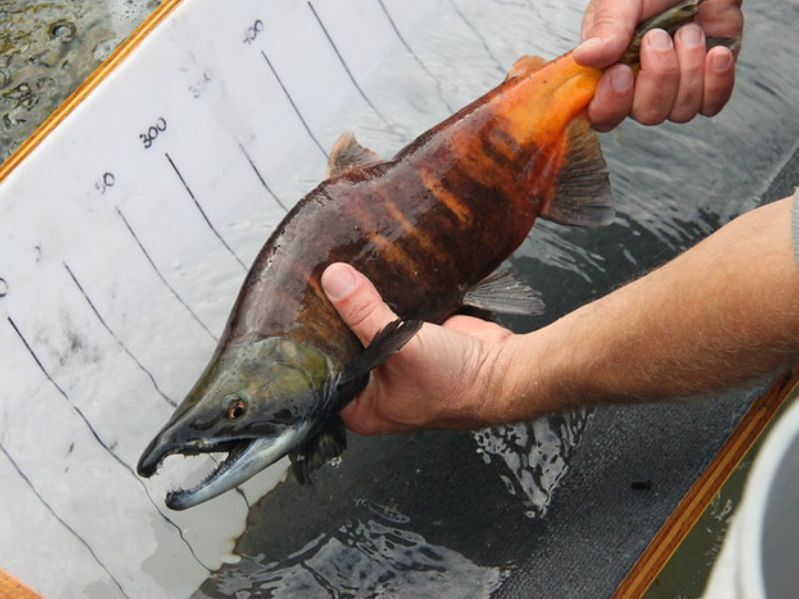
The first name a species is given is its Latin name. These names are important because scientists across the world use them and they do not vary by region. Often scrambled into these scientific names, are clues that describe the species they reference. All Pacific salmon species found in North America are members of the genus Oncorhynchus. This genus name comes from two Greek words—“onkos” and “rhunkhos”—which, when taken together, mean “bent snout,” in reference to the hooked snouts, called “kypes,” that male salmonids develop. The species names of Chinook, chum, coho, and sockeye (O. tshawytscha, O. keta, O. kisutch, and O. nerka, respectively) all come from the Russian names for these species. Similarly, the scientific name for pink salmon (O. gorbuscha) comes from a Russian word that translates to “humpie,” in reference to the characteristic dorsal hump that males develop.
Along with common and scientific names, these fish also come with a host of nicknames. After Chinook, the frequently used common name for this species is king salmon because of the large size of this species. The dark line along the gums of Chinook also gave rise to another, less used nickname, blackmouth. The dog salmon (chum) gets this nickname from the canine teeth that males develop during spawning season. Coho salmon are also called silver salmon in reference to their especially shiny and chrome-like coloration. Pink salmon are often called humpback salmon or “humpies” because of the exaggerated dorsal hump referenced also by their scientific name. Because of their vibrant crimson coloration during spawning, sockeye salmon are also referred to as red fish.
To keep the myriad salmon monikers straight, here’s a convenient memory trick. All five species of North American Pacific salmon have a tie to one of the five fingers on a hand. To start, chum rhymes with thumb. Sockeye goes with the index finger because this is the finger that could be used to poke someone in the eye. The middle finger is the Chinook salmon because the largest species is tied to the largest finger. Silver rings go on your ring finger to remember silver salmon (coho). Finally, and fittingly, pink salmon are represented by the pinky finger.
From Indigenous languages to Greek roots to fisher-originated nicknames, the many names of salmon reflect observations, culture, and science. Learning these names does more than prevent mix-ups; it reinforces connections to the people, places, and traits that define each species. With tools like the five-finger method, even a tangle of names can become a useful guide to understanding the diversity of Pacific salmon.
Header Image Caption: Most salmon species can be referred to by multiple different common names. Credit: Freshwater and Marine Image Bank
This post was featured in our weekly e-newsletter, the Fish Report. You can subscribe to the Fish Report here.