

Monday February 23, 2026
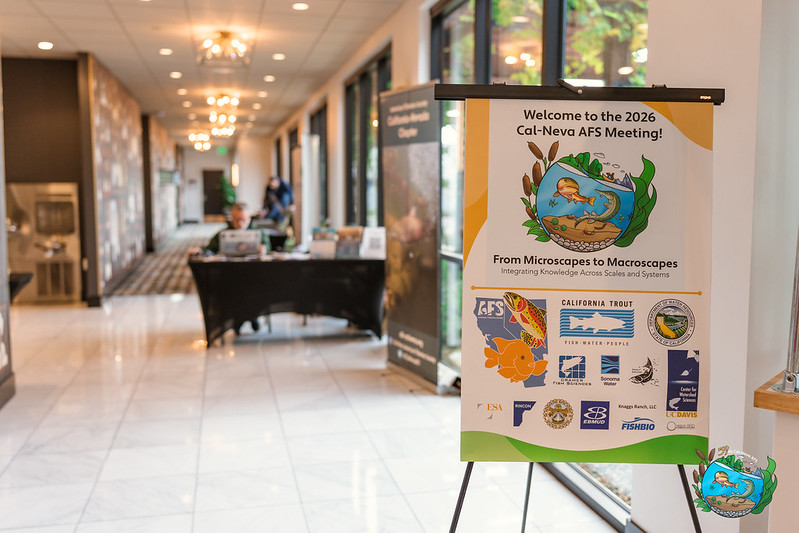
The California-Nevada Chapter of the American Fisheries Society held its meeting in Chico, California this February, and FISHBIO was excited to support and participate in this event. From February 9 to 13, Hotel Katerina was buzzing with fisheries fanatics attending various workshops, field tours, sessions, and social events. Under the theme “From Microscapes to Macroscapes: Integrating Knowledge Across Scales and Systems,” the conference featured 45 talks and 23 posters covering a wide range of topics. The subject matter spanned the ecological spectrum from the microscopic scale of eDNA and pathogens, all the way up to watershed management with speakers from California, Nevada, Oregon, and even Pakistan. Cal-Neva AFS 2026 brought together a diverse mix of tribal leaders, academics, students, and industry and agency professionals to discuss fisheries challenges that are pervasive throughout the field.
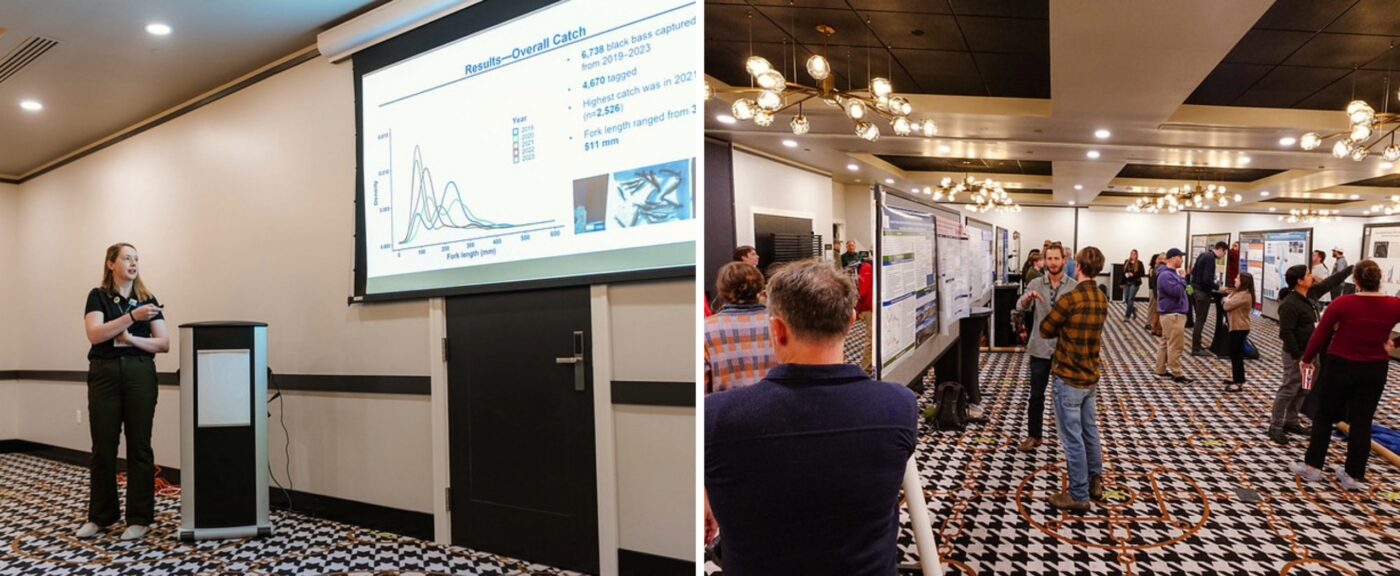
Honing in on the “From Microscapes to Macroscapes” theme, nine sessions explored topics at a variety of scales. Starting small, the “DNA & eDNA” session discussed recent research in molecular technologies, and scaling these methods to monitor entire landscapes. Several sessions, such as “Recovering Lahontan Cutthroat in the Walker Drainage” and “Spring-Run Salmon and SJR Salmon Restoration”, focused on specific species in important areas. On the largest scale, sessions like “Estuarine and Marine Science” and “Habitat, Flow, and Passage” covered wide ranges of topics, with some insights shared by international presenters. One session, “Feather River Faring,” had a suite of presentations from the California Department of Water Resources. Their talks shared insights into topics like using acoustic tags to monitor salmonid survival and the effectiveness of video counting technology over mark-recapture estimates.
This conference brought together many communities, and attendees heard firsthand from members of the Mechoopda, Winnemem Wintu, and Yurok Tribes. Presentations throughout the week emphasized that Tribal nations are not just participants in restoration, but leaders with valuable insights and experience to offer current management practices. This collaborative approach recognizes that bridging traditional knowledge and modern research is the most effective path toward shared goals for resilient fisheries. The future of the field was also on display during the Student Symposium, where ten student presentations highlighted research advancements being led by the next generation of fisheries researchers. One interesting talk from this session—given by Brandi Gross from UC Davis—discussed the use of beaver dam analogs in aquatic management. Preliminary data suggest that these structures help create important habitat for threatened salmonids.
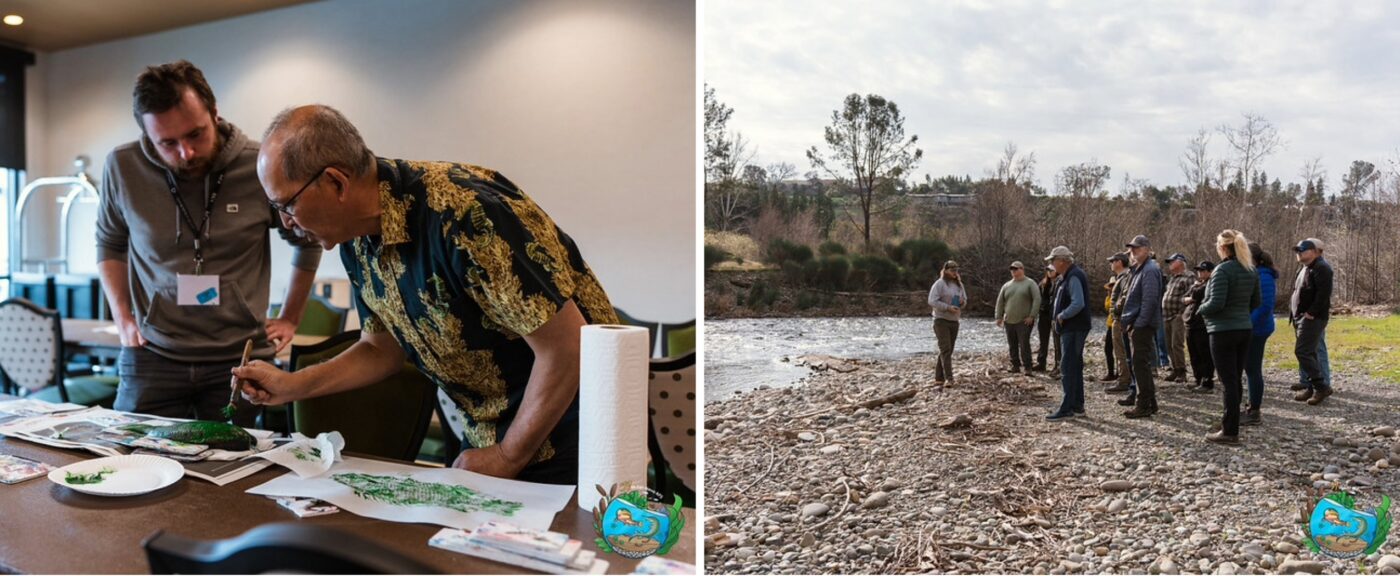
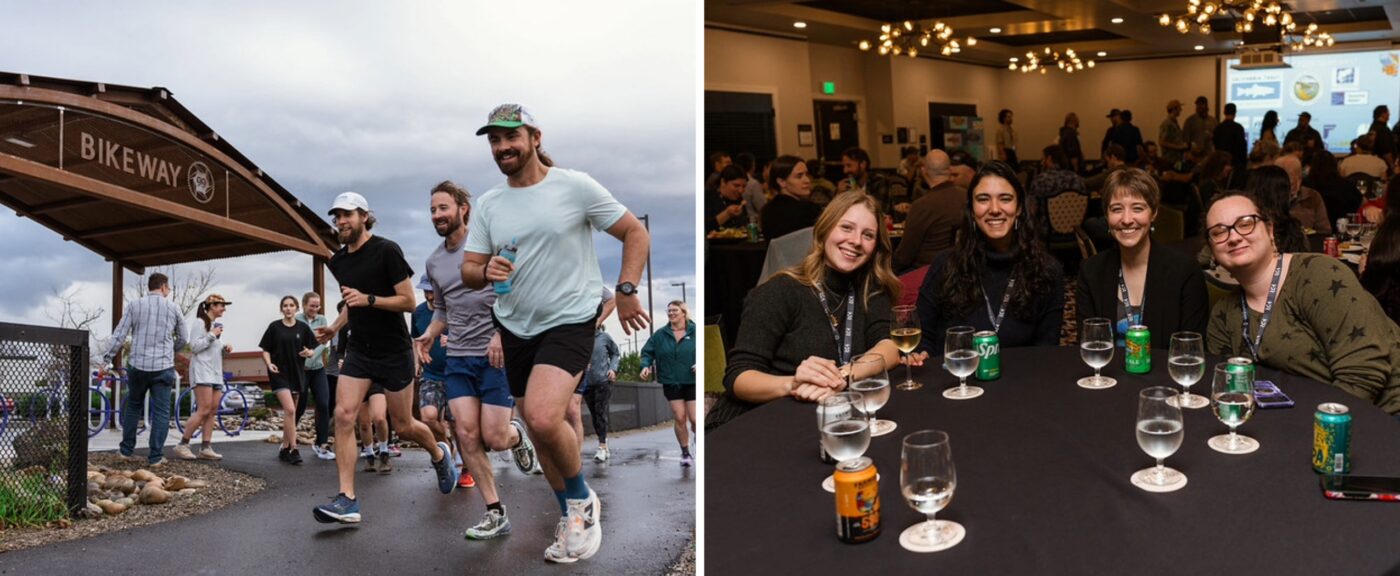
The fun certainly extended beyond the sessions and posters at the Cal-Neva AFS 2026 conference venue. Before sessions began, many conference attendees participated in hands-on workshops and local field trips. Workshops focused on chemical training for fisheries management, GIS mapping, and Gyotaku (art of Japanese fish printing), while field trips explored local Chico creeks and the Sacramento River. The local Chico field trip highlighted some Chico-based management projects, like the Iron Canyon Fish Passage Project, post-fire stream recovery projects at the Big Chico Creek Ecological Reserve, and the importance of floodplain restoration in Butte Creek for spring-run Chinook salmon. In the evenings, networking continued at events like the Welcome Social, the Spawning Run, happy hour, and the conference banquet.
Along with being in the audience, several FISHBIO staff members took center stage, presenting current research and monitoring updates. FISHBIO gave an engaging talk about the survival and abundance of black bass in the Stanislaus River. That same night, we presented a poster about fish passage in Big Chico Creek, a project done in collaboration with CalTrout. To close out the conference, FISHBIO hosted a session on spring-run Chinook salmon management in the Central Valley and presented on rapid-response efforts to rescue stranded spring-run Chinook salmon in the Tuolumne River in 2025. Behind the scenes, our team also played a major role in planning and executing the conference alongside Cal-Neva AFS board members.
Whether discussing new eDNA applications or river floodplain restoration, the 2026 meeting demonstrated that science at every scale is connected. As the conference came to a close, the FISHBIO team left feeling motivated by new perspectives and a collaborative spirit fostered in California and Nevada fisheries. Through bridging the gap from microscapes to macroscapes, conference attendees are better equipped to help build the resilient fisheries that our ecosystems and communities will depend on for generations to come.
If you attended (or if you didn’t!), check out FISHBIO’s Flickr page for more conference photos.
This post was featured in our weekly e-newsletter, the Fish Report. You can subscribe to the Fish Report here.
Header Image Caption: Chico, CA was excited to host the 2026 California-Nevada American Fisheries Society meeting.