

Friday August 29, 2025
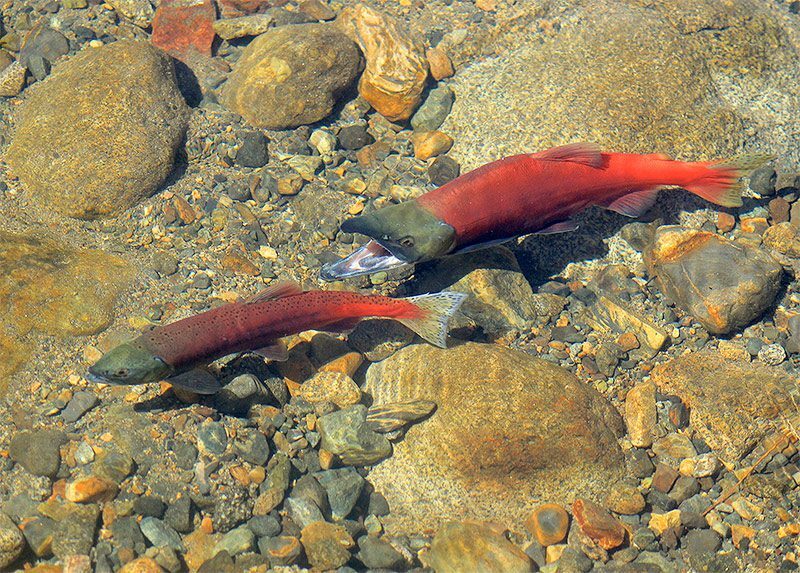
Common names: Kokanee Salmon
Scientific name: Oncorhynchus nerka
Native range: Lakes of the Pacific Northwest, from Alaska to California
Status: Population dependent
Habitat: Coldwater lakes and reservoirs
Kokanee salmon (Oncorhynchus nerka) – a popular sport fish that inhabits deep and cool-water lakes of the Pacific Northwest region – are the landlocked form of sockeye salmon. Much like the relationship between rainbow trout (Oncorhynchus mykiss) and its anadromous form (ocean-migrating steelhead), kokanee and sockeye salmon are considered to be the same species but they exhibit different life histories. Kokanee salmon complete their entire life cycle in freshwater lakes. Adults feed and mature in the depths of lakes and migrate into tributary streams to spawn. Then, kokanee fry emerge and grow into juveniles before returning to the lake to start the cycle again. Kokanee can be identified by their chrome coloration with a blue-green back and the lack of dark spotting seen in other salmon and trout. During spawning, kokanee exhibit bright red bodies with dark green heads, form a hump in front of the dorsal fin, and a pronounced hook in their upper jaw (a feature referred to as a “kype”). This landlocked salmon species reaches 10 to 12 inches in length, on average, but can grow up to 16 inches long in optimal conditions.
Fun fact: What kokanee may lack in size compared to ocean-going salmon, they make up for in fight – some anglers report that reeling in these fish out on the lake is great fun, and even preferable over other sport species!