

Monday April 13, 2026
When thinking of bodies of water, crashing waves and rushing waterfalls are the first sounds that come to mind. It turns out, water itself is not the only source of noise in the aquascape. While fish may not be the first animals we associate with sound, they can cause quite a racket. From drumming to slapping and at times even FRTing (Fast Repetitive Ticks), fish have a lot to say, and scientists are listening to understand those sounds.
Fish make a variety of sounds for different purposes, using a number of anatomical structures. Common types include drumming (the fast contraction of muscles against the gas bladder), stridulation (rubbing hard skeletal parts or structures together), hydrodynamic sounds (sounds made through movement in water), and FRTs (gas released through the anus in pulses). Because fish lack vocal cords, they use gas bladders, bones, and spines to make noises. These sounds may be intentional or accidental and are usually low frequency.

When drumming sounds occur, the gas bladder and associated muscles work together to produce noise. Once the gas bladder is filled with gas from surface air intake or the circulatory system, nearby sonic muscles rapidly expand and contract, creating sounds described as thumps, purrs, knocks, or pulses. This type of sound is produced by fish like croakers (Sciaenidae). The plainfin midshipman (Porichthys notatus), also called the “California singing fish,” is famous for its ability to produce loud, sustained noises. Both males and females of this species produce short grunting sounds when threatened. Males are also known for the “hum” they produce during the breeding season. During this time, the females’ inner ear structures become more sensitive and can better detect the males’ calls.
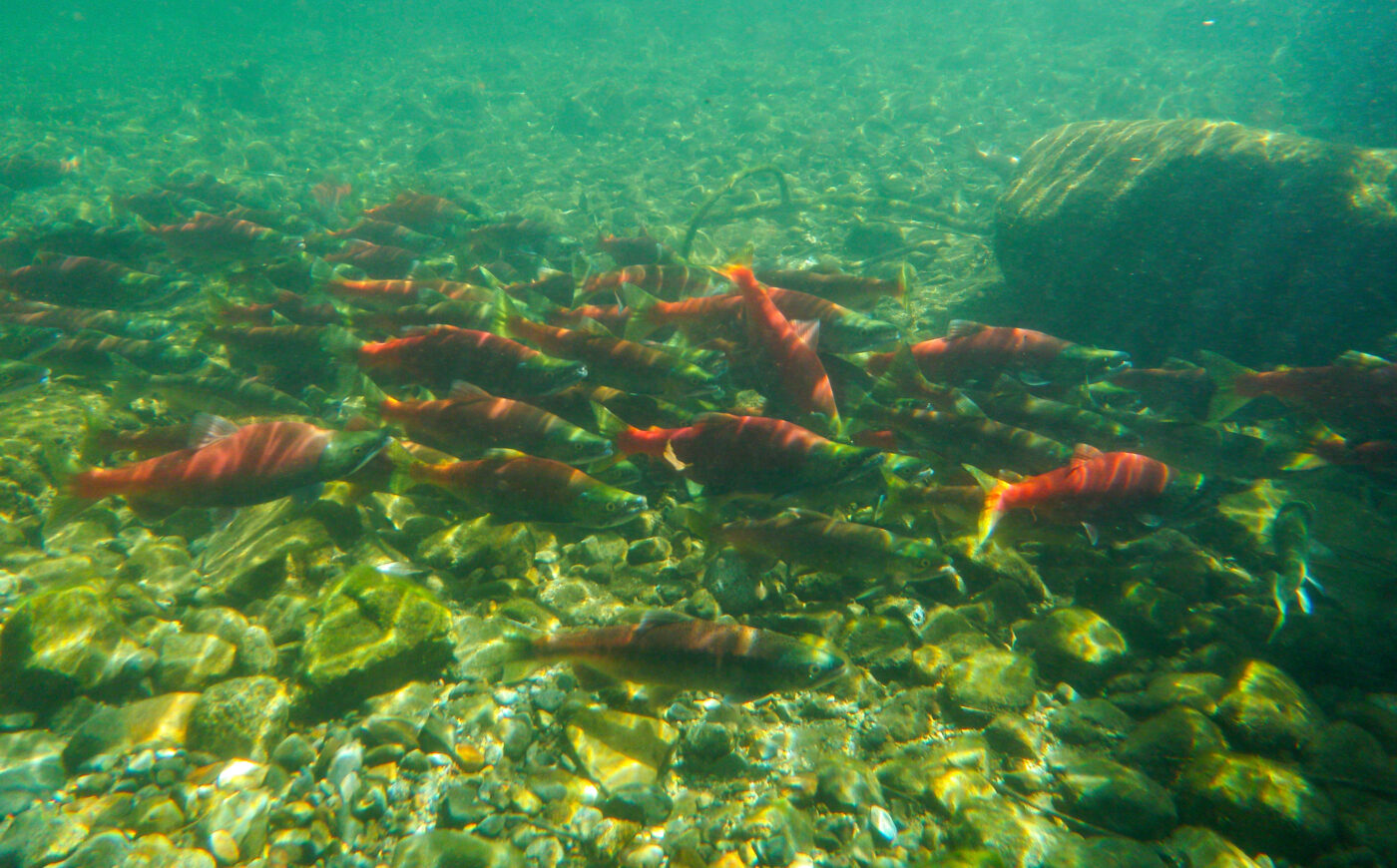
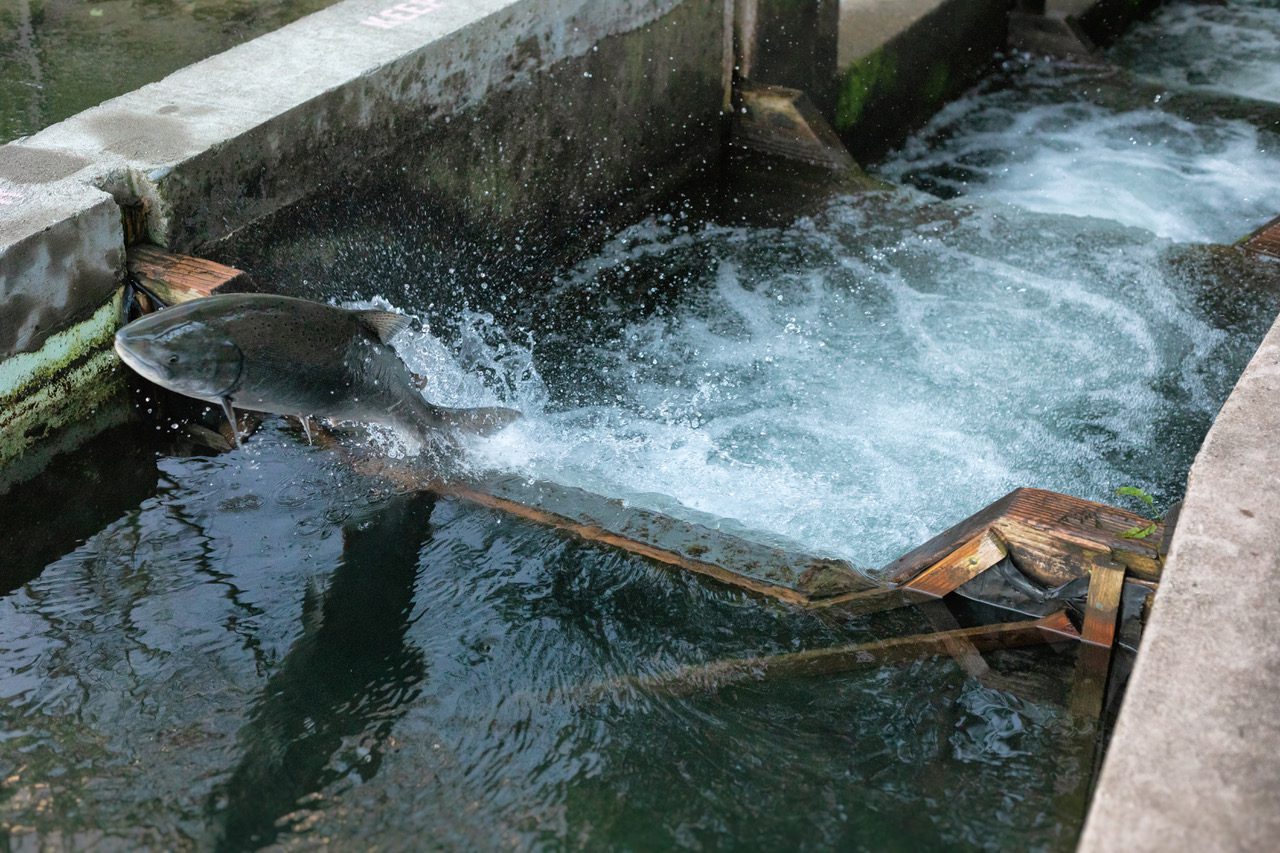
Hydrodynamic sounds are often unintentional, produced as fish move through the water. For example, steelhead and rainbow trout (Oncorhynchus mykiss) have been reported to make a variety of noises while feeding, especially when breaking the surface with tail flips. They also make clicking and scraping noises while feeding (stridulations), though the function of these sounds remains unknown. Aptly named FRTs are documented in both Pacific and Atlantic herring (Clupea pallasii and C. harengus, respectively). These sounds are produced as fish release gas from their vents in pulses. Often occurring at night during schooling, FRTs help fish stay together in the dark. Catfish produce sounds through stridulation, rubbing together spines on their pectoral fins to create squeaking noises. These noises are often produced during courtship, or when the fish are threatened or disturbed.
The sounds that fish make do not go unnoticed; other fish are listening. Fish hearing evolved early in vertebrates, and many species use two systems for detecting sound: their inner ear and the lateral line. In the inner ear, dense structures called otoliths move differently than the fish’s body when they encounter sound waves, bending nearby hair cells on the inner ear (cilia). The gas-filled bladder, with its different density, can also compress under sound waves and stimulate cilia. Meanwhile, the lateral line’s pressure-sensing neuromast cells detect vibrations and aid in schooling, predator evasion, and navigation.

Beyond the fish themselves, scientists are listening too. One of the most common ways to detect fish sounds is with a hydrophone. Hydrophones are underwater microphones that produce small electrical currents in response to changes in pressure underwater. This lets researchers record and analyze fish sounds in their natural habitats, with minimal disturbance. Gas bladders also do more than just help fish make noises. Because they reflect sound waves, these structures make fish detectable to scientists with sonar technology like fishfinders and the ARIS. More recently, scientists have used machine learning to analyze recordings of fish in real time and identify species based on their unique acoustic “signatures.” Recordings of some of these fish sounds are available at FishSounds and at Discovery of Sound in the Sea. Far from silent, fish contribute many dynamic and diverse sounds that scientists are still working to fully understand.
Header Image Caption: Fish make a variety of noises, like hydrodynamic sounds which happen when they move through water or break the surface.
This post was featured in our weekly e-newsletter, the Fish Report. You can subscribe to the Fish Report here.