

Wednesday September 16, 2026
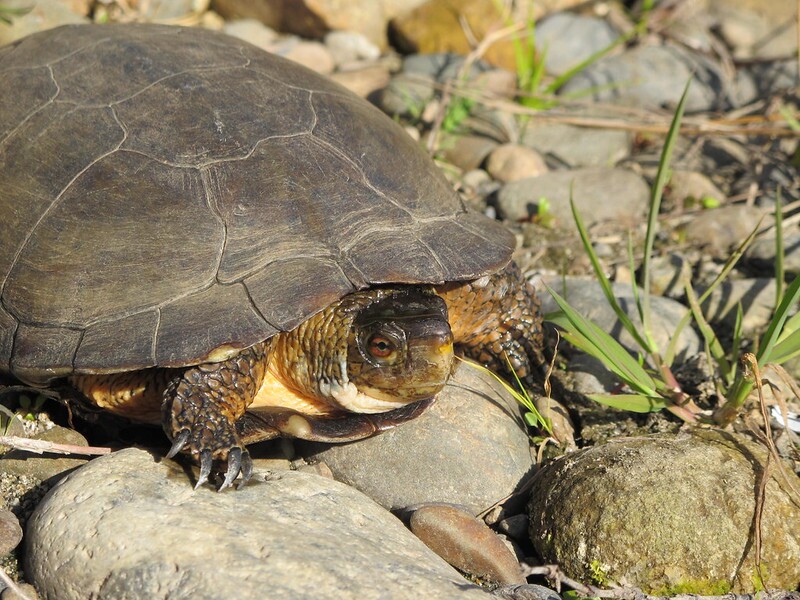
Common names: Western Pond Turtle
Scientific name: Actinemys marmorata
Native range: Western Coast of North America
Status: Threatened
Habitat: Freshwater environments
The western pond turtle (Actinemys marmorata) is a small to medium-sized freshwater turtle native to the western United States from Northern Baja California to Washington and the only native turtle in central and northern California. It typically measures 4 to 9 inches in shell length and has a brown or olive-colored shell with dark mottling. Unlike many other turtles, it lacks bright markings, helping it blend into its surroundings. This species inhabits ponds, streams, and wetlands, preferring slow-moving or still water with abundant vegetation and basking sites. It is omnivorous, feeding on insects, crustaceans, amphibians, small fish, and aquatic plants. Western pond turtles regulate their body temperature through basking, often stacking on top of each other on logs or rocks. They have a slow growth rate and delayed maturity, with females taking 10 to 15 years to reach reproductive age and living up to 50 years. Unlike most aquatic turtles, they spend significant time on land, sometimes traveling long distances to find nesting sites or suitable overwintering locations. Once common, western pond turtle populations have declined due to habitat loss, pollution, and competition with invasive species like red-eared sliders.
Fun fact: Western pond turtles can only swallow food when underwater.