

Monday January 26, 2026
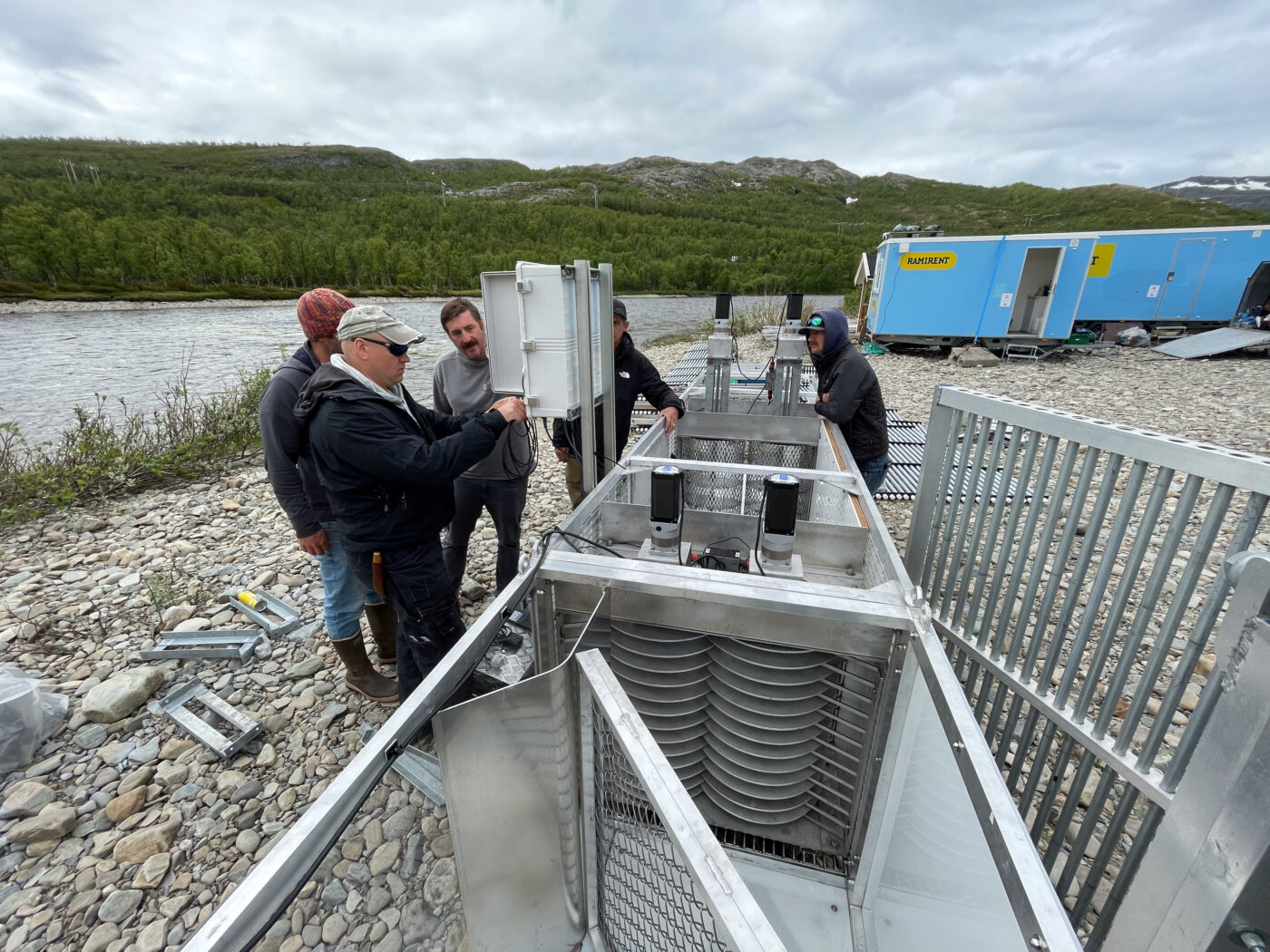
In 2022, FISHBIO built, shipped, and installed resistance board weirs in arctic Norway as a management tool to stem the tide of invasive pink salmon. Originally introduced to northern Russia, this species has rapidly expanded westward and been documented throughout the North Atlantic—including in Canada, Greenland, Iceland, the UK, and Scandinavia. This spread has raised great concerns about their effect on fragile riverine ecosystems and valuable native species. In northern Norway, a world-class destination for anglers pursuing large, wild Atlantic salmon, residents and visitors alike now fear that their piscatorial pursuits are tarnished by small, humped, invaders from the East. Beyond social and economic effects, the now-abundant pinks may act as vectors for diseases and parasites, jeopardizing native fishes and the Atlantic salmon aquaculture industry. Furthermore, the large amounts of marine-derived nutrients released by decomposing pinks could cause algal blooms and deteriorate water quality in rivers. At the same time, pink salmon also compete with native species for resources in the marine environment, diminishing their growth and survival.
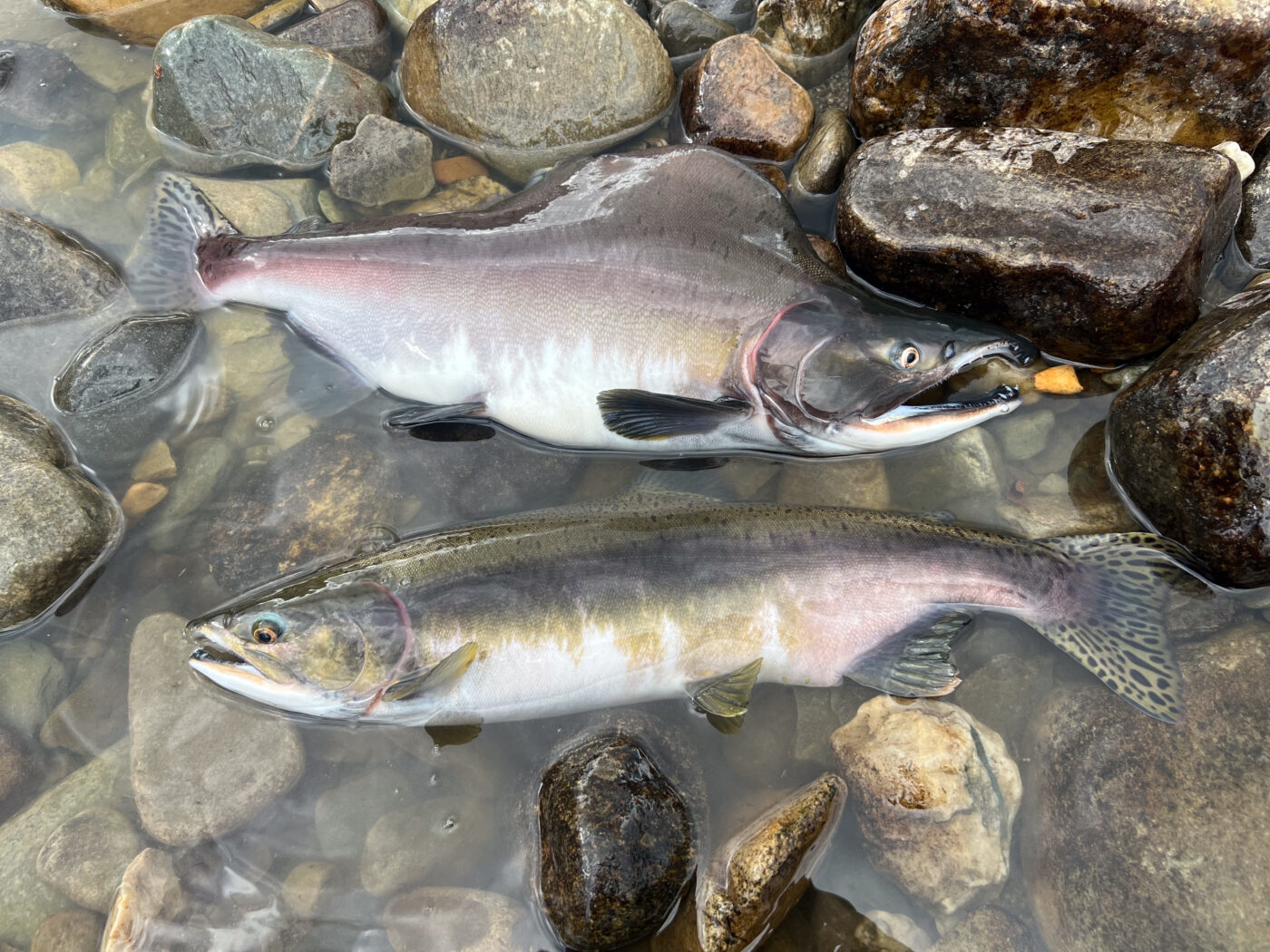
Local and government engagement to prevent pink salmon from spawning is high in Norway, and weir operation and trapping as the fish return to freshwater to spawn has been effective in removing pinks. About 35,000 pinks were removed in 2023 from the Repparfjord River, where one of the weirs we fabricated is in use. Trapping of all migrating fish species, unfortunately, involves labor-intensive manual sorting of trapped fish, which can cause stress, injuries, or even death. To find a better alternative, the Norwegian government launched a research and development competition with the goal of making the exclusion and removal of pink salmon more streamlined and sustainable, while minimizing the impact on native species. FISHBIO brought the fisheries expertise and teamed up with Simsonar, a Finnish company specializing in underwater video systems. Using AI technology, we began work on a platform that rapidly identifies and selectively sorts passing salmon.
Our team advanced through various stages of the competition, from concept design to detailed plans, prototype fabrication, and ultimately field testing. The final design is able to route native species back into the river and divert invasives into a trap box for removal. This non-invasive method enables real-time monitoring of large numbers of fish, with data accessible remotely. Once built, this new system—the AquaSort—left its birthplace at our Oakdale FabLab in the fall of 2024, and after a layover in a Finnish storage unit for testing and refinements, arrived on the banks of the Repparfjord River near Hammerfest, in northern Norway, in June of 2025. With valuable support from locals, the sorting platform was installed in early July—integrated into the resistance board weir we bid farewell to in 2022!
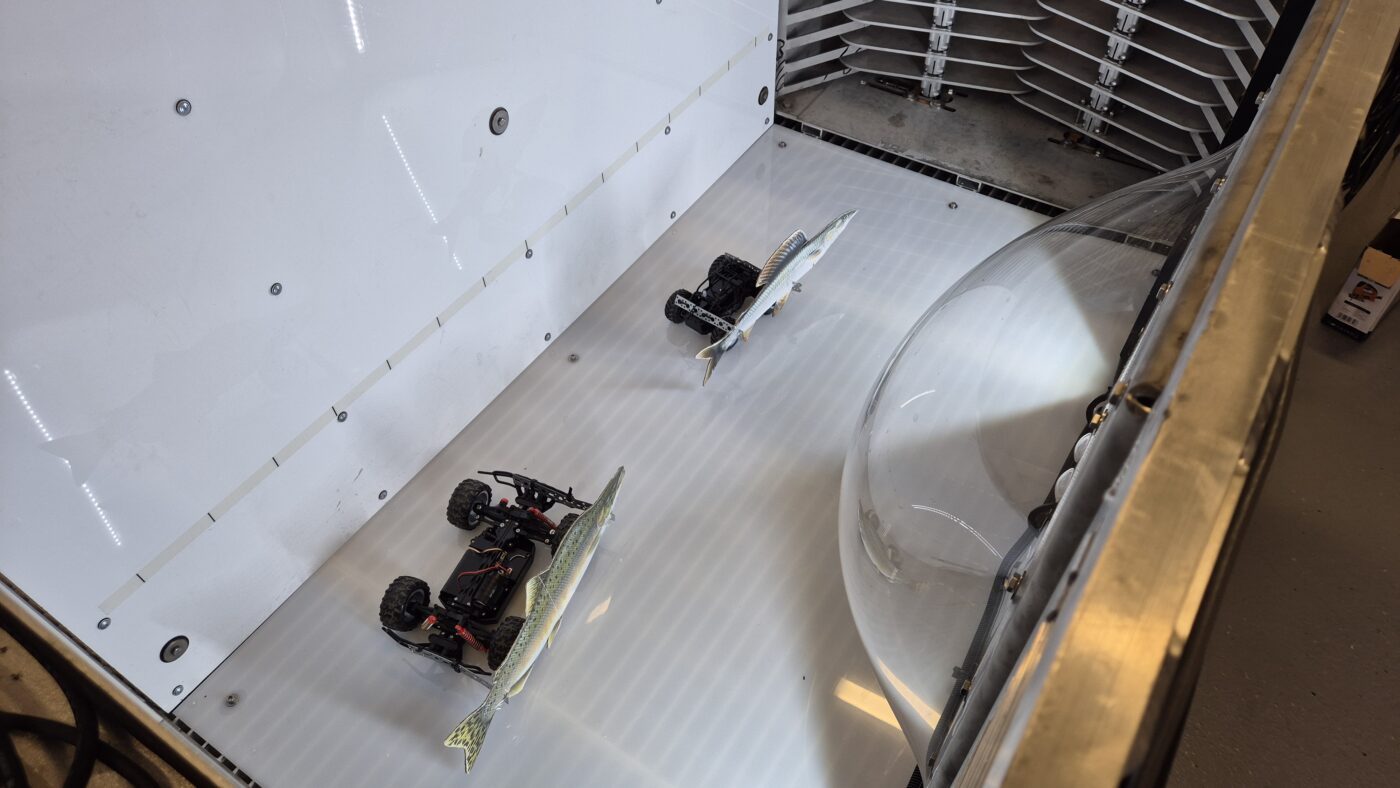
Once the system was installed and operating, it wasn’t long before the first invasive pink—still early enough in the season to be ocean-bright (and a culinary delight when grilled!)—was successfully trapped. Over the following weeks, our team repeatedly re-trained the AI software with additional imagery, updated and refined system operations, and spent countless hours in front of our monitors observing fish behavior through the platform. Following a visit from a panel of experts in various disciplines tasked with evaluating the system, we had a short period of standardized operation to quantify performance metrics. Over three days and a cumulative 550 fish passages, the platform achieved a trapping efficiency of greater than 97% for invasive pink salmon, while reducing handling of native species by 94%. We estimate that, with an observed transit time as short as ten seconds, the system can identify and sort several thousand fish per day, greatly reducing the requirements for manual sorting and simultaneously improving the welfare of native fishes.
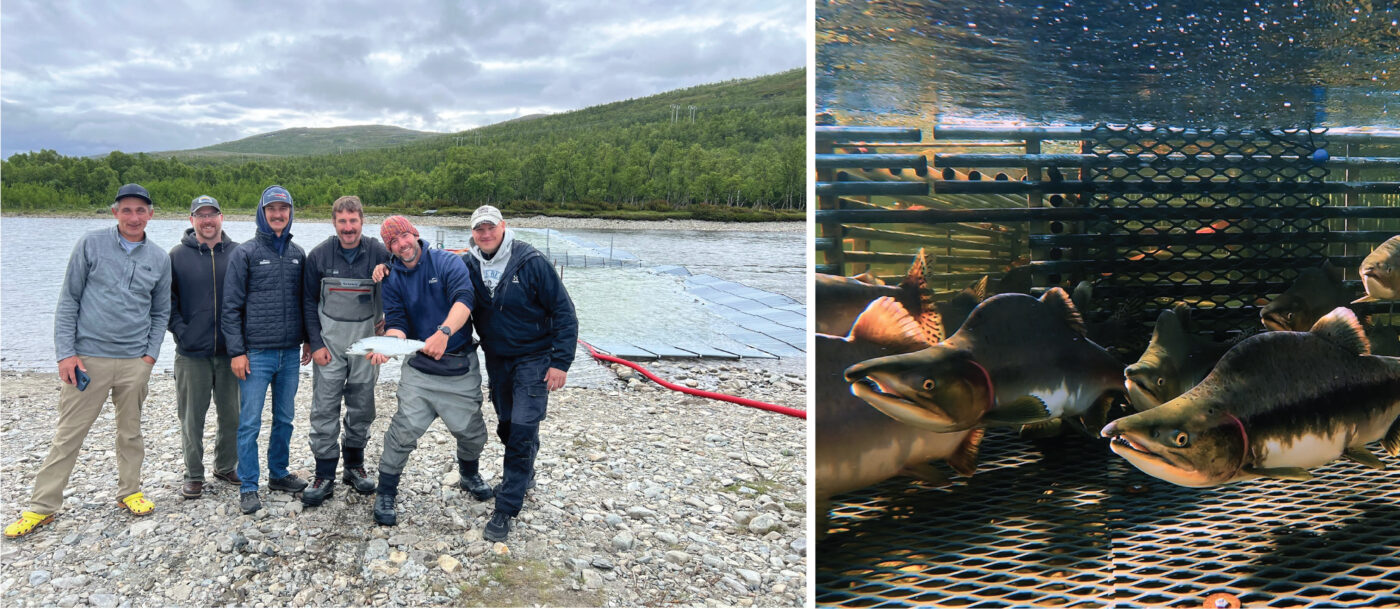
While we originally planned to remove the system after the competition, our friends at the local fishing association appreciated it so much that they offered to maintain the system after we left. Because of their help, the system continued to do its job long after we had come home. As we implement small tweaks and look towards future deployment of the AquaSort in Norway and beyond, we are also exploring other applications of this novel technology, including selective passage and targeted trapping of species for research—stay tuned!
This post was featured in our weekly e-newsletter, the Fish Report. You can subscribe to the Fish Report here.
Header Image Caption: FISHBIO and Simsonar developed a platform that uses AI technology to selectively sort invasive salmon.