

Monday January 5, 2026
Hello, new readers, and welcome back, returning friends! At the beginning of a new year, we like to reflect on last year’s accomplishments and milestones, hoping to inspire our staff and thank our readers and clients for coming along on this journey with us. Before diving into this year’s highlights, we wanted to take a moment to introduce/re-introduce ourselves.
FISHBIO is a fisheries and environmental consulting company dedicated to providing innovative solutions to natural resource challenges. We work to advance the research, monitoring, and conservation of fishes around the world. Our California offices are located in Oakdale and Chico, putting us in the heart of the Central Valley and allowing us to study the fish and rivers in our backyard.
While most of our work takes place domestically, we are also involved in a number of international projects—many centered around the Mekong Basin in Southeast Asia and, more recently, in Norway. Our work is built on core principles of sound science, technical expertise, and science communication. The Fish Report, our weekly newsletter, is a way for us to share all things new and interesting in fisheries with our colleagues both inside and outside the scientific community. We pride ourselves on being a liaison between current events, trends, and ideas in fisheries and the Fish Report readers.
Our last year was a lively one, full of new faces, projects, challenges, and achievements. With 2026 just getting started, we’re taking a look back at what we accomplished in 2025 and celebrating the numbers that tell our story.
In California:
- 1 new PIT tag antenna installed in Santa Cruz County.
- 1 new weir fabricated and installed in upper Battle Creek.
- 1 system installed in Norway to selectively trap non-native salmon.
- 7+ national conferences attended.
- 6 rotary screw traps operated in 3 watersheds.
- 19 sites across 7 streams assessed as part of the Surface Water Ambient Monitoring Program (SWAMP), which included the collection of 28 benthic macroinvertebrate samples.
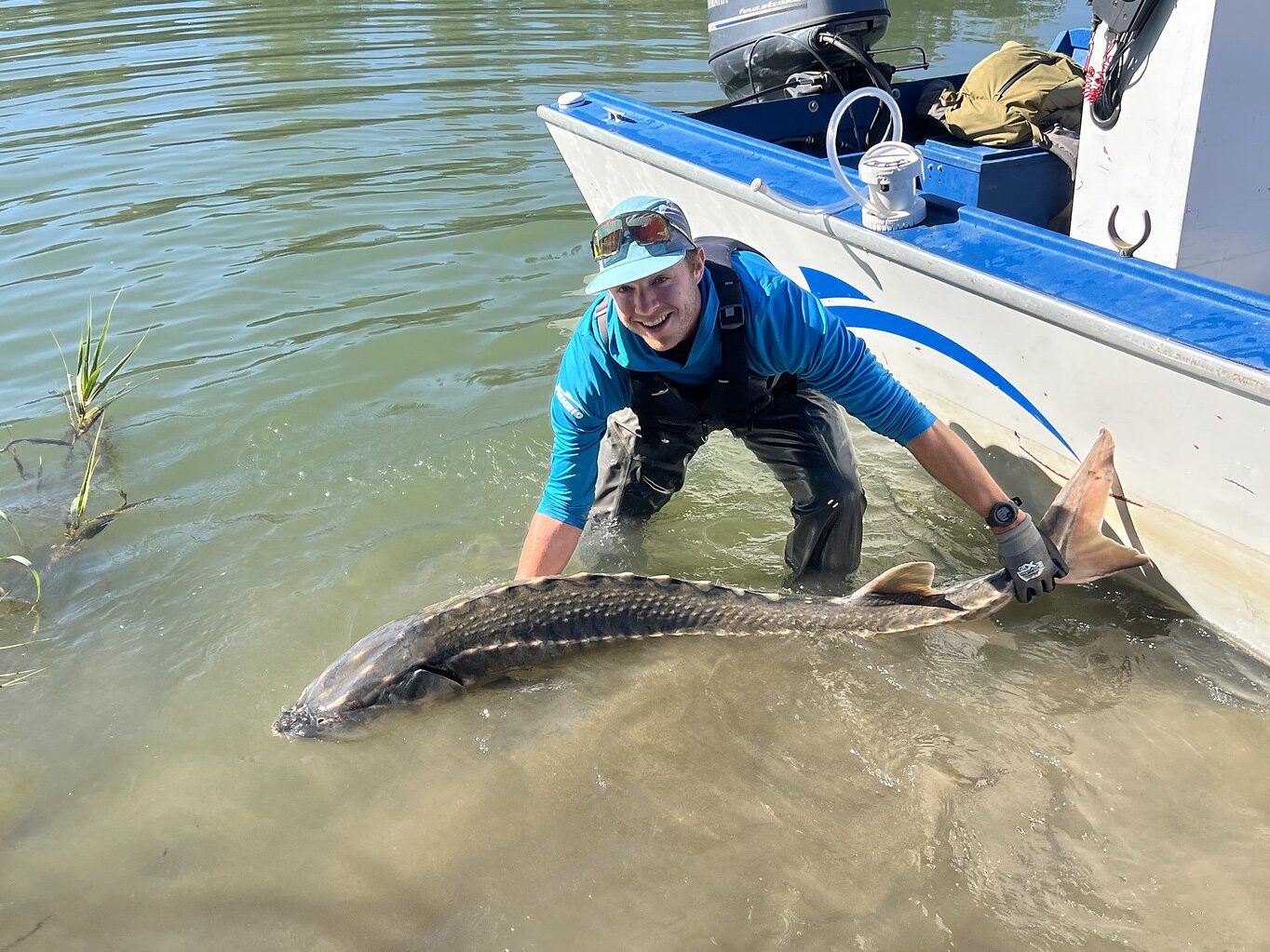
- 24 threatened green sturgeon captured and tagged in the Sacramento River.
- 28 different fish species captured in rotary screw traps.
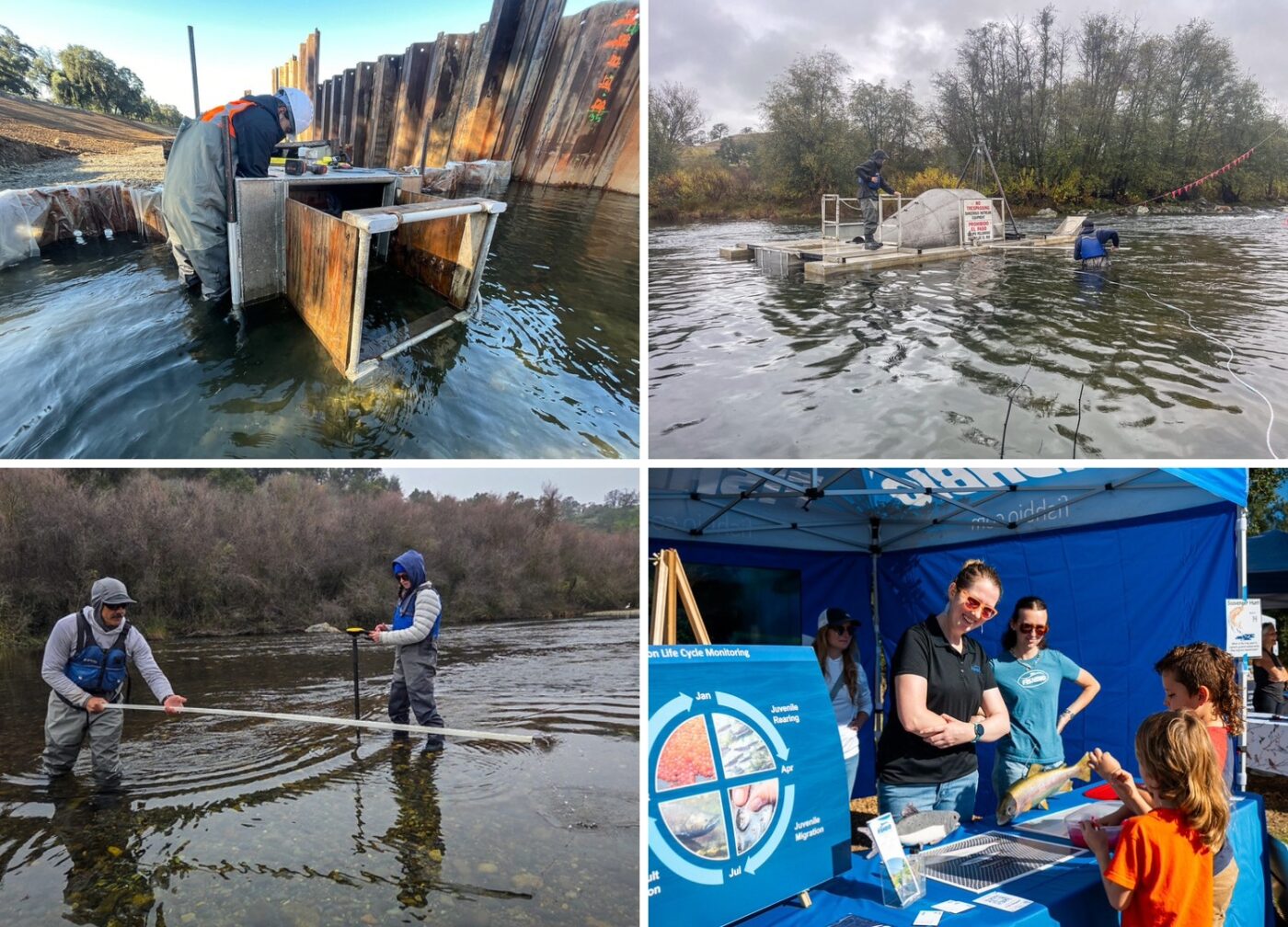
- 35 HOBO data loggers in operation, monitoring temperature and water level in 4 rivers.
- 36 tagged rainbow trout/steelhead (Oncorhynchus mykiss) recaptured on the Calaveras River.
- 406 rainbow trout/steelhead (O. mykiss) captured via hook-and-line sampling on the Calaveras and Stanislaus rivers.
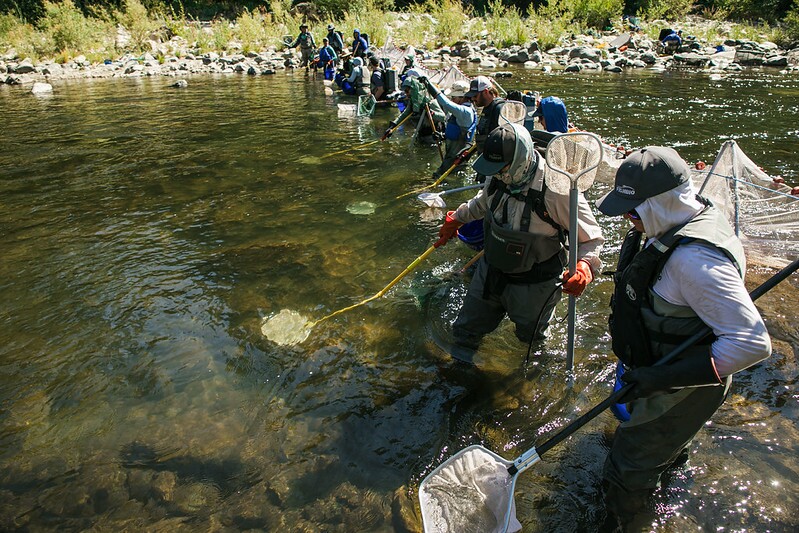
- 450 spring-run Chinook salmon rescued and relocated for a total of 1,200 adult spring-run Chinook making their way up the Tuolumne River.
- 487 predator diet samples analyzed in the San Joaquin River.
- 2,037 fish captured and 1,219 bass and catfish PIT tagged for the South San Joaquin Delta Predator Monitoring Study.
- 2,365 fish PIT tagged on the San Joaquin, Stanislaus, and Calaveras rivers.
- 2,500 hours of audio recorded of 220 bird species at 4 central valley orchards.
- 3,722 Chinook salmon (Oncorhynchus tshawytscha) observed passing through the Tuolumne River weir.
- 7,998+ Chinook salmon observed passing through the Stanislaus River weir.
- 10,138 rainbow trout observed during snorkel surveys of the Stanislaus, Tuolumne, and Calaveras rivers.
- ~20,000 cubic yards of dredged San Joaquin River material monitored for fish entrainment in the Stockton Deep Water Ship Channel.
- 30,379 fish captured in rotary screw traps on the Tuolumne and Calaveras rivers.
In the Mekong Basin:
- 1 conservation project completed in the Xe Champone Wetlands with a total of 16 FCZs (covering an area of 225 hectares) established from 2020–2025.
- 1 eDNA study implemented in the Mekong River in two countries: Laos and Thailand.
- 4 fisheries conferences attended.
- 5 new FCZs established and under community consultation and protection.
- 5 Mekong River tributaries surveyed.
- 5 provinces and 15 districts visited for community-based data collection and work.
- 9 flagship species monitored across Mekong countries (Cambodia, Laos, Thailand, and Vietnam).
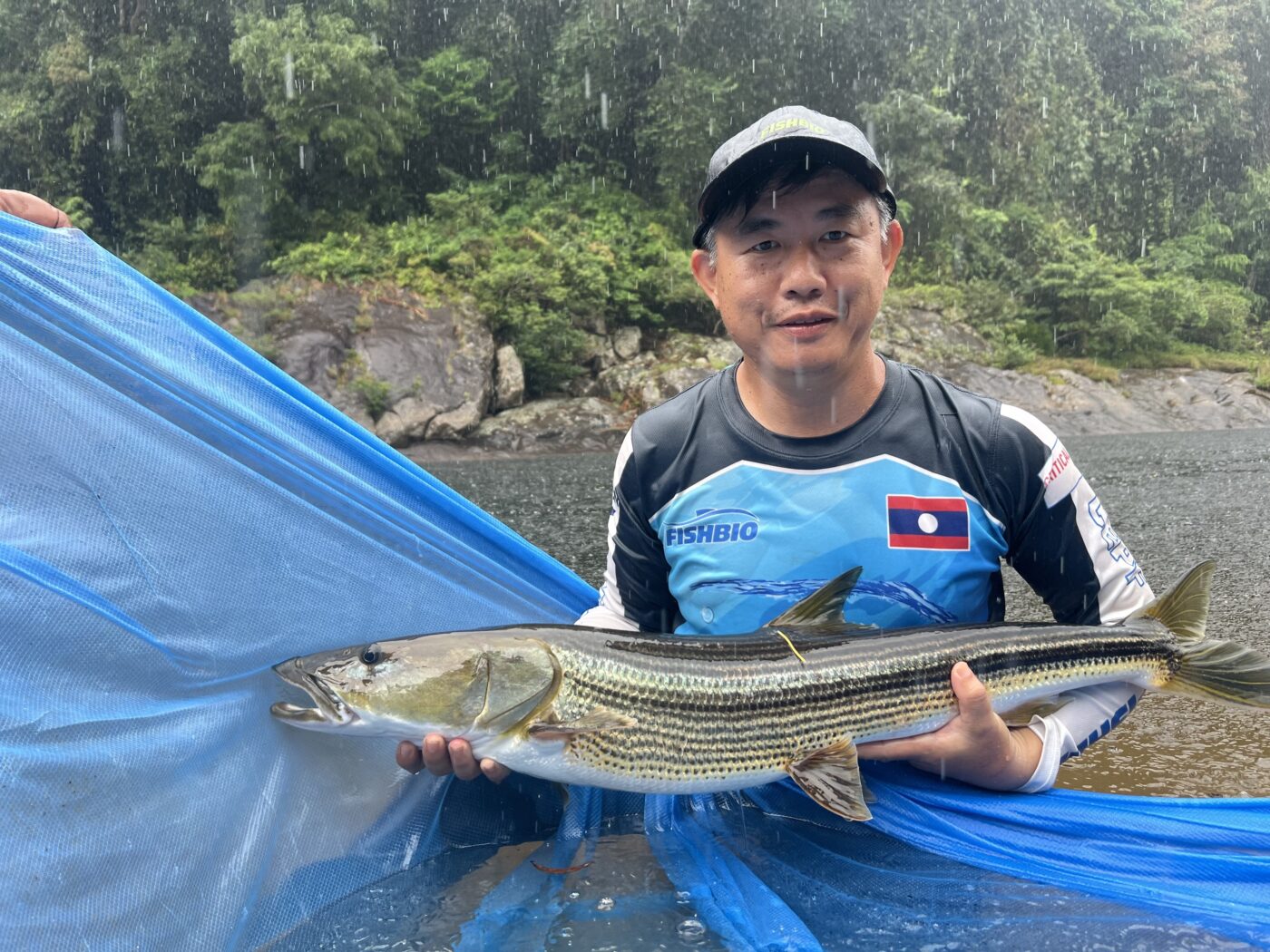
- 12 wolfbarb individuals tagged and released for monitoring.
- 120 eDNA samples collected across 26 sites on the Mekong, belonging to 37 taxonomic families, 81 genera, and 92 species.
- 200 fish scale samples collected from 5 target species across 3 rivers.
Other Notable Accomplishments:
- 1 paper published in the journal Fisheries Management and Ecology, titled Mekong Migrations: Insights Into Fish Movement in the Lower Mekong From a Large-Scale Acoustic Telemetry Study.
- 1,046 photos taken and shared on the FISHBIO Flickr.
With 2025 and the holidays behind us, we are excited for what’s ahead. Thank you to everyone who has joined us over the past 12 months! Here’s to another year of discovery, collaboration, and innovation in 2026.
This post was featured in our weekly e-newsletter, the Fish Report. You can subscribe to the Fish Report here.
Header Image Caption: A tagged sturgeon, ready to be released.