

Friday August 21, 2026
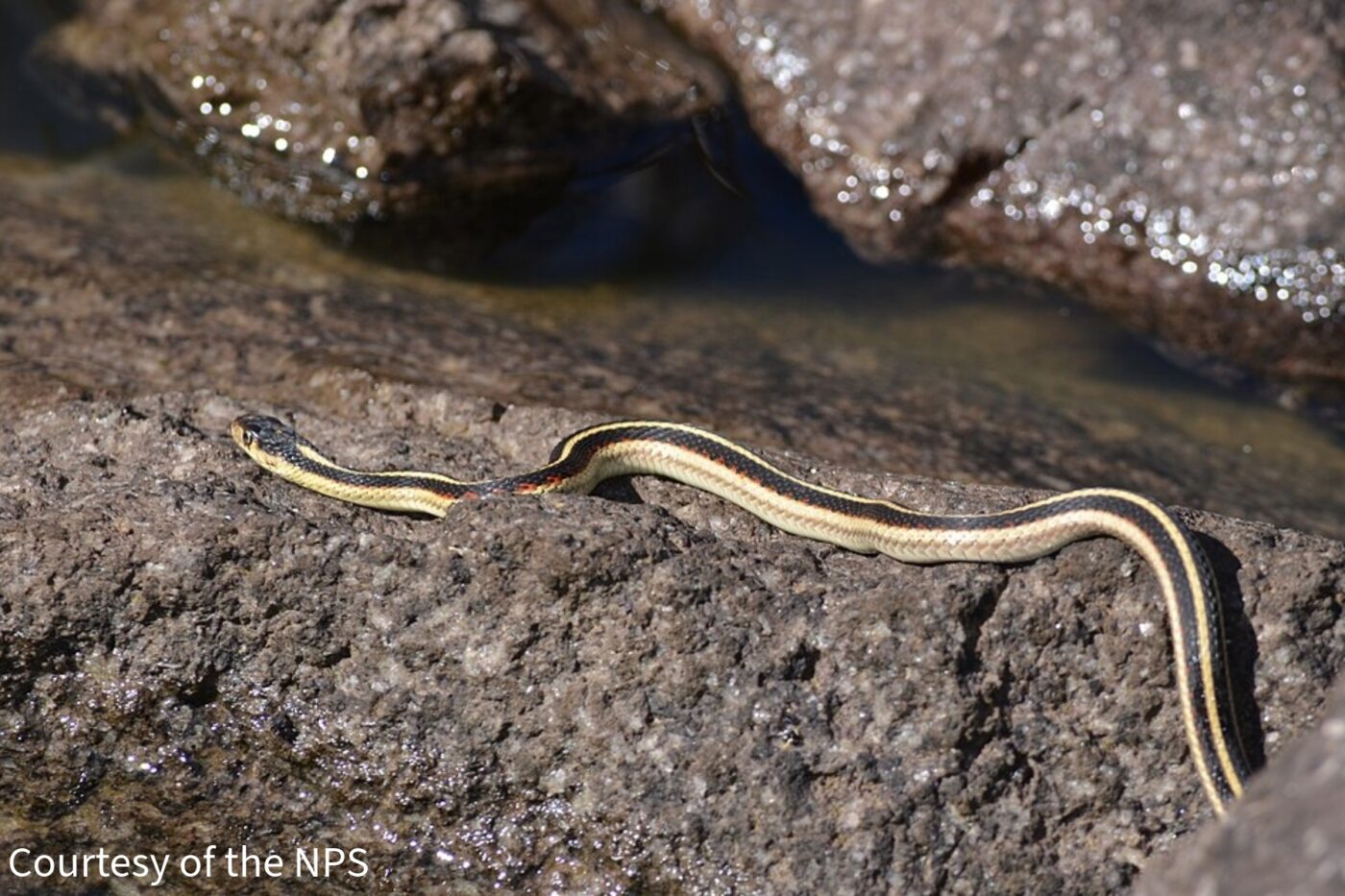
Common names: Valley Gartersnake
Scientific name: Thamnophis sirtalis fitchi
Native range: Central California to Southern Alaska
Status: Least Concern
Habitat: Terrestrial with a consistent water source
The valley gartersnake (Thamnophis sirtalis fitchi) is native to the western United States from central California to British Columbia, Idaho, and western Nevada and Montana. The valley gartersnake is a subspecies of the widespread, non-venomous common gartersnake (Thamnophis sirtalis) found across North America. It measures 18 to 55 inches in length and has a slender dark grey, black, or brown body featuring three longitudinal stripes running down its back, which are typically yellow in this region, and red markings above the lateral stripes. Highly adaptable, gartersnakes inhabit a variety of environments, including forests, grasslands, wetlands, and suburban areas. They are active during the day and are excellent swimmers, often found near water. Their diet is diverse, consisting of amphibians, fish, earthworms, and small mammals. They subdue prey using quick strikes and mild venom, which is harmless to humans but effective against small animals. Unlike most snakes, common gartersnakes give birth to live young rather than laying eggs. They can produce large numbers of snakelets, sometimes exceeding 50 offspring. During colder months, they hibernate in large communal dens, sometimes with hundreds of other snakes. Gartersnakes can survive freezing temperatures and even have parts of their body frozen for long periods of time with little to no ill effects.
Fun fact: Valley gartersnakes can become poisonous to predators if they recently ate a toxic meal including toxic newts.