

Friday August 28, 2026
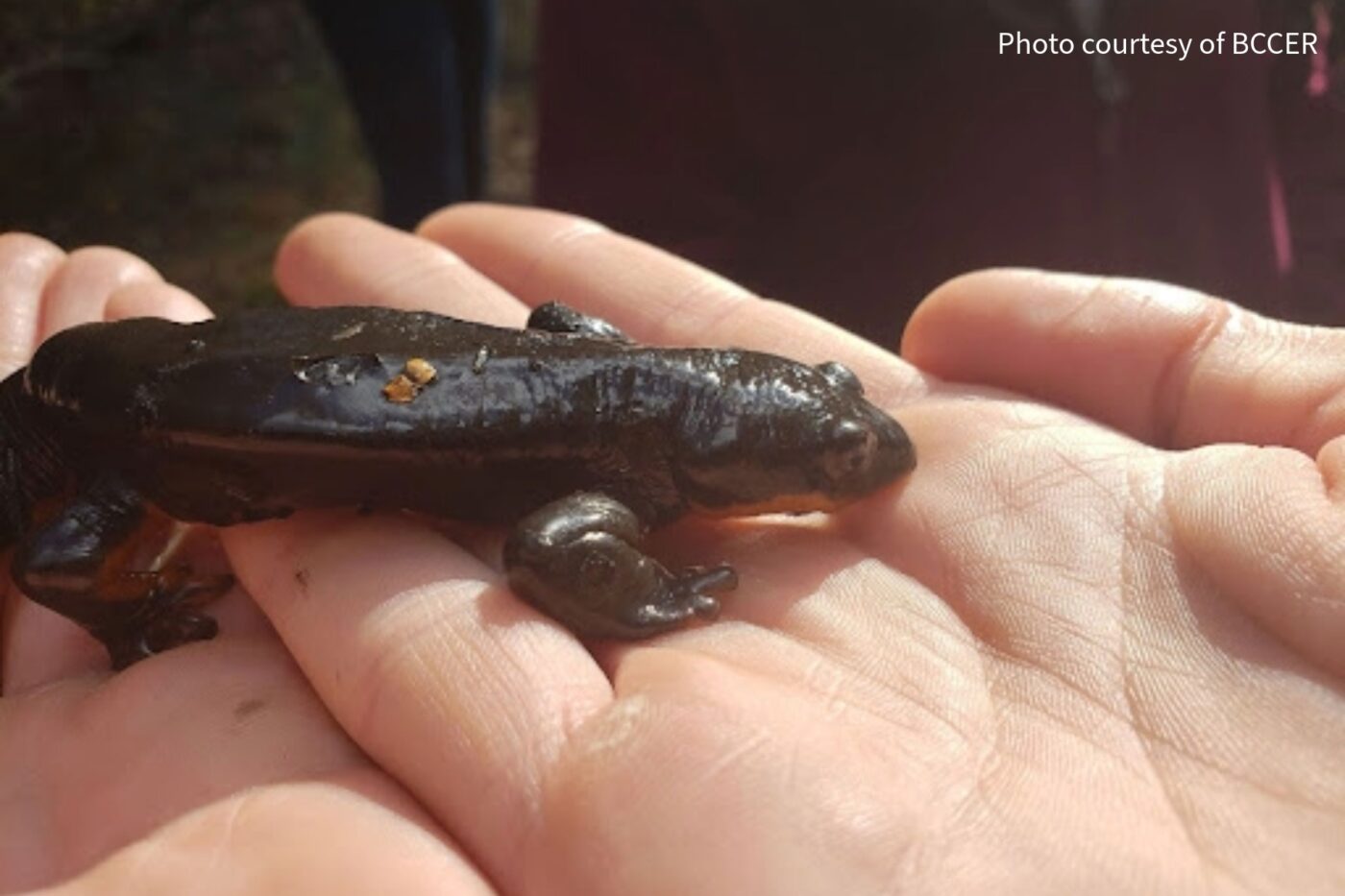
Common names: Rough-Skinned Newt
Scientific name: Taricha granulosa
Native range: Central California to Southern Alaska coastal areas
Status: Least Concern
Habitat: Semi-aquatic freshwater environments
The rough-skinned newt (Taricha granulosa) is a medium-sized amphibian native to the Pacific Northwest, ranging from California to Alaska. Its coloration is dark brown on the back with a bright orange or yellow underside, serving as a warning to predators. It typically grows 5 to 8 inches in length and has rough, granular skin, which sets it apart from other smooth-skinned newts. Compared to the cooccurring and similar looking Sierra newt (T. torosa), rough-skinned newts have darker upper eyelids. This species is highly toxic, with skin bacteria that produces a powerful neurotoxin called tetrodotoxin (TTX), which can be lethal to predators. However, some gartersnake populations have evolved resistance to this neurotoxin, leading to an evolutionary arms race between the two species. Rough-skinned newts are primarily aquatic during the breeding season, inhabiting ponds, slow-moving streams, and wetlands. They lay eggs individually on submerged vegetation, and larvae undergo metamorphosis before transitioning to a more terrestrial lifestyle. Outside of breeding, they are often found in moist forests, hiding under logs and leaf litter.
Fun fact: When threatened, the rough-skinned newt will curl its head and tail over its body to show off its bright underside, acting as a warning for potential predators.