

Monday October 13, 2025
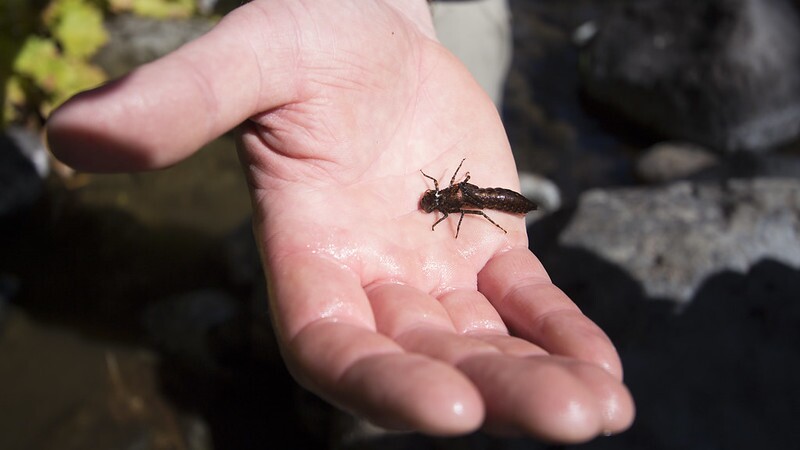
FISHBIO biologists often survey rivers and creeks for creatures of the finned variety, but for a handful of projects, we direct our nets towards the creepy crawlies of the benthos. Found on riverbottom substrates, tiny larval insects, mollusks, and worms are known as benthic macroinvertebrates, or BMIs. These small, backboneless aquatic organisms are an important link in the aquatic food web as a vital food source for fish, birds, and larger aquatic invertebrates. BMIs also function as invaluable ecosystem health indicators for aquatic scientists. Scientists conduct BMI surveys to monitor the spread of invasive species, measure restoration project progress, or track the extent to which pollution and human disturbance have affected a water body.
Depending on the methods used, BMI surveys entail collecting a BMI sample from benthic substrates (rocks, sand, gravel, etc.) and often incorporate water quality measurements and habitat evaluations. To be able to compare the survey results of one stream to another – especially in study designs involving reference sites – it is important to conduct BMI surveys in a standardized fashion, following the same sampling methods at each site. The Surface Water Ambient Monitoring Program (SWAMP) provides lengthy and detailed standardized procedures for performing BMI and riparian habitat surveys across the state.
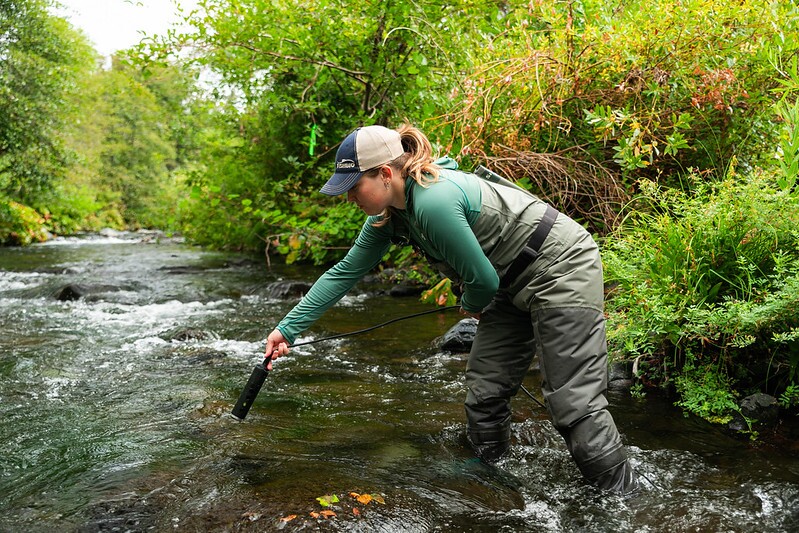
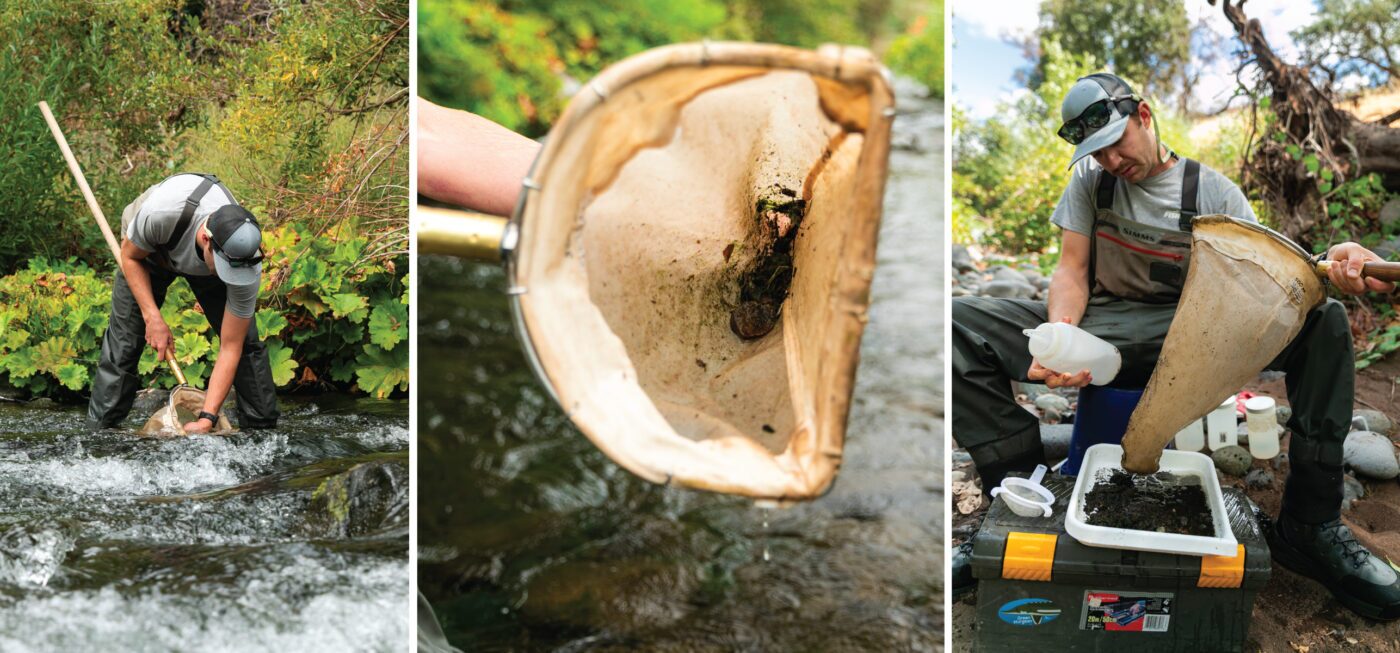
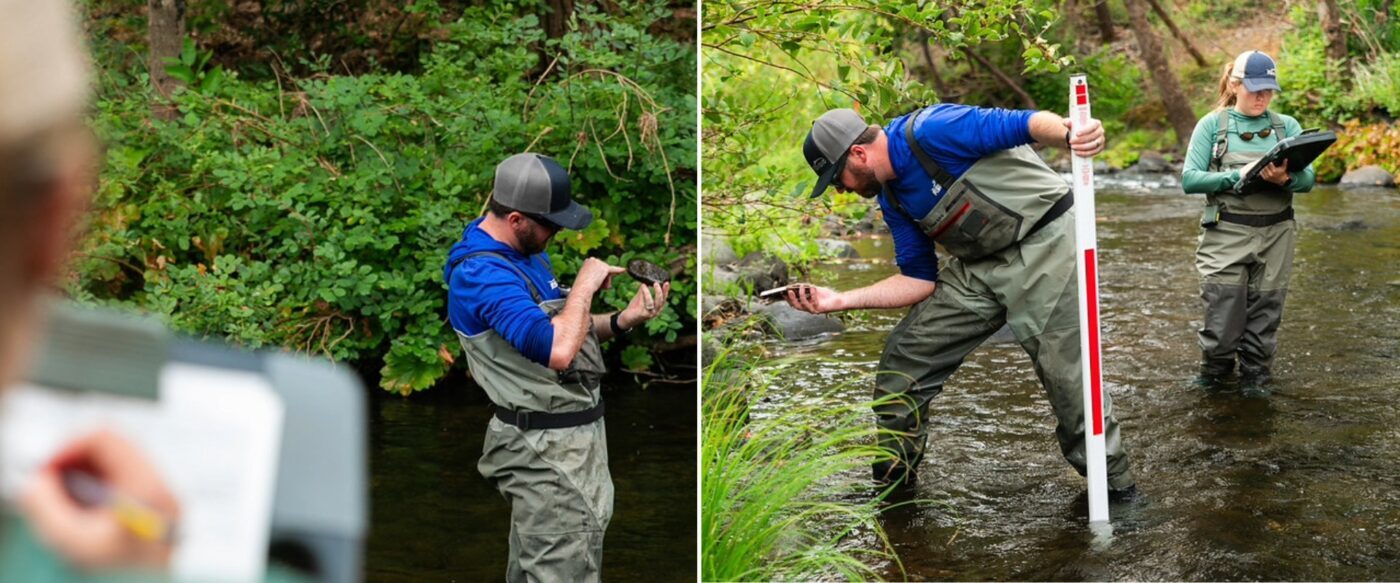
A BMI survey usually begins with the collection of water quality measurements such as water temperature, oxygen content, turbidity (water clarity), and pH, to name a few. One team then sets out with a fine-meshed D-frame kicknet to begin collecting BMIs from benthic substrate in the reach. Back on shore, the kicknet sample is carefully processed and placed into a jar for preservation. While the BMIs are collected, another team gathers physical habitat data to round out the big picture of a stream’s health. This team collects data characterizing both the stream bank, and in-stream habitat, including measurements like human disturbance level, vegetation types, and stream width, algae cover, substrate size, and water depth.
After the BMIs have been counted and identified in a lab, it is time to make sense of the BMI results. Some BMIs are less tolerant of pollution and disturbance than others, so the presence (or, in some cases, absence) of certain species or taxa in a water body’s BMI community is telling. To analyze BMI taxonomic results, FISHBIO generally keys in on measures of both diversity and water quality. One important metric that speaks to water quality is the EPT (Ephemeroptera, Plecoptera, Trichoptera) Index which is the proportion of different taxa – in this case, a group of related families – present in the BMI sample from three sensitive groups: mayflies (Ephemeroptera), stoneflies (Plecoptera), and caddisflies (Trichoptera). Generally, the higher the EPT index, the better the water quality, as insects in these groups are known for their low tolerance to pollution.
We also consider the Shannon Diversity Index, which quantifies the diversity in a sample, considering both the number of species present (richness) and how evenly distributed individuals are among those species (evenness). Other useful scoring systems like the California Stream Condition Index (CSCI) incorporate the results of both the habitat survey and BMI sample, providing a standardized score for characterizing the health of a stream and comparing it to other streams in the state.
FISHBIO has performed BMI surveys under SWAMP protocols routinely for many years, in streams large and small, bouldery and sandy, remote and urban. In upper Big Chico Creek, we perform this work as part of a restoration monitoring program, which measures and tracks changes in the BMI assemblage throughout the Iron Canyon Fish Passage project. On the mainstem Calaveras River, we conduct annual BMI surveys as part of a long-term water quality monitoring project, paying special attention to changes in invasive New Zealand mudsnail populations at each site. With the understanding of a complex protocol and the right list of gear, scientists can perform BMI surveys for a variety of projects and decipher the story of a stream’s biological integrity, as told by the benthos.
Header Image Caption: Macroinvertebrates are important health indicators for stream ecosystems.
This post was featured in our weekly e-newsletter, the Fish Report. You can subscribe to the Fish Report here.