

Monday September 21, 2026

As temperatures continue to rise, news stories and research in California often focus on the fact that salmon thrive in colder water. Historically, many native salmon populations spawned in cool, high-elevation waters, but many upstream reaches are now blocked by dams, restricting salmon to warmer, low-elevation rivers for reproduction and rearing. As a result, the survival of many of these populations is dependent on cold-water releases from dams during hot summer months to help maintain downstream water temperatures within a suitable range for salmon. This water, however, is a limited and highly contested resource, and managers must balance competing demands, like water storage and supply, flood control, and recreation, with fish conservation goals. To help make effective decisions while managing these tradeoffs, research into how much cold water salmon need is important. Recent research (Arai et al.) has gone one step further to show that the success of salmon may depend less on the total amount of cold water that salmon receive and more on the timing of when the cold-water releases happen.
In this study, researchers analyzed multiple datasets to better understand how cold-water releases affect salmon egg survival. They focused on winter-run Chinook, which spawn during peak summer temperatures in the Central Valley. Because success for this species is often measured based on the number of salmon that return to spawn, this research instead focused on how many of those spawning events actually led to surviving juveniles. To achieve this, researchers used otolith analyses, redd surveys, and temperature models. Together, these data allowed the researchers to estimate the temperatures that salmon eggs experienced in redds, and to detect juveniles that later hatched, emerged, and moved downstream. The results indicated that the first 14 days following fertilization were a “critical thermal window,” meaning that eggs that experienced cooler water temperatures during this time had a better chance of surviving.
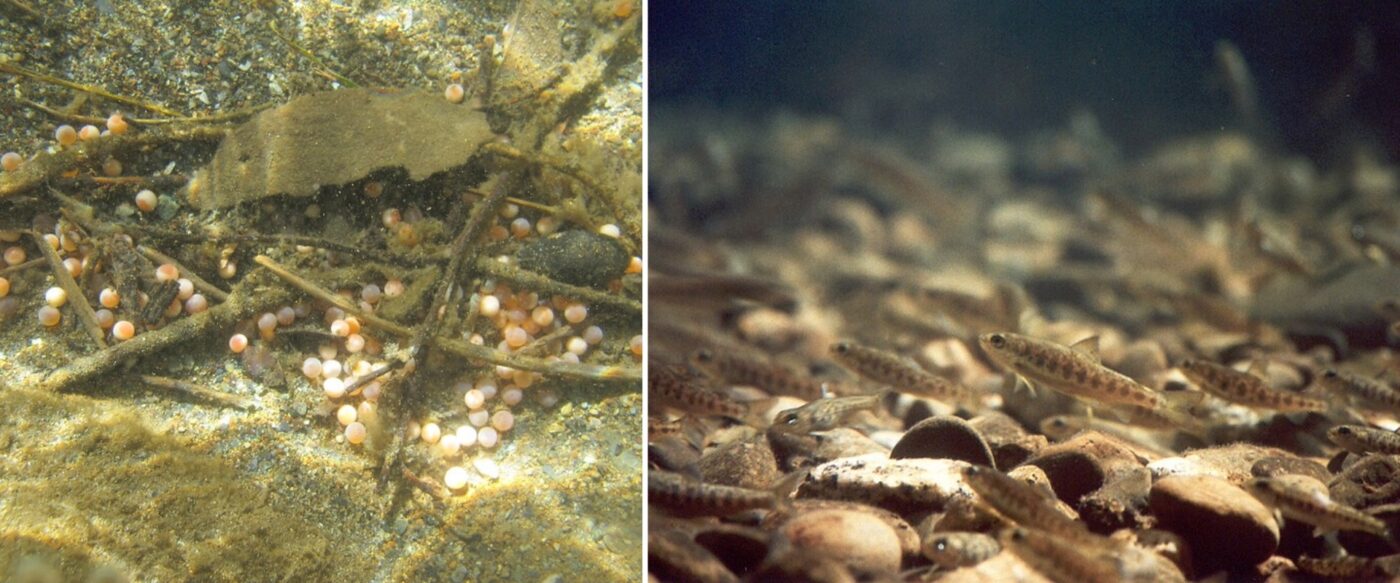
This critical thermal window has large implications for salmon survival. For every 1°C increase in temperature during this time, there was a 73% decrease in egg survival. While this trend was strongly supported in days 1–14 post-fertilization, days 15–28 also followed this pattern with a slightly weaker association. This critical time period creates what the researchers termed a “thermal bottleneck,” a relatively short period in the salmon life cycle when survival is disproportionately affected by environmental temperatures. This means that while many spawning events may occur, only a small number of these instances may produce juveniles that survive. In extreme cases, the negative effects of thermal bottlenecks can even lead to losses of almost entire cohorts, highlighting the importance of not only the volume of cold-water releases, but the timing and duration of those releases.
This study also looked at how salmon populations were affected in both a warm year (2021) and a cool year (2022). In both years, spawning events took place over a similar range of time. However, with limited cold-water releases in 2021, most survivors came from redds observed during a short colder window from June 21–28. Redds observed outside this time window produced a small number of survivors in comparison. In contrast, 2022 releases maintained suitable thermal conditions across more of the spawning season, producing survivors from a broader window (mid-June through late July), with most coming from redds observed in July.
Water in California is a limited resource, and managers often face difficult decisions when managing crucial cold-water releases. The findings from this study suggest that salmon survival may strongly depend on the timing of the cold-water releases. Research like this is critical in helping managers make effective and informed decisions when determining how to allocate water. As global temperatures continue to rise, identifying thermal bottlenecks and critical thermal windows can make the difference between life and death for salmon and help ensure the most efficient use of California’s water.
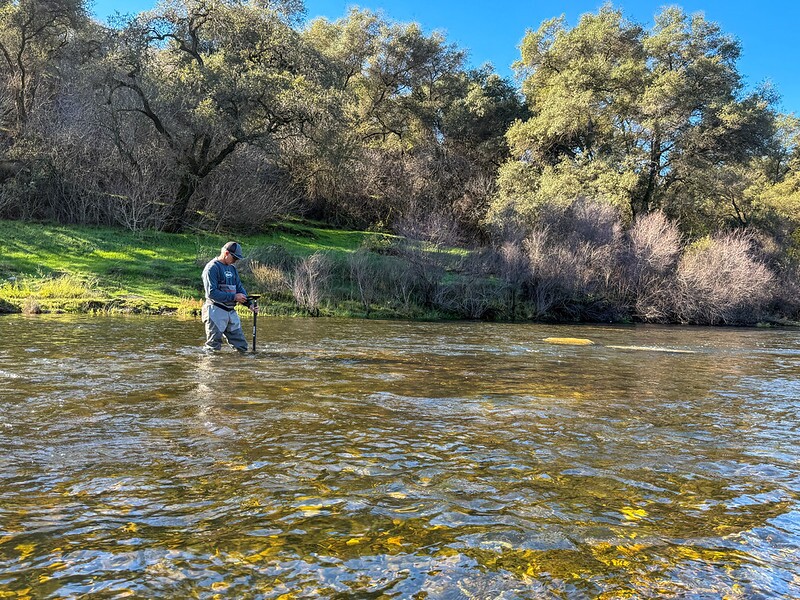
Header Image Caption: Cold-water releases from dams help salmon eggs survive in warmer downstream spawning habitat.
This post was featured in our weekly e-newsletter, the Fish Report. You can subscribe to the Fish Report here.