

Monday October 12, 2026
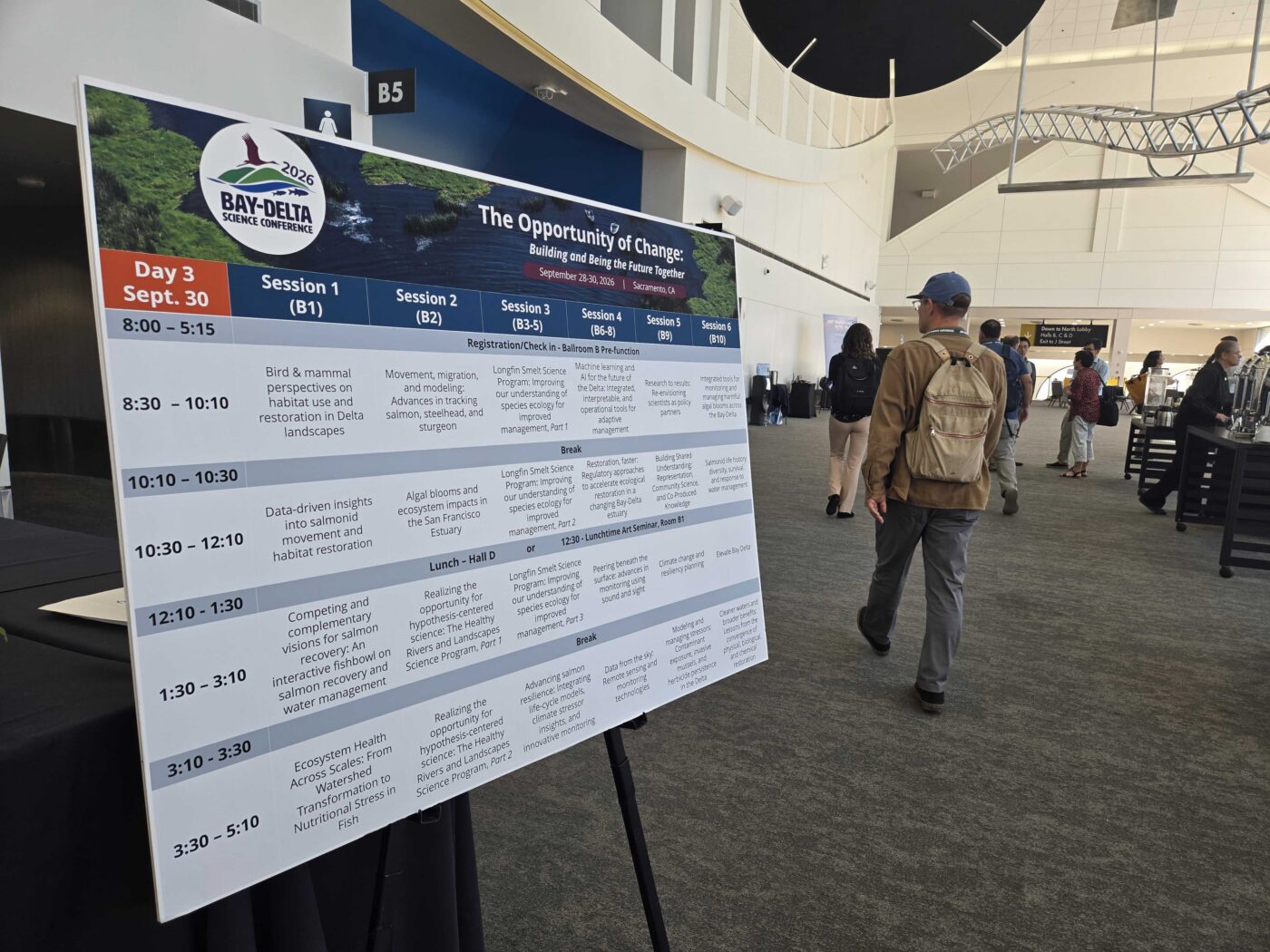
This year’s Bay-Delta Science Conference (BDSC) was a busy three days full of talks, posters, and discussions centered on the ecosystems that make up the heart of California. The San Francisco Bay and the Sacramento-San Joaquin Delta (Delta) are part of a region with a long history characterized by drastic change. River deltas call to mind the ancient civilizations of the Nile Delta and the biodiversity supported in the Okavango Delta. Historically, the Bay-Delta also supported high levels of biodiversity, large animal herds, and sizable human populations. Many of the conversations at BDSC this year focused on the loss of this legacy, a shared love for these ecosystems, recent scientific and management advances, and the future of this region.
A plenary speaker compared the Delta’s ecological crisis to the 2019 Notre-Dame fire, which generated mass public support for restoring the landmark. She argued that the Delta needs the same urgent, collective attention. Other speakers discussed what could be seen as challenges to that goal, saying that it can be difficult to rally behind resources, like salmon, that people are not connected to. Talks mentioned that using words like “salmon” over lesser-known terms like “smolt” or “fry” can help to build these connections. One talk compared Seattle’s K-12 curricula, which require students to learn about the science and cultural heritage of salmon, with California curricula, where salmon are not similarly highlighted. This same talk discussed how a recent volunteer-painted mural in Roseville, CA built the community’s connection to native species. Other talks mentioned how project outputs like online-published story maps can help connect people with the species and ecosystems of the Delta.
Other presentations at BDSC centered around rethinking the business of conservation, as money often plays the central role in determining what projects can be executed. Multiple talks referenced a 2020 Nature publication that showed that species with higher conservation budgets typically have worse recovery rates, and that typically 50% of a species’ recovery budget goes to research and monitoring. One talk drew the comparison that typically pharmaceutical companies put only 8–25% of their budgets toward research and development. Other discussions focused on ways to move from “manuscript to implementation” by focusing on the monetary worth and cost of projects, using structured decision-making flows like ProACT, and navigating tradeoffs and competing objectives.
Many of the nuances of modern research, and projects implementing those intricacies, were also discussed. Some talks focused on the idea that restoration is not simply acreage; other factors like length, connectivity, and complexity can be more important. Others discussed results that challenge many old assumptions about restoration, with one speaker showing that when their project compared managed and natural wetlands, it was the managed areas that supported higher levels of native fishes. A different presentation highlighted their findings that flow (as opposed to temperature) was a greater driver of salmon development. The importance of multi-benefit actions was also highlighted, with the reminder that sometimes water being moved for reasons like land management can be used to support food webs. Other talks that focused on salmon, salt marsh harvest mice, and dabbling ducks stressed the importance of keeping predators in mind when restoring an area for a prey species.
New technologies, tools, and methods helping to better understand the Bay-Delta were also highlighted across sessions. Attendees heard about eDNA technologies like the RoCSI being applied in the Delta and new multiplexing methods to speed up lab work. Several talks discussed the bioacoustic fish fence at Georgiana Slough that uses lights, sound, and a bubble curtain to direct fish away from hazards. One talk also focused on the use of machine-vision cameras to monitor salmon exiting rice fields. Some success stories included using advanced genetic methods to confirm that Putah Creek origin salmon are in fact the salmon returning to Putah Creek, and the continued growth of the BirdReturns program, which has attracted new funding and partners to expand habitat for migratory birds in the Central Valley.
One talk ended with the quote from the Columbia River Salmon Reintroduction Initiative, “it takes a river of people to bring the salmon home.” While salmon were the focus of many talks, the heart of this quote could be seen throughout discussions at BDSC that focused on native fish, birds, mammals, and even algae. The note that many walked away with is that recovery is possible, and the ecosystem, animals, and even the scientists studying them are adaptable and will continue moving forward toward a future for the Bay-Delta.
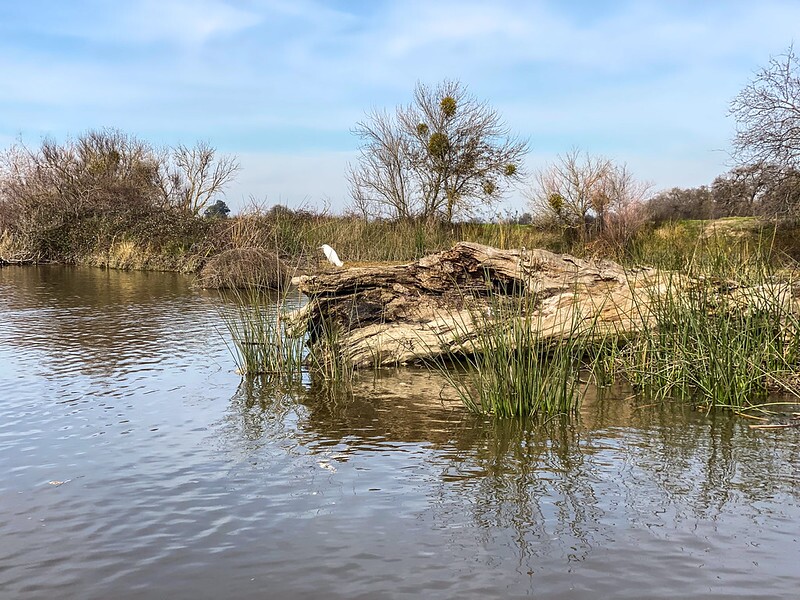
Header Image Caption: The 2026 Bay-Delta Science Conference brought together scientists and managers to discuss the future of the Bay-Delta.
This post was featured in our weekly e-newsletter, the Fish Report. You can subscribe to the Fish Report here.