

Monday May 4, 2026
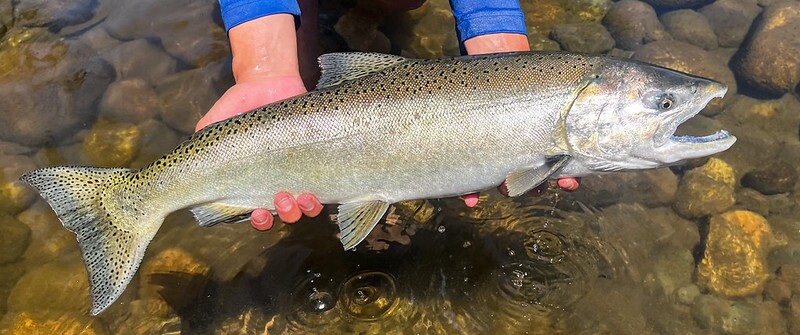
Every fall, Chinook salmon return to California’s Central Valley (CV) to spawn. Beneath the surface of this event lies a managed system that relies on hatcheries, tagging programs, and monitoring to understand where these fish come from and how they survive. A recent report from the Central Valley Constant Fractional Marking (CFM) Program offers a look at that system via data from coded-wire tags. To scientists, these data provide invaluable information for guiding the management of this species.
Each year, CV hatcheries release roughly 32 million fall-run Chinook salmon juveniles. Under the CFM program, roughly 25% are marked by adipose fin clipping and implanted with a coded-wire tag (CWT). This translates to 7–9 million tagged fish annually, with each tag carrying information about the fish’s origin hatchery, brood year, release strategy, and more. When adults return approximately 2.5 years later, a small portion of these fish are recovered and sampled. This dataset is then expanded statistically to represent the entire population of hatchery fish, tagged and untagged. The 2022 dataset, which contains the most recent available data, compiled tens of thousands of tags from multiple agencies, ocean fisheries, inland fisheries, hatcheries, and spawning grounds. Data from this report illustrate the role of hatcheries and the importance of release strategy and location.
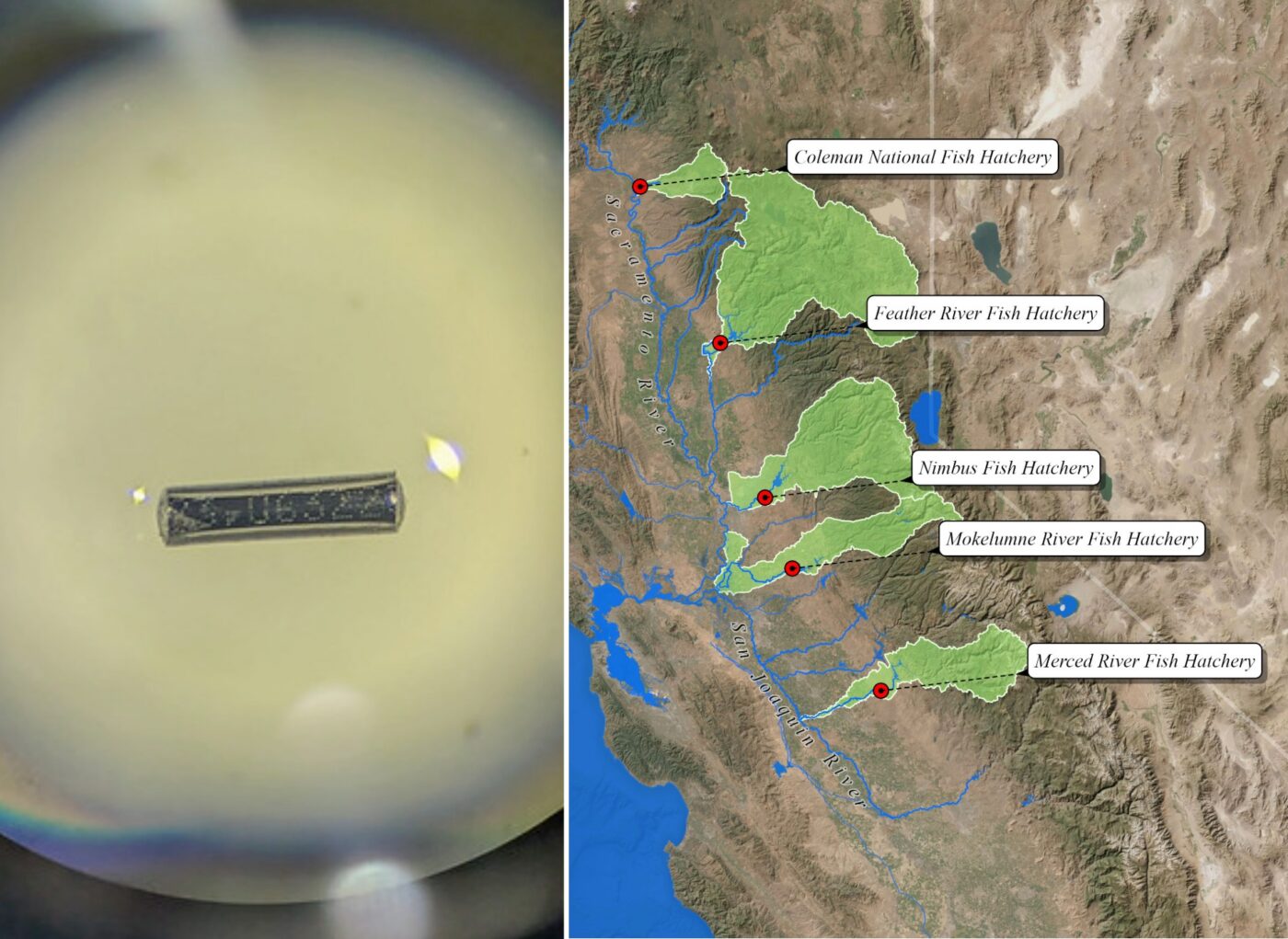
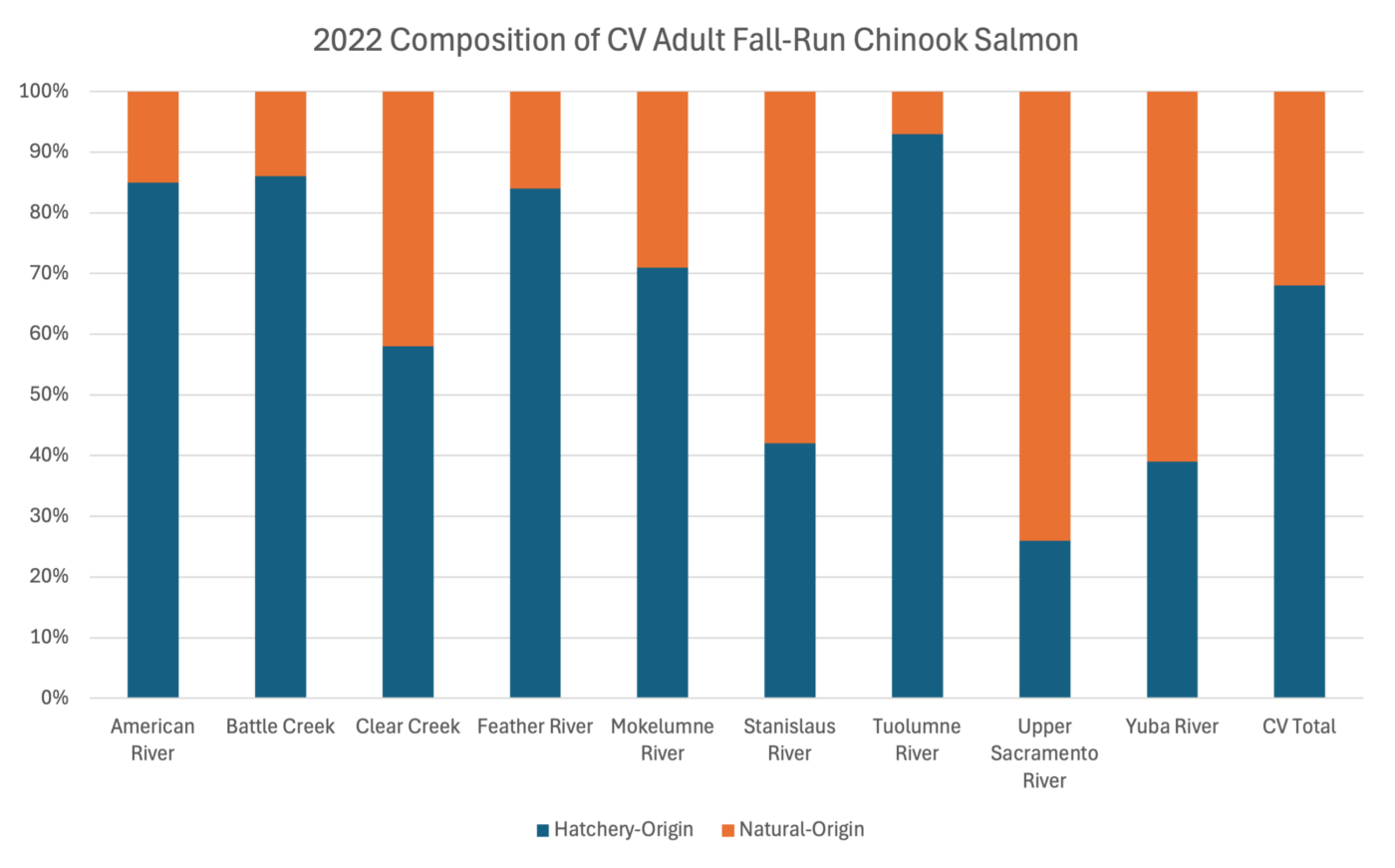
Construction of major dams in the late 20th century required hatcheries to produce ocean-ready Chinook smolts to take the place of those excluded from natural spawning sites. These hatchery salmon have dominated the CV landscape in previous years and continue to do so according to this report’s data. Some CFM estimates have found that more than 70–90% of returning fall-run Chinook are of hatchery origin. Even in natural spawning habitat, hatchery fish frequently exceed 50% of the population. Since the 2010s, the Stanislaus River—which has no hatchery—has experienced a high hatchery influence, primarily strays from the Mokelumne and Nimbus hatcheries. In 2022, the Stanislaus River had 42% hatchery-origin Chinook. This was a lower proportion than past years, likely an effect of drought, environmental conditions, and variable release strategies during the 2019 brood year.
The 2022 report also examines how release strategies affect smolt-to-adult survival rates (SARs), which can have large implications for future populations. Typical SARs in the CV are low, ranging from 0.5% to 2%, but this depends on various factors. Fish transported downstream or released closer to the ocean can produce SARs at the higher end of that range, but they often return to spawn in different rivers than where they were born. This can reduce genetic diversity amongst different CV tributaries. In contrast, in-river releases near hatcheries often have lower SARs, but result in fish returning to spawn in their natal rivers, preserving the genetic integrity of individual tributaries. Managers must weigh the tradeoffs as strategies that are designed to preserve genetic integrity are often at odds with strategies that are intended to maximize abundance, and even a small 1% increase in SAR for a release group of five million fish could mean 50,000 additional returning adults.
Numbers from tag recoveries also highlight how widely hatchery fish disperse. In some cases, like the Stanislaus River, over 30–40% of returning hatchery fish are recovered outside their release river. This behavior (“straying”) can reduce the genetic diversity of populations and is especially prevalent with fish released far from their natal river. 2022 hatchery release groups with high straying rates include Merced River Hatchery fall run, which were placed in a net pen in the bay/delta before they were released, as well as San Joaquin River Restoration Program spring-run Chinook salmon. This highlights the challenges facing CV fisheries managers, as strategies that boost juvenile survival can also increase the mixing of populations.
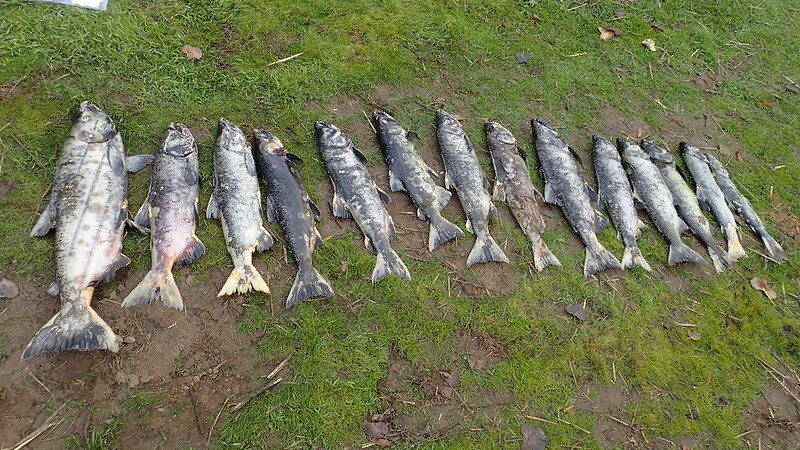
Tagging data make it possible to trace catches back to their source, revealing that most of the CV salmon population is supported by hatcheries. These findings highlight that while hatcheries are effective at producing large numbers of fish, there are many underlying dynamics. High proportions of hatchery-origin fish may lower genetic diversity, local adaptation, and the long-term stability of salmon in the region. As hatchery-origin fish continue to dominate, the scarcity of natural-origin CV Chinook constrains recovery and limits the ability of agencies to effectively monitor populations. Chinook escapement in the CV may be on the rebound but is masked by the effect of hatchery production, which continues to raise concerns about natural populations and the current management practices.
This post was featured in our weekly e-newsletter, the Fish Report. You can subscribe to the Fish Report here.
Header Image Caption: A Chinook salmon with a clipped adipose fin.