

Monday May 11, 2026
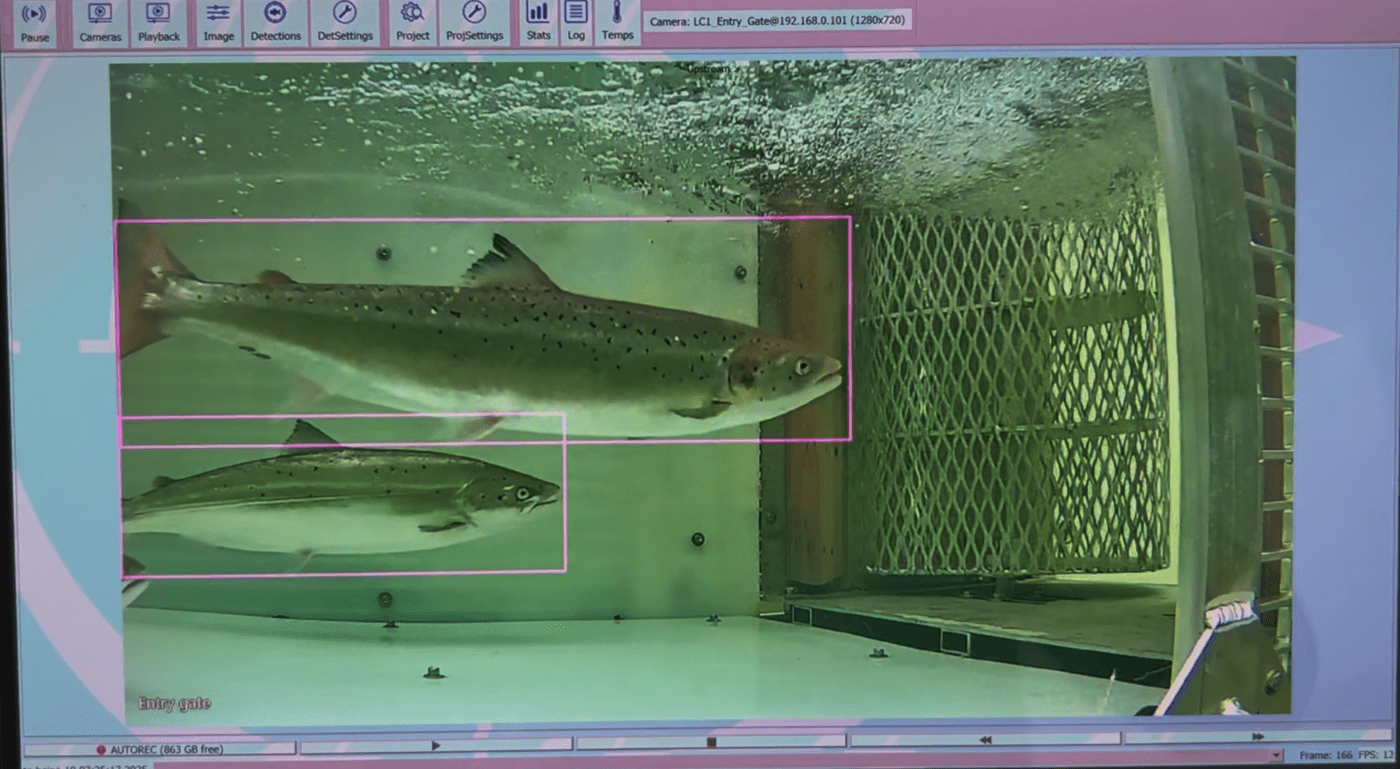
In biological sciences, accuracy and advancement are important, but sometimes these two pillars do not go hand in hand. In fisheries science, managers and biologists make decisions that impact entire species and ecosystems, so, naturally, these decisions must be rooted in science that is correct, transparent, and defensible. Because of this, biology can be slow to adopt new technologies until rigorous testing has occurred. Today, artificial intelligence (AI) is a new technology on scientists’ minds, and it took center stage at the recent Interagency Ecological Program (IEP) workshop where plenary talks and an entire session were dedicated to the topic. Over these talks, aspects of AI—from how it works to common concerns in science—were discussed, leaving attendees with the sense that AI is not a passing trend, but a tool that fisheries science is already engaging with critically and carefully.
Currently, many of the AI methods being discussed and used in science fall under an umbrella that includes machine learning, computer vision, and large language models. These systems identify patterns in data and make predictions. For example, large language models predict the next word in a sequence based on learned patterns, making them useful for drafting, summarizing, or coding support. Other forms of AI discussed at IEP, like computer vision, process objects in images and video, which is particularly relevant for fisheries monitoring. Many of these models were first trained using supervised learning, where humans or other AIs label data and validate outputs to help the model learn what correct answers look like and to reduce mistakes. This is followed by iterative refinement, where expert feedback helps improve performance over time. Importantly, these models continue to evolve as data and training improve. Throughout the workshop, speakers emphasized a key limitation: AI systems are only as reliable as the data and expertise guiding them.
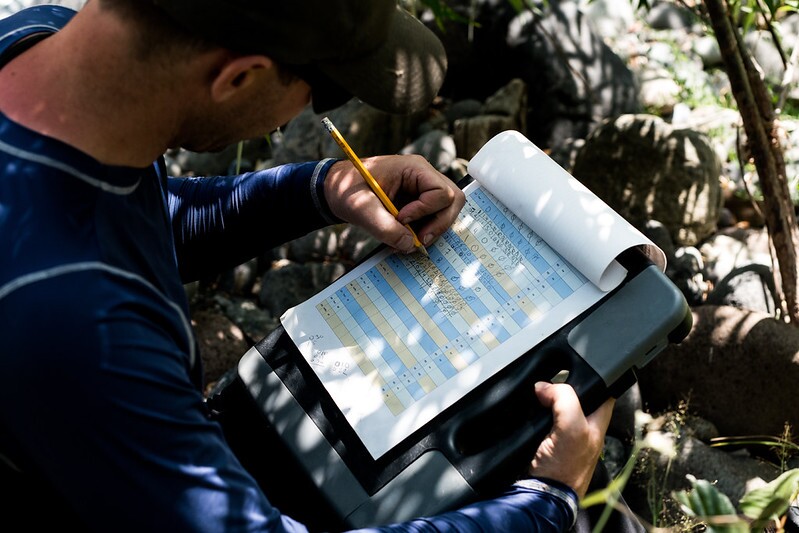
New AI tools are already being used in creative ways in fisheries science. Usually, humans must spend time manually viewing and tagging hours of video footage, but AI can do this labor-intensive work in a fraction of the time using automated tools. This opens the door for larger datasets that can be processed quickly, increasing the efficiency and consistency of data. In many cases, AI is best at processing high volumes of straightforward data, while human validation is still needed for anomalies, species-level nuances, and quality control. The California Department of Water Resources also used AI to develop an inventory tool which organizes their contributions to peer-reviewed publications in an easy to navigate platform. This platform showcases past work, making it more accessible to the public.
Like the use of any tool, AI in science needs to be used critically, and scientists themselves are accountable for this. Validation and human oversight are still needed, from facilitating data training to final decision making. Some tools, like NotebookLM, generate outputs that are based only on sources provided by a user, helping remove biases or potentially erroneous data sources. The use of AI does not remove uncertainty; it changes where expertise is needed. Fisheries biologists will always be the entities that are defining the scope of a prompt and giving the AI context. After AI helps process and execute a task (with human guidance), people are required to verify, clarify, and use the results. While AI should never be expected to make management decisions, it can save time and allow biologists to work more efficiently. This tool, when used critically, can help to offload routine tasks, support literature review, and act as a brainstorming helper.
Based on the prevalence of AI discussions at this year’s IEP workshop, this new technology is here to stay, and it can be an incredible asset. Fisheries managers are presented with new opportunities by adding AI to their toolkit. New hardware, like the NVIDIA spark, even offers opportunities for running AI models locally, moving away from controversial large data centers. Currently in the Delta, AI is being used for identifying harmful algal blooms, automating fish counting, and camera and sound monitoring, among other applications. Many aspects of fisheries science are reactive, where management happens in response to observed problems. With AI, fisheries can move into a more predictive space with faster response times and the ability to test scenarios and make rapid decisions, ideally identifying problems before they can escalate. As with past technological shifts, the challenge will not be whether these tools exist, but how they are adopted.
This post was featured in our weekly e-newsletter, the Fish Report. You can subscribe to the Fish Report here.
Header Image Caption: Some forms of AI, like computer vision, can help fisheries scientists quickly process large amounts of data.