

Monday June 8, 2026
It is easy to assume that restoring habitats to their native states benefits native species. But sometimes, there are too many factors at play for that to be true. Complex dynamics between native and non-native species in aquatic ecosystems can make some restoration approaches difficult, and in some cases, may even harm the native species that the project was designed to help. Recent research in the Sacramento-San Joaquin Delta (Delta) investigates this phenomenon, unveiling the intricate relationships between submerged aquatic vegetation (SAV), juvenile Chinook salmon (Oncorhynchus tshawytscha), largemouth bass (Micropterus salmoides), and striped bass (Morone saxatilis). Given the Delta’s historic struggle against invasive aquatic plants and their ecological and economic impacts, studying these interactions is integral to successful restoration and conservation efforts.
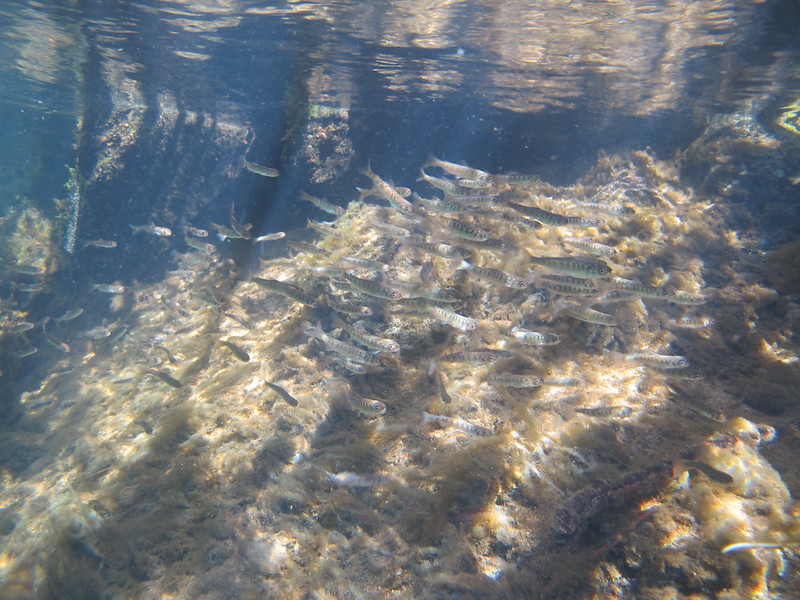
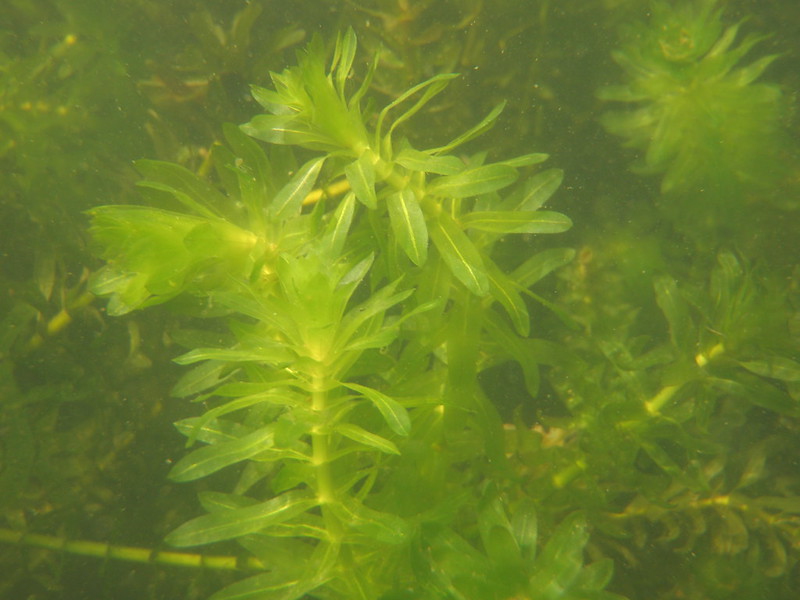
Brazilian waterweed (Egeria densa) is an invasive species of SAV in the Delta. As this species became established in the region, other native species—including juvenile Chinook salmon—faced population declines. For juvenile salmon, this may be because largemouth bass (a known predator of juvenile salmon) uses SAV as nursery areas. Unfortunately, lurking outside of SAV is another predator, striped bass, which excels at hunting in open water environments. Because of proposed and ongoing efforts to remove SAV in the Delta, researchers investigated whether the removal of SAV and the decrease in predation on juvenile Chinook salmon by largemouth bass outweighed the increase in predation by striped bass.
The researchers looked at the impact of SAV removal on predator densities and predation rates on juvenile Chinook salmon. In the study, researchers selected some sites for SAV removal while they left SAV alone at other sites for comparison. After SAV removal from the treatment sites, researchers recorded and analyzed predation rates, fish communities, and environmental variables. To analyze predation rates, the researchers used a predation event recorder (PER). The PER involves a juvenile Chinook salmon tethered by a string to a magnet and a GoPro camera. When a predator grabs the juvenile salmon, the magnet is detached from the system and a timer records the exact timing of the predation event.
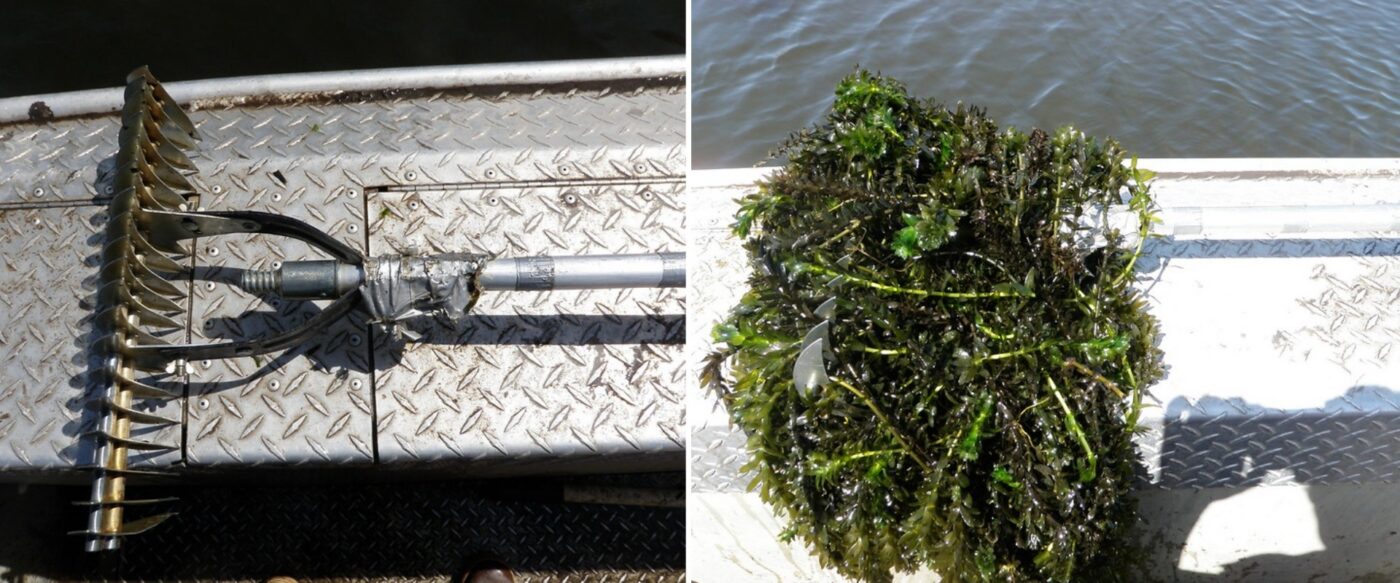
Study results showed that, in the short term, SAV removal resulted in increased predation on juvenile Chinook salmon by striped bass, the open-water predator. This means that juvenile Chinook salmon likely experience a multiple predator effect in the Delta, in which they are preyed upon by both a shallow, near shore predator in SAV (largemouth bass) and an open-water predator (striped bass). This multiple predator effect likely means that predation risk for juvenile Chinook salmon is highest at the edge of SAV, where both predators may be active. When considering all measured variables, the researchers found that predation rates were higher in deeper water, farther from the shore, and farther from SAV—areas where striped bass are likely the dominant predator.
Submerged aquatic vegetation, even when considered an invasive species, still plays a role in the ecosystem dynamics of the Delta. Because the removal of SAV resulted in an increase in predation on juvenile Chinook salmon, it could mean that SAV-dominated habitats protect juvenile Chinook salmon from striped bass predation. This study highlights that ecosystems are complex, and management actions that seem beneficial (like removing invasive plant species) can sometimes have unintended consequences for native species. Within the Delta, Brazilian waterweed may provide a refuge for juvenile Chinook salmon, reminding us that effective restoration requires a nuanced understanding of ecological interactions.
This post was featured in our weekly e-newsletter, the Fish Report. You can subscribe to the Fish Report here.
Header Image Caption: Brazilian waterweed is a prolific invasive species in many aquatic systems of California.