

Monday October 26, 2026

Nestled below Don Pedro Reservoir and supplying water to the Turlock and Modesto Irrigation Districts, lies the historic La Grange Diversion Dam on the Lower Tuolumne River. In a recent effort to improve habitat below the dam, Turlock Irrigation District (TID), Modesto Irrigation District (MID), and San Francisco Public Utilities Commission (SFPUC), in collaboration with local partners including FISHBIO, completed the 2026 Powerhouse Riffle Restoration project. The project restored 4.78 acres of riffle and gravel bar habitat that will support spawning fall-run Chinook salmon, recently observed spring-run Chinook salmon, rainbow trout, and juvenile rainbow trout rearing.
During construction, heavy equipment pushed gravel in and out of the water, water became more turbid, and woody debris and flagging tape were strewn across the site. Equipment shaped and graded gravel riffles designed to support hundreds of salmon redds, engineered woody debris was placed to provide shelter for juvenile fish, and flagging tape relayed important messages to operators to protect natural and cultural resources in the restoration site. Successfully completing each complex habitat feature—including high-velocity riffles, gravel bars, boulder clusters, thermal refuges, and more—depended on constant communication between operators, biological monitors, engineers, and cultural resource specialists.
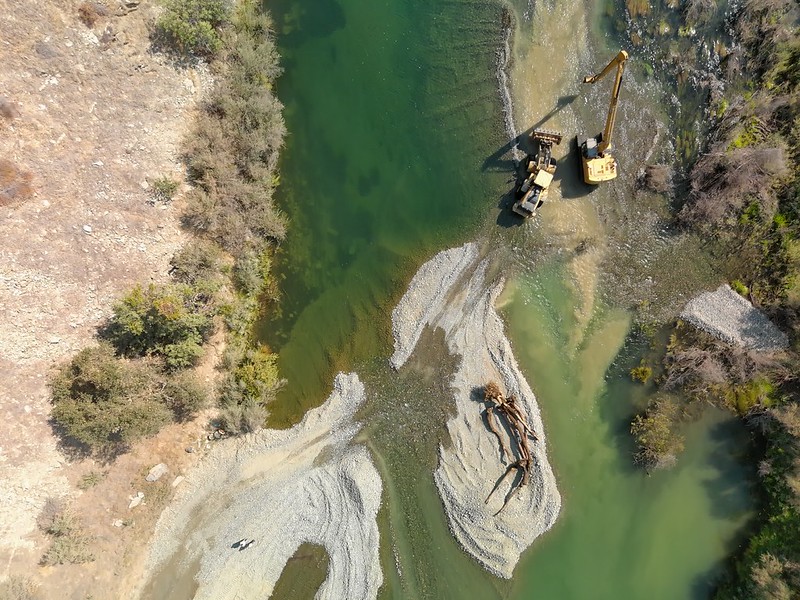
This same collaboration across agencies transforms science into art. Within the project footprint, TID constructed seven high-velocity riffles and five gravel bars to support adult spawning. These used over 24,000 cubic yards of precisely sized gravel. Gravel size is tailored specifically to each species’ ability to move and dig. For Chinook, this size often ranges from 25–100 millimeters. Strategic placement of 49 trees, 100 cubic yards of woody slash, 80 large boulders, and 294 willow cuttings added essential microhabitats, offering juvenile fish safe cover and reliable access to food within the high-flow environments typical of riffle habitats.
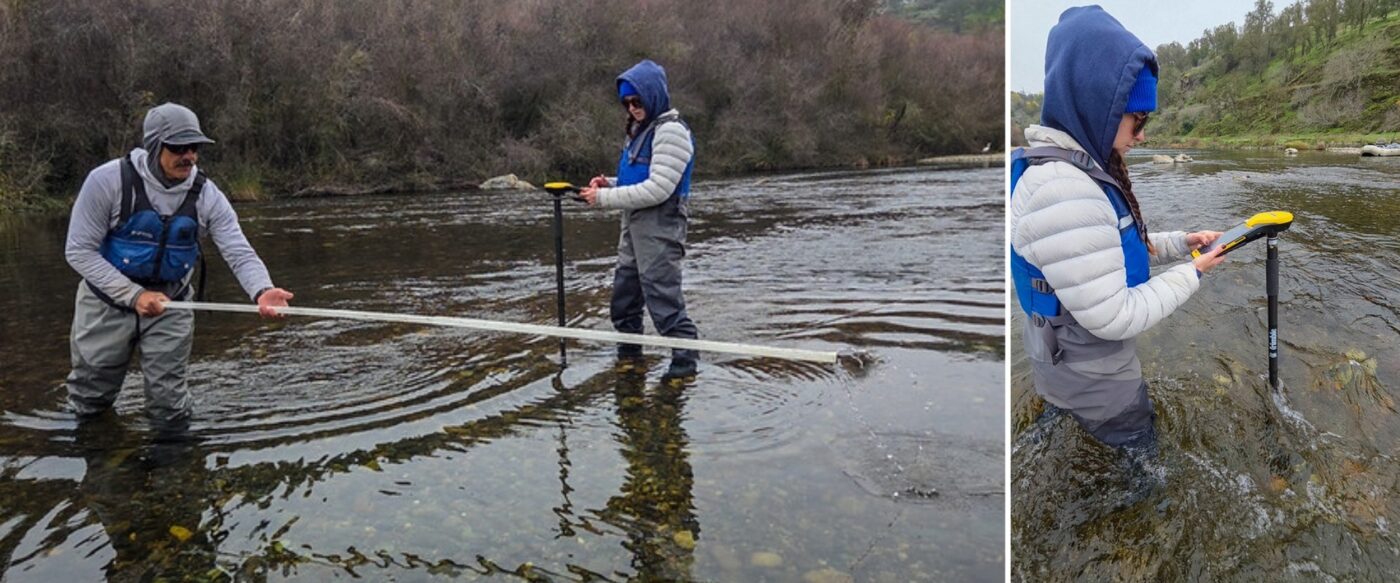
Projects of this scale require extensive monitoring prior to initiation, during construction, and years after completion. Fortunately, FISHBIO has helped monitor the Tuolumne River for over two decades, providing important fisheries data on the site from before this restoration work. Fish monitoring on the river includes weekly redd surveys across the lower Tuolumne, weir monitoring (providing escapement estimates) during fish migration season, summer snorkeling (providing population estimates), and long-term water quality monitoring. During in-water construction, daily on-site water quality monitoring helped ensure turbidity remained at levels safe for fish. Redd mapping, seine surveys, and rotary screw trapping, in addition to newly added drone surveys, will be used to evaluate the long-term success of the increased instream fish habitat.
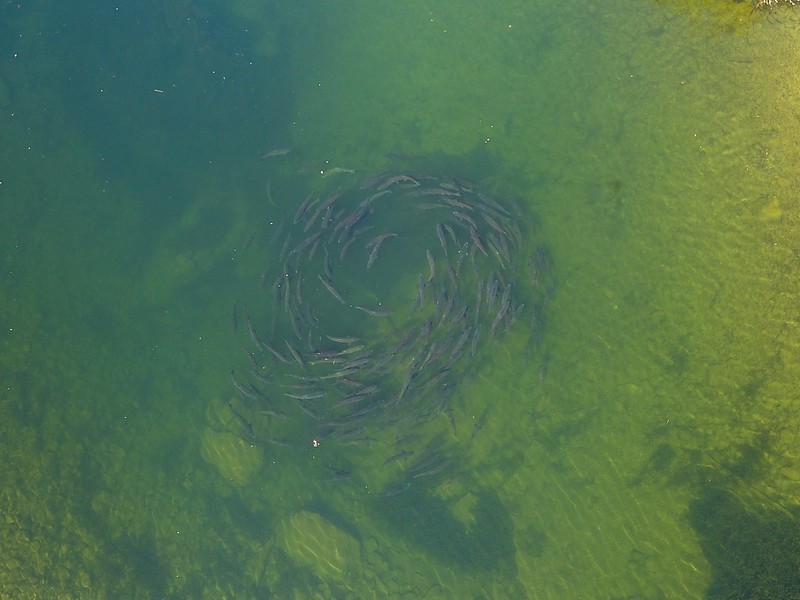
In spring 2025, high-flow events brought an unexpected influx of spring-run Chinook salmon into the Tuolumne River, where they are not typically observed. Drone surveys were used for the first time to assist with the rescue of over 400 stranded spring-run salmon in a secluded pool below the La Grange Dam. FISHBIO collaborated with MID, CDFW, USFWS, NOAA, and other local water districts to relocate these fish downstream, and monitoring efforts were extended to include spring-run salmon. These spring-run salmon were part of an experimental release of Chinook salmon in the San Joaquin River. Over 90% of this group strayed to rivers without a hatchery presence, such as the Tuolumne. It is estimated that over 1,200 adult salmon migrated into the lower Tuolumne River in the spring of 2025. Since then, results of drone surveys have been highly effective for counting and the continued monitoring of this population. Drone monitoring also stretched across the restoration site, producing imagery that documented the weekly transformation of habitat features as gravel was added to the river. Additionally, FISHBIO documented spawning on these newly created riffles within days of project completion.
Restoring this part of the Tuolumne does more than support fish; it creates complex habitat for a variety of aquatic and terrestrial species. As the project concludes, the hope is for this habitat to support not only populations of returning spring- and fall-run Chinook but trout, western pond turtles, mammals, and more. Resident beavers also appear to have relocated near the new restoration site, a sign that the river’s changing habitat is already attracting wildlife. By building a Tuolumne River that is more resilient to change, this project establishes a lasting foundation for biodiversity that will yield ecological benefits for years to come. And as the unexpected spring-run migration showed, the collaboration behind this work is just as important for responding to unforeseen challenges as it is for bringing long-term restoration goals to life.
Header Image Caption: Heavy equipment shapes new habitat along the Tuolumne River during the Powerhouse Riffle Restoration project.
This post was featured in our weekly e-newsletter, the Fish Report. You can subscribe to the Fish Report here.