

Monday August 10, 2026
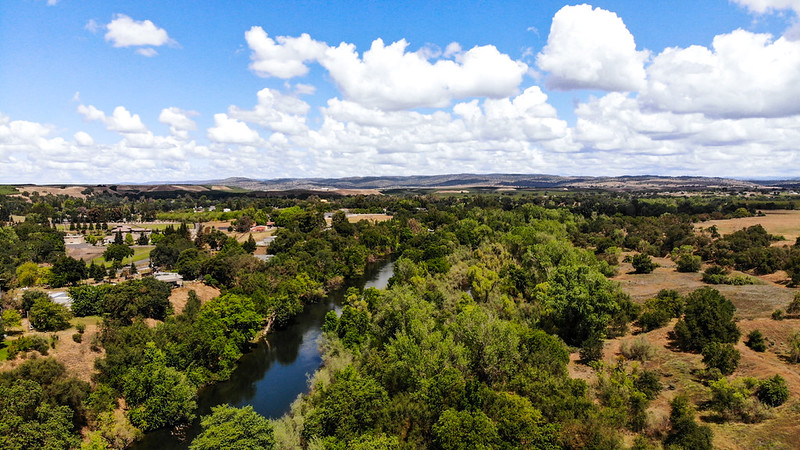
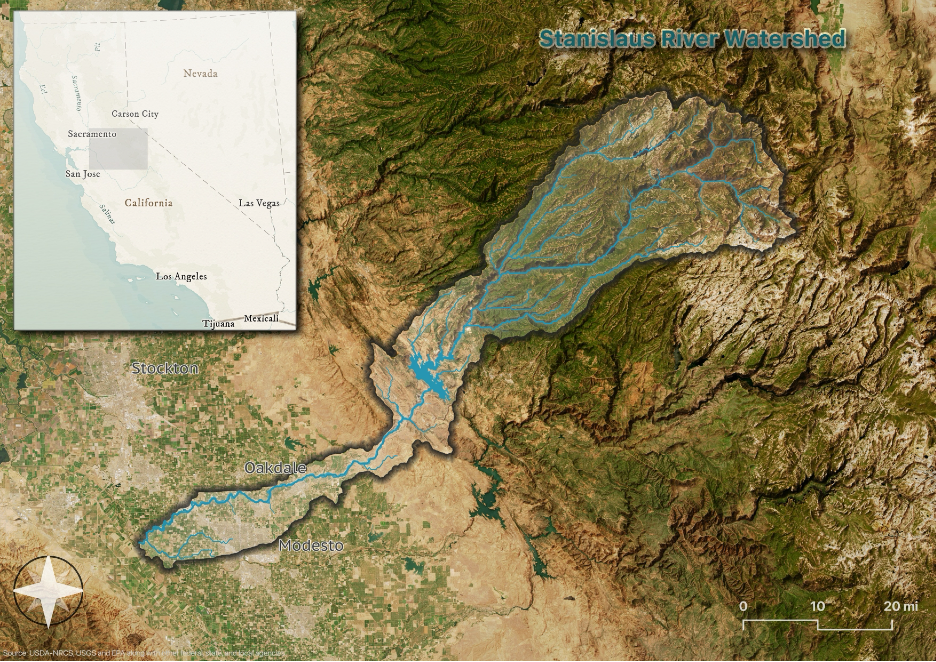
The Stanislaus River begins as a trickle of snowmelt from peaks towering over 10,000 feet tall in the Sierra Nevada mountains of California. Its three main forks cascade through remote forest and rugged foothills before they converge and snake across the flat Central Valley, where the Stanislaus meets the San Joaquin River. The river is named after Estanislao, a Yokut leader who led a rebellion against Mexican-controlled California on its banks in 1828. The Miwok and Yokut Tribes fished the Stanislaus using nets, harpoons, and plants that stun fish. During the gold rush, elaborate ditch and flume systems were built to wash gold from the riverbed. These were later repurposed and now supply drinking water to residents of Tuolumne County.
As early as 1884, scientists cautioned that dams on the headwaters of the Stanislaus River were a serious problem for salmon. The construction of Goodwin Dam near Knights Ferry in 1913 permanently blocked salmon migration to over half of their historical spawning habitat. In the 1970s, the New Melones Dam spurred California’s river preservation movement by flooding the deepest limestone canyon on the West Coast along with archaeological sites, endemic species, and a world-class rafting reach. Today, the river’s flows are over-allocated and hotly contested between farmers, municipalities, and environmentalists—a balancing act with no easy remedy.
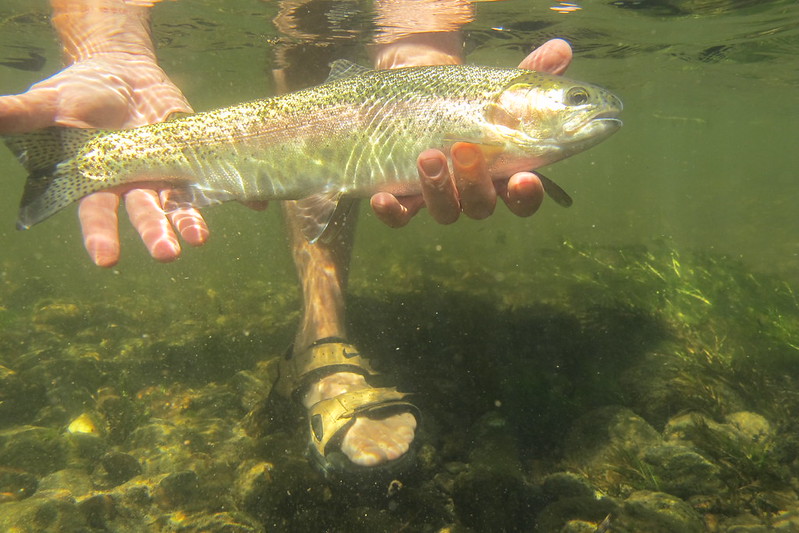
Despite the drama surrounding the Stanislaus River, a variety of fishes reside in its waters. The Stanislaus River is the largest contributor of wild-produced salmon in the San Joaquin basin. However, over 40% of salmon returning to the Stanislaus River to spawn each year were released from a hatchery. Federally endangered steelhead (the ocean-migrating form of rainbow trout) also reside in the Stanislaus and have naturally spawning populations. While salmonids often receive the most attention, the Stanislaus supports a diverse assemblage of native fishes, including Pacific lamprey, green sturgeon, hardhead, Sacramento sucker, Sacramento pikeminnow, tule perch, Sacramento hitch, three-spine stickleback, and prickly sculpin. Several nonnative species of sportfish and other introduced fishes have become naturalized in the watershed, including black bass, striped bass, bluegill, and carp.
With the Stanislaus right in our backyard, FISHBIO got its start in 1993 monitoring salmon and steelhead on the river. Since then, we have counted the number of salmon returning each year at our weir near Riverbank and the number of out-migrating juveniles at our rotary screw trap in Oakdale, making it the longest-running salmon counting dataset in California. We began tagging steelhead in 2021 and have counted trout during annual snorkel surveys since 2009. From 2019 to 2023, we conducted a diet and PIT tagging study with the goal of quantifying predation risk on juvenile salmon. We also monitor stream temperatures, conduct eDNA surveys, restore spawning gravel, and conduct annual salmon spawner surveys. Our work understanding the fish of the Stanislaus River doesn’t stop at collecting raw data. We have created several ecological models, contributed to policy discussions, and published papers in academic journals, synthesizing what we’ve learned from field studies over the years and sharing that knowledge. We are involved in our local communities and have helped plan the Stanislaus River Salmon Festival since its inception in 2008. We also frequently teach about our work at local schools and participate in river clean-up events so that future generations carry the same appreciation for the river that we do.
The Stanislaus River has a long history of change, and the fish species found there have spent millennia adapting, but now they face pressures that move faster than evolution can keep up with. During the drought of 1977, zero Chinook salmon were counted on the Stanislaus and the total number entering the entire San Joaquin River Basin in 1991 was estimated at just 500 fish. But thanks to species conservation, water management, and a growing body of scientific research, there is a glimmer of hope for the future. Our monitoring efforts indicated that the times may be changing, and 2025 saw 8,000 salmon return to the Stanislaus River. The meticulous work we do is not merely counting fish; it is understanding what needs to be done to ensure a future for native fish in the Stanislaus.
This Fish Report is part of our River Profiles Series, where we highlight different rivers that are all integral parts of the Central Valley. You can subscribe to the Fish Report here.
Header Image Caption: Aerial view of the Stanislaus River near Knights Ferry.