

Monday August 3, 2026
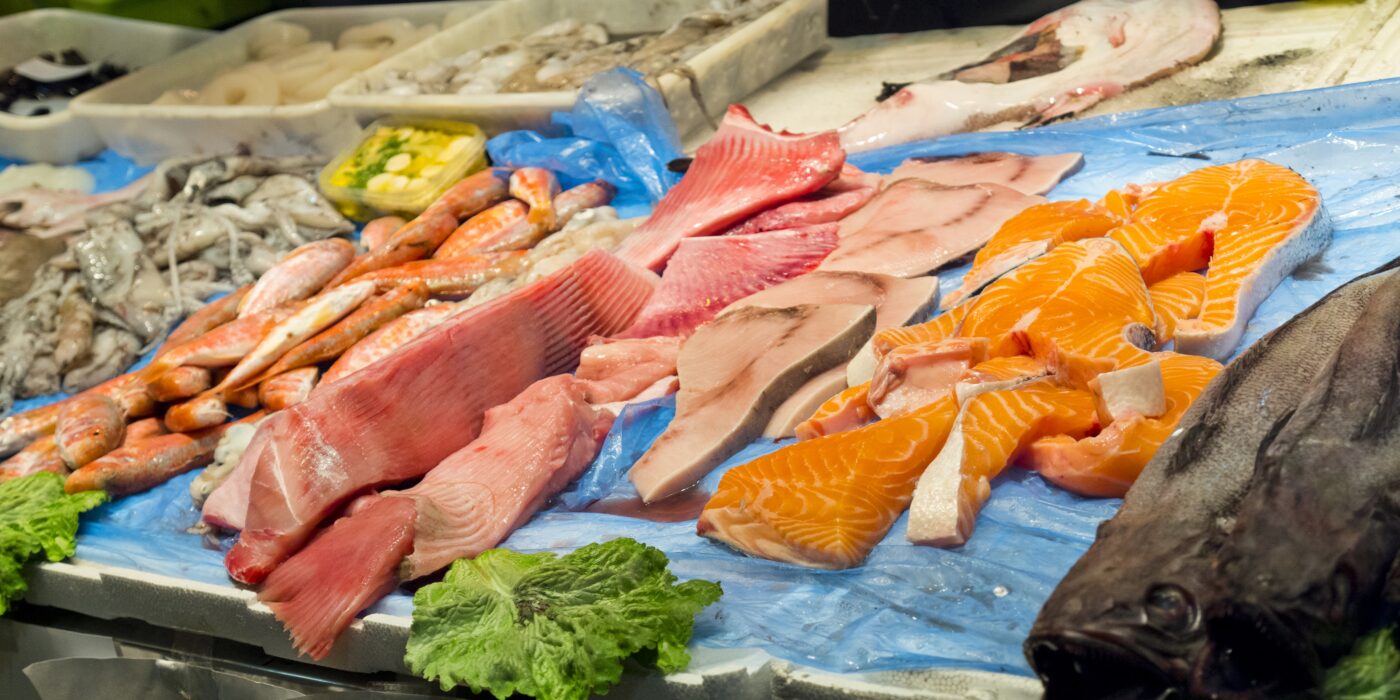
If you are a fish eater, you may have noticed that fish flesh comes in a surprising range of colors. Some species have deep red fillets, others are bright orange or pink, and many are pale white. Occasionally, a fish reveals a color so unexpected that it surprises even seasoned anglers. These differences are not random—the color of fish flesh reflects a combination of diet, physiology, and internal chemistry. In many cases, the color of a fillet can reveal clues about how a fish feeds, swims, and lives in its environment.
Diet is one of the largest drivers of fish flesh color. Pigments called carotenoids play a major role in producing the orange and pink colors seen in many fish species like salmonids. Carotenoids are naturally produced by algae and plants and move through aquatic food webs when small organisms are eaten by larger predators. When fish eat prey that contain carotenoids, such as krill, shrimp, or other crustaceans, these colorful pigments accumulate in their muscle tissue. Salmon are the most well-known example of this process. In the ocean, salmon feed heavily on krill and other crustaceans that contain a carotenoid called astaxanthin. As salmon consume these prey items, the bright pigment is deposited in their muscles, giving wild salmon their characteristic orange-red color. The intensity of this color can vary widely. Some salmon fillets appear deep red, while others are pale pink. This variation depends on other factors such as diet, location, and how long the fish spent feeding at sea. Some wild salmon have genetic mutations which prevent them from accumulating any astaxanthin at all, giving them a pale or ivory color. Interestingly, the familiar color of salmon fillets is not always natural. In aquaculture operations, farmed salmon are typically fed formulated pellets rather than natural prey like krill. Without the same carotenoid pigments found in wild diets, farmed salmon would have pale or grayish flesh. To achieve the pink or orange color that customers expect, salmon farmers typically add carotenoid pigments, often astaxanthin, to the feed. The pigment is the same compound found in nature, but it is included deliberately to replicate the coloration that wild salmon develop naturally.
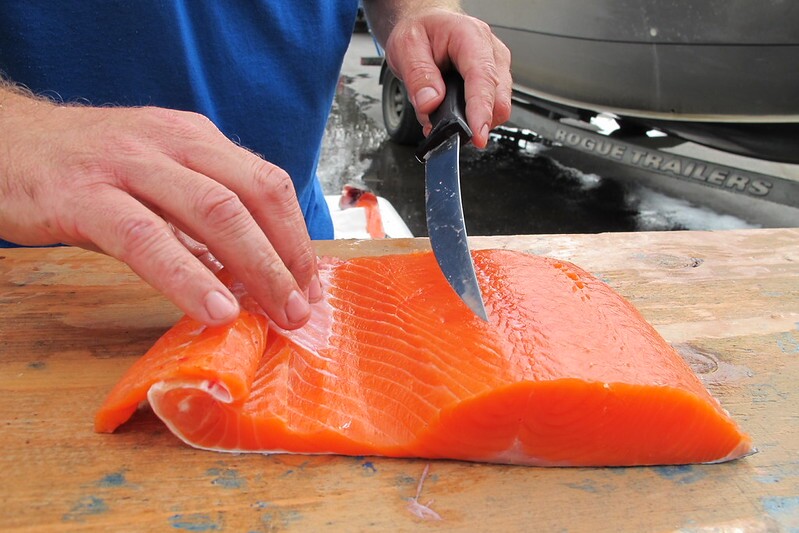
However, diet is only one part of the story. Another important factor influencing fish flesh color is muscle physiology. Fish that swim continuously over long distances tend to have darker muscle tissue because their muscles contain high concentrations of myoglobin, a protein that stores oxygen. This type of muscle, often called red muscle, supports endurance swimming and sustained activity. Highly active species such as tuna and mackerel are classic examples. Their dark red flesh reflects the oxygen-rich muscle tissue needed to power constant movement through the open ocean. In contrast, many fish that rely on short bursts of speed rather than sustained swimming have pale white muscle, which produces rapid power but tires quickly. Fish like halibut, cod, and many reef-associated species fall into this category, resulting in the familiar white fillets often seen in seafood markets.
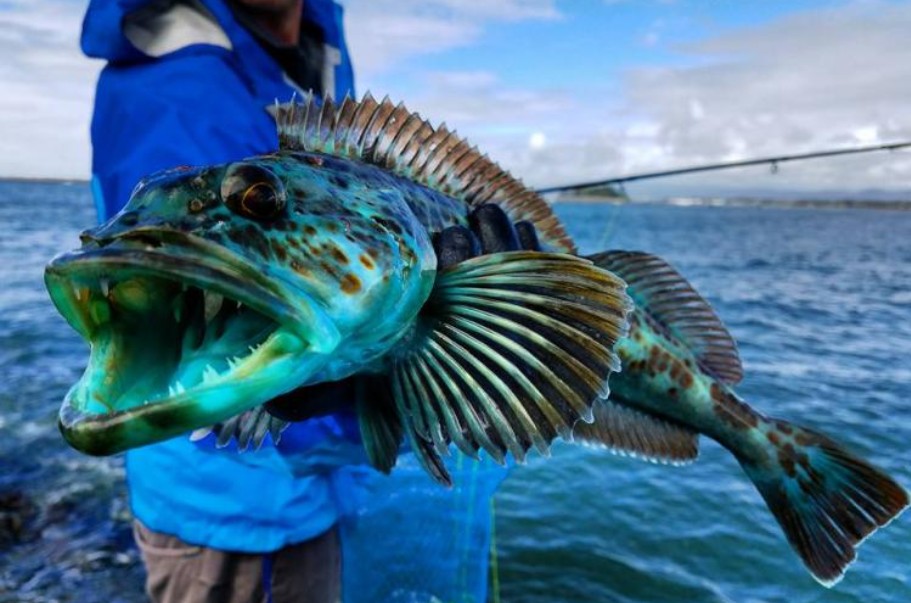
Sometimes, fish break the typical color patterns altogether. Along the Pacific coast, anglers have encountered a striking example while filleting species like lingcod, greenling, and cabezon. Although these species usually have white flesh, some individuals have vibrant turquoise or blue fillets. The color can be so intense that it almost appears artificial. This unusual coloration is believed to be caused by a pigment called biliverdin, a compound produced during the breakdown of hemoglobin in the blood. In some organisms, biliverdin accumulates in muscle tissue, giving the flesh its distinctive blue-green color. Despite its unusual appearance, blue fillets are perfectly safe to eat, and the flesh turns white when cooked. Despite its unusual appearance, blue fillets are perfectly safe to eat, and the flesh turns white when cooked. Antarctic icefishes have another example of a unique flesh color. Because these fishes lack hemoglobin, the protein that gives blood its red color, icefishes have pale, translucent flesh.
Together, these examples illustrate that fish flesh color often reflects many factors about how a fish lives. Diet determines which pigments accumulate in muscle tissue, while swimming behavior influences the type of muscle a fish develops. Even internal biochemical processes can occasionally produce unexpected colors. The next time you eat a fish, take a moment to notice the color of the meat. Those shades of red, orange, white, or even blue are more than just a culinary detail, they are clues about the fish’s biology, diet, and lifestyle beneath the surface.
Header Image Caption: Fish flesh comes in a range of colors that can give insights into the fish’s life history.