

Monday July 27, 2026
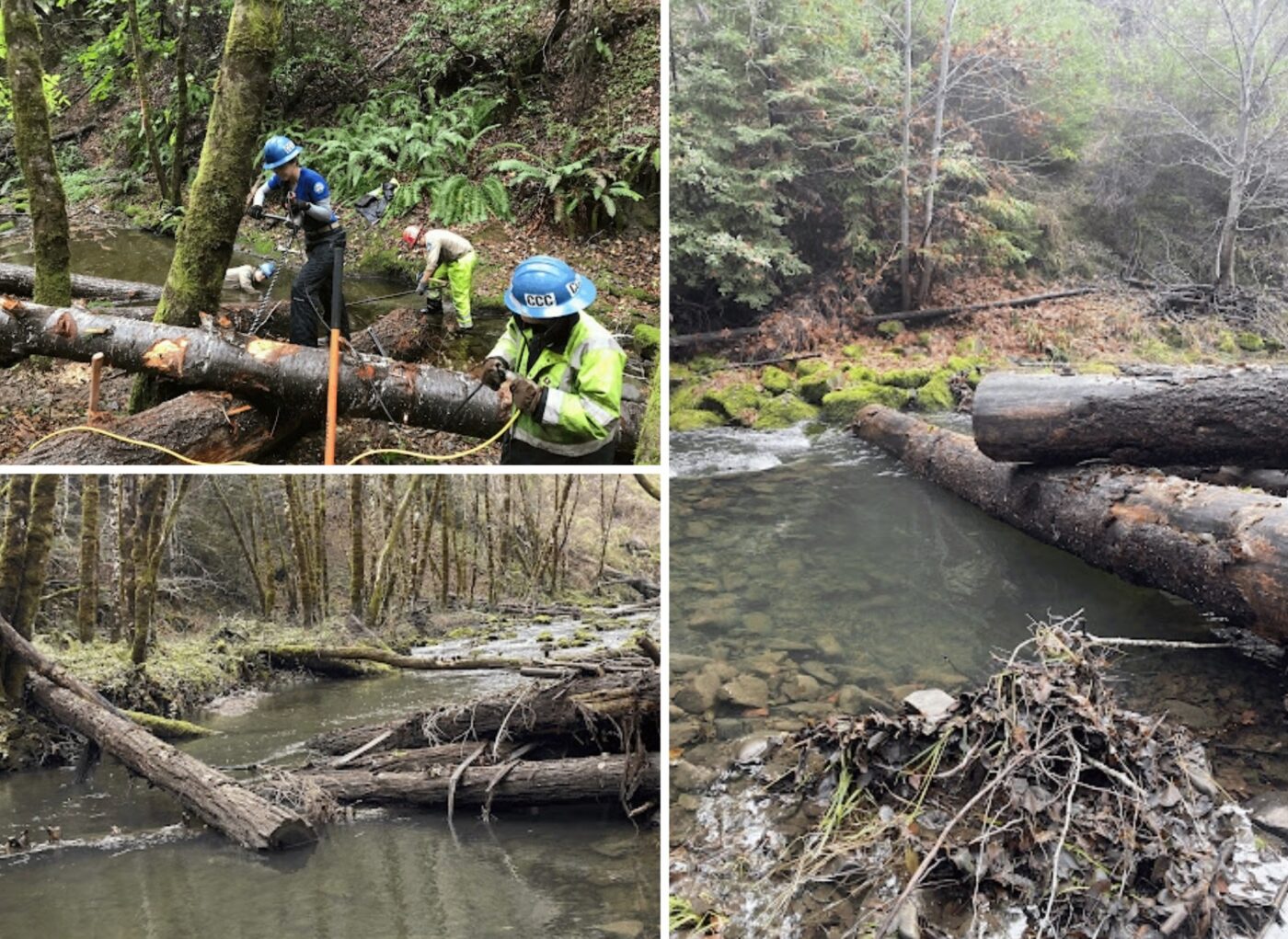
Logging, mining, and agriculture have drastically altered California’s historic waterways, significantly impacting the species that depend on them. These practices all contributed to straighter, more incised, and simplified stream channels. Large scale mining operations dredged much of the critical spawning gravel used by salmonids, often removing it from rivers and depositing it onto floodplains. This frequently left behind long, deep pools with little suitable riffle habitat for spawning. In heavily logged areas, splash dams and timber harvest practices destabilized streambeds and created large accumulations of debris in smaller streams and tributaries that often acted as fish barriers.
As anadromous fish populations declined in the mid-20th century, agencies began removing these perceived barriers through a “stream cleaning” approach that cleared large wood and debris from waterways. While well-intentioned, these efforts further reduced habitat complexity by eliminating pools, disconnecting floodplains, and increasing channel incision, ultimately creating high-velocity systems. These straightened channels functioned like a treadmill for fish swimming upstream, with no off-ramps to rest or avoid predators.
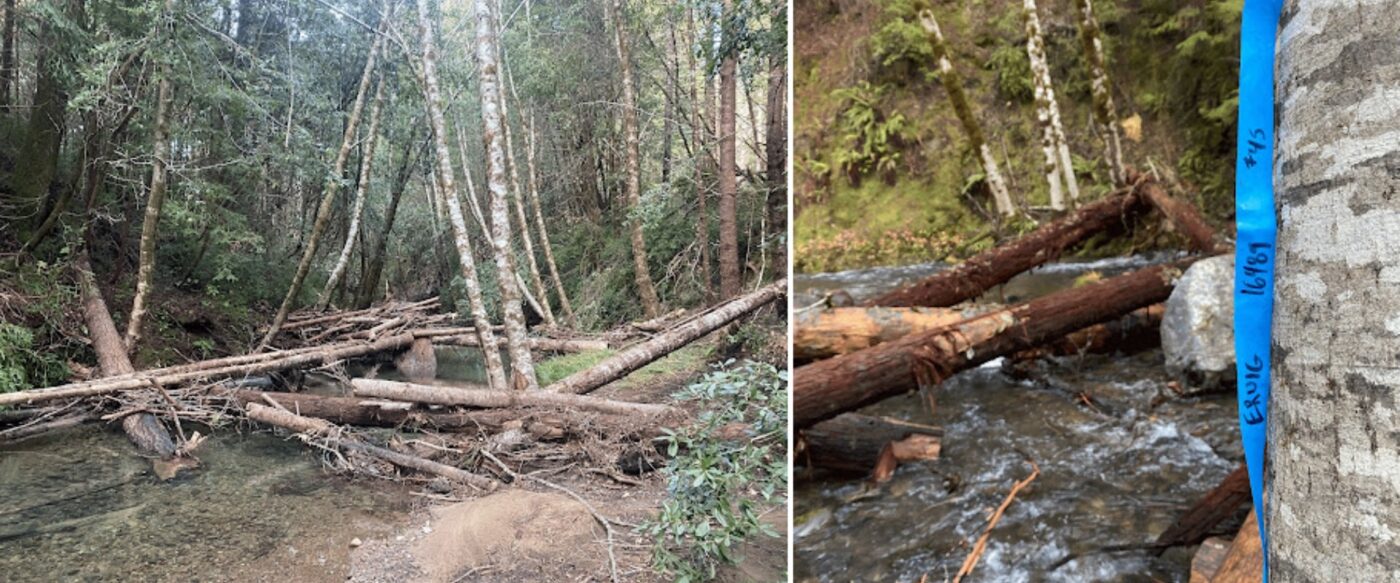
Early habitat enhancement efforts often involved placing boulders and constructing log weirs, but many of these projects failed or required frequent maintenance because they were not designed to work with natural river processes and high flows. By the 1980s, restoration began shifting toward a watershed-based approach that considered the entire drainage basin. Strategies expanded to include engineered log structures, grade control, bank stabilization, floodplain and side channel reconnection, riparian planting, fish passage improvements, and the reintroduction of large woody debris, essentially reversing earlier management practices. More recently, restorationists have begun working with nature using process-based restoration techniques to harness the system’s own biological energy to do most of the restoration “work” and bring back dynamic flow, woody recruitment, sediment capture, and floodplain connectivity.
In-stream restoration is critical for rebuilding habitat for rearing and spawning salmonids, as well as supporting other sensitive species. By adding complexity back into aquatic ecosystems, restoration creates slow-water habitat for juvenile salmon at the start of their life cycle. Large wood provides cover from predators and supports insect communities that are a key part of the food web. During high flows, these large pieces of wood facilitate scouring (sediment and debris movement in swift water) and create pools with cool-water refugia for fish when temperatures rise and flows drop. Log structures can also reconnect floodplains and create off-channel habitat for a wide range of riparian species.
In some systems, a simple “chop and drop” approach is enough to restore complexity and reconnect floodplains. In more remote areas where infrastructure is not a concern, unanchored wood loading techniques can improve habitat while mimicking natural wood recruitment processes at a fraction of the cost of engineered projects. In larger rivers, engineered structures are often needed to withstand winter flows. The Bull Creek Habitat Restoration project is an example of this approach, using engineered features to improve geomorphic function, reconnect floodplains, and enhance in-stream habitat.
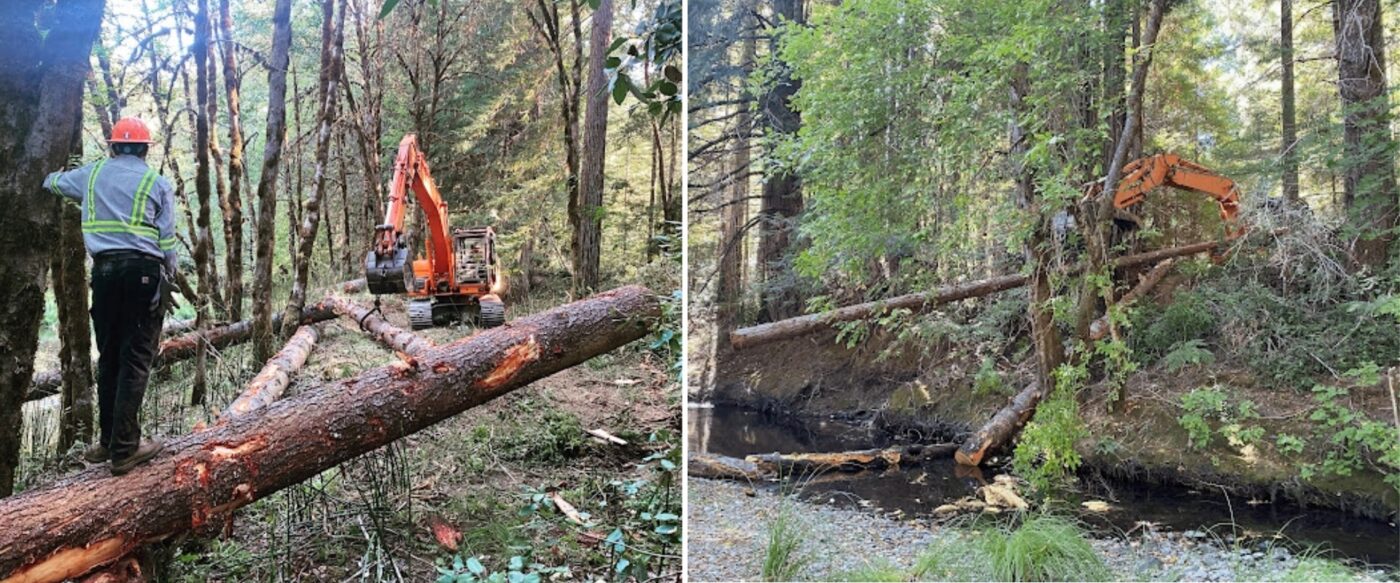
Some of the most logistically challenging projects occur in remote canyon reaches, where helicopters are sometimes the only way to place large wood. Low-gradient systems within high-gradient canyons can provide especially important habitat for fish and other aquatic life. McGinnis Creek, a tributary of the Mattole River, which is known to support a native steelhead population, contains nearly two miles of crucial cold-water habitat during the summer months, making it an ideal candidate for this type of restoration work. In systems impacted by legacy mining, one of the most effective restoration actions is the addition of spawning-sized gravel. This helps address sediment deficits and provides returning salmonids with the substrate needed to build redds, reproduce, and complete their life cycle. Organizations like the Yosemite Rivers Alliance have done just that on the Tuolumne river, adding miles of spawning habitat.
The evolution of in-stream restoration reflects a major shift in how we understand rivers. Early efforts focused on simplifying channels and removing what were thought to be barriers. Today, restoration recognizes that in-stream complexity, wood, floodplain connectivity, and dynamic natural processes are exactly what healthy salmon systems depend on. By working with rivers instead of against them, modern restoration aims to create ecosystems that are more resilient to disturbance, climate change, and long-term watershed impacts.
This Fish Report is part of our Restoration miniseries, where we discuss how and why different freshwater habitats are being restored. You can subscribe to the Fish Report here.
Header Image Caption: Restoration done by the Eel River Watershed Improvement Group on Sproul Creek (funded by CDFW).